 Albania
 Argentina
 Australia
 Austria
 Belgium
 Bosnia and Herzegovina
 Brazil
 Bulgaria
 Canada
 Chile
 Colombia
 Croatia
 Czech Republic
 Denmark
 Estonia
 Finland
 France
 Germany
 Greece
 Hungary
 Ireland
 Italy
 Latvia
 Lithuania
 Luxembourg
 Mexico
 Moldova
 Montenegro
 Netherlands
 New Zealand
 North Macedonia
 Norway
 Philippines
 Poland
 Portugal
 Romania
 Serbia
 Slovakia
 Slovenia
 South Africa
 Spain
 Sweden
 Switzerland
 Turkey
 Ukraine
 United Kingdom
 United States of America


How to tune a ukulele

When tuning, you can choose from several types of tuners. There are standard tuners, rack-mounted tuners, pedal tuners and multifunction tuners, which are mainly used by guitarists or more experienced instrumentalists.
A fixed-pitch tuner is suitable for the most experienced players, as it has no display with a needle to show you which way to tune the strings.
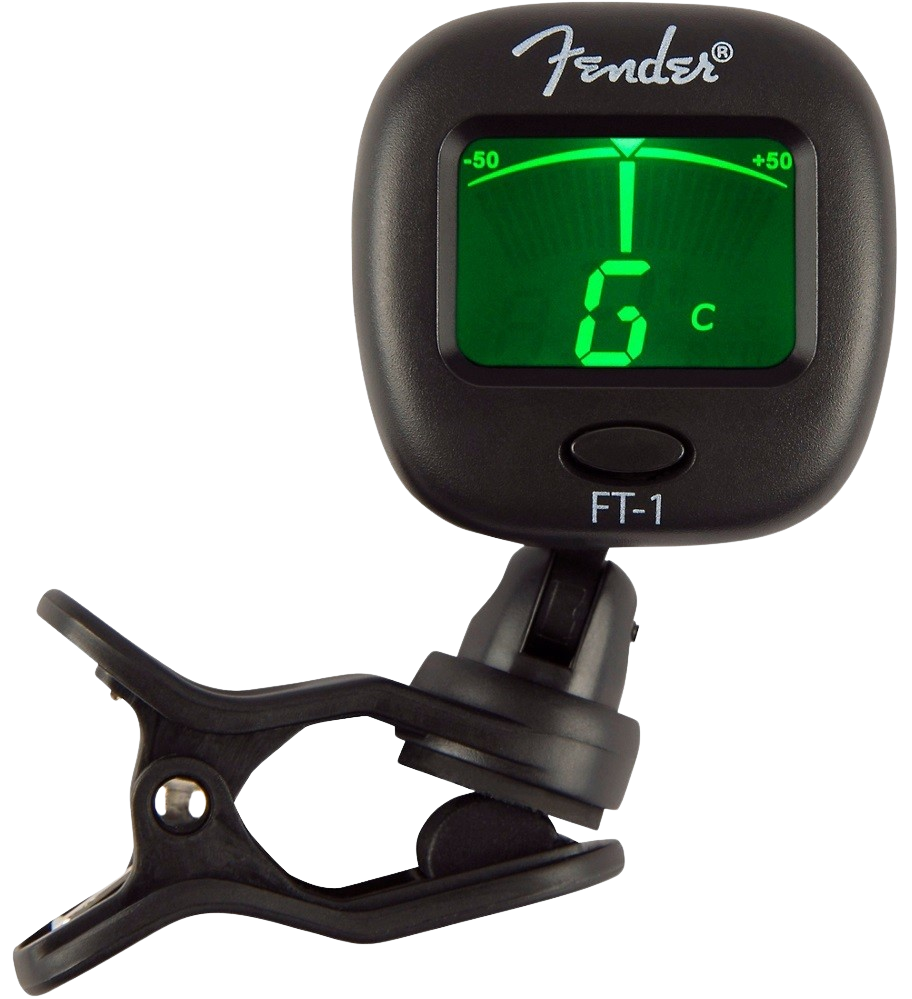
A clip-on tuner for beginners
For beginners, an electronic clip-on tuner is the easiest and most suitable option. When choosing one, keep it simple. You will not need complicated features anyway. To start with, all you need is a tuner that you can switch on and off and set to ukulele mode.
One button is usually enough to control these two functions. Pressing and holding the button switches the tuner on and off, while a short press switches between the instruments to be tuned. Most players will not use the other functions anyway, and as a beginner, you may simply find the symbols on the display confusing.
Check your settings
Before you start tuning, check that your tuner is set to ukulele or chromatic mode (the letter u or c on the display). Chromatic mode is universal and works with all instruments. Many ukulele players prefer it because it seems more accurate. You can still confidently choose ukulele mode (u), though. Take care, as some tuners have two ukulele modes. One is for an instrument tuned to C and the other is for a ukulele tuned to D.
One string at a time
Good-quality strings are the foundation of a good sound. Only then can you get started with tuning. When tuning your ukulele, start with the top string – the fourth string. Tune this to G. Continue with the third string, which is tuned to C, the second to E and the first, bottom string to A.

Ukulele tuners
Need to tune your ukulele accurately? Take a look at our wide selection of ukulele tuners!
Choose your tunerLeft-handed players, take note!
Left-handed players need to reverse the order of the strings so that they can play left-handed. There is nothing complicated about it. First, remember to label the strings so you can put them back in the correct order. You need to rearrange the strings so that even when the ukulele neck points to the right, meaning you fret the strings with your right hand, they are tuned in the same order – from top to bottom: G,C,E,A.
Manufacturers sometimes also recommend tuning your ukulele a tone higher than the previous tuning. Specifically: A, D, F sharp (F#), B. It is up to you which tuning you choose.
Tunings by type:
Soprano ukulele: G4, C4, E4, A4 (less commonly A, D, F# (F sharp), B)
Concert ukulele: G4, C4, E4, A4
Tenor ukulele: G4, C4, E4, A4 and also G3, C4, E4, A4
Baritone ukulele: G3, C3, E3, A3
Types of ukulele
How you tune a ukulele depends on its size and sound. The baritone ukulele is one of the largest types. It measures more than 75 cm in length and sounds similar to a classical guitar with nylon strings.
The most common type is the soprano ukulele, which measures 53 centimetres and has the typical high-pitched ukulele sound. Smaller versions are also made – the Sopranino, measuring just 48 centimetres, and the Sopranissimo, measuring 43 cm.
The concert ukulele is slightly larger. It measures 58 to 63.5 centimetres and has both a larger body and a longer neck with wider spacing between the frets. It sounds similar to a soprano ukulele, but is slightly louder.
The tenor ukulele is becoming increasingly popular. It measures approximately 66 centimetres and has a slightly deeper sound, though it still sounds similar to soprano and concert ukuleles.
Take care when buying strings, as you need to choose them for your particular type of ukulele. There are many string manufacturers around the world, and almost all of them make strings for every type of ukulele. In time, you will certainly find strings for ukulele that suit you perfectly. For example, D'Addario strings for ukulele are very popular. Many players consider them good-quality, reliable strings that rarely break. This manufacturer makes strings for all types of ukulele.
MUZIKER TIP: Remember that your ukulele also needs a good-quality gigbag for ukulele.

Tuning with a tuner
Place the tuner between the tuning pegs and angle it so that you can see the display clearly. Pluck one string and the tuner will show you the note it detects. If you use ukulele mode (u), the tuner should also recognise which string you are tuning. If the note is correct, the needle should sit in the middle of the display. If it moves to either side, the string needs adjusting.
Turn the tuning peg and repeat this process for every string so that the needle sits exactly in the centre for each one. On some tuners, the display even lights up green when the string is in tune. It does not matter which string you tune first, as long as you do not miss any out.
It looks really simple, but there are a few small pitfalls. One is that you might accidentally turn the wrong tuning peg. This happens to more experienced players too, not just beginners. If you are unsure which tuning peg to use, touch the string you want to tune and follow it all the way to its tuning mechanism.
Beginners also often wonder which way to turn the pegs when tuning. It is simple. Just try turning one way and watch what happens to the needle on the display. If the needle moves towards the centre when you pluck the string again, you are turning in the right direction. If the needle moves away from the centre, you need to turn the peg the other way.
Watch the following video to see the correct tuning procedure:
Common tuning problems
When tuning, you may find that the tuner shows a different string from the one you are tuning. There is a simple explanation. The string you are tuning is so flat that the tuner has identified it as a completely different string. To solve this problem, turn the relevant tuning peg far enough to bring the string up to the required pitch. The tuner may have problems when moved from a cold environment into a warm one. As with most electronic devices, the battery may refuse to work in these conditions. Often, simply taking it out and warming it up is enough. However, even an electronic tuner can have a “bad day”, and you will have to manage on your own. In these situations, players often turn to tuning apps on their phones, even though these are far less accurate than a conventional electronic tuner.
If your new ukulele frequently goes out of tune, this is nothing unusual. Like all stringed instruments, ukuleles are stored with their strings loosened, so it takes a while for the strings to get used to the tension. The same thing happens when you replace the strings with new ones. New strings are sold coiled up, so they also need time to get used to being stretched out and tend to return to their previous shape. It simply takes patience, a little time and repeated, frequent tuning.
MUZIKER TIP: Concert ukulele strings – Aquila – ensure a stable, good-quality sound
Tuning by ear
Like other stringed musical instruments, a ukulele can also be tuned by ear. However, this method is better suited to an experienced player or someone with perfect pitch than to a beginner. As with other stringed instruments, you can also tune a ukulele if you have a piano or another keyboard instrument to hand. Even this requires at least a basic knowledge of musical notes, though.
If you do find yourself in a situation where you have to tune your ukulele by ear without a tuner, there is a method you can learn over time. This involves tuning using neighbouring strings. We usually start with the G string, which is the lowest string. Ideally, tune it using a piano or another instrument as a reference. If you do not have one to hand, you will have to rely on your own ear.
Continue with the neighbouring C string. When you press it down at the seventh fret, it should sound the same as the previous string played open. The next string, E, should sound the same as the C string pressed down at the fourth fret. The final string, A, also played open, should sound the same as the E string pressed down at the fifth fret. This method is not completely accurate, but it will help you out in a pinch and will certainly help you develop your ear as well.
Six-string ukulele
You can usually tune a six-string ukulele to the same notes as its four-string counterpart. The difference with a six-string ukulele is that the A and C strings are doubled. The second C string is usually an octave higher than the standard C string, while the second A string is tuned either to the same pitch as the standard A string or an octave lower.
However, there is no completely standard or traditional way to tune a six-string ukulele. You may find that the doubled strings are tuned in different ways. It depends on the manufacturer or player, and the tunings vary far more than with a four-string ukulele. This type of ukulele tends to be used by experienced players who perform concerts on the ukulele.
Once you have successfully tuned your ukulele, you can start easing into playing, which is sure to put you in a good mood too.