 Albania
 Argentina
 Australia
 Austria
 Belgium
 Bosnia and Herzegovina
 Brazil
 Bulgaria
 Canada
 Chile
 Colombia
 Croatia
 Czech Republic
 Denmark
 Estonia
 Finland
 France
 Germany
 Greece
 Hungary
 Ireland
 Italy
 Latvia
 Lithuania
 Luxembourg
 Mexico
 Moldova
 Montenegro
 Netherlands
 New Zealand
 North Macedonia
 Norway
 Philippines
 Poland
 Portugal
 Romania
 Serbia
 Slovakia
 Slovenia
 South Africa
 Spain
 Sweden
 Switzerland
 Turkey
 Ukraine
 United Kingdom
 United States of America


MOOG Synthesizers and Workstations
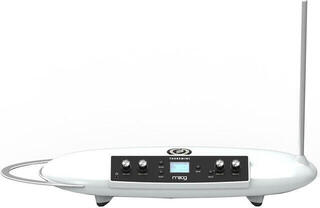
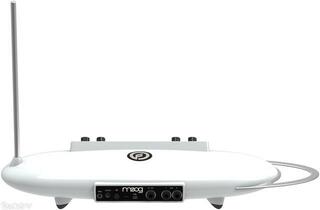
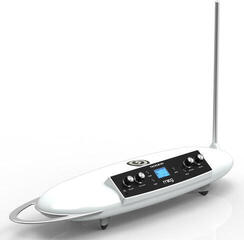
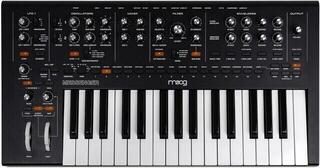
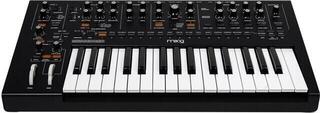
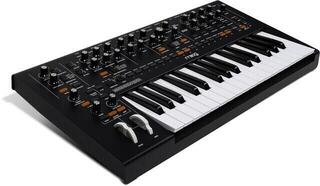
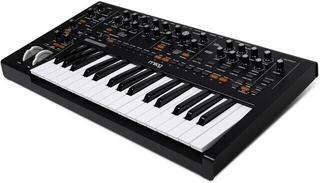
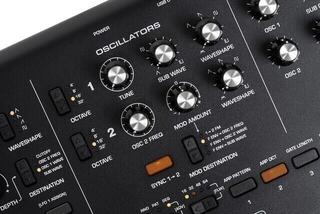
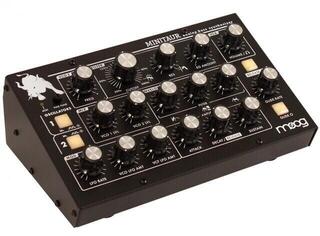
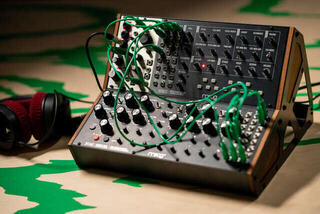
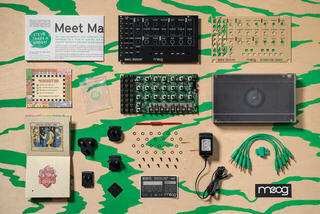
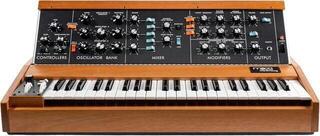
This page features MOOG analogue synthesizers: instruments with keyboards ranging from 32 to 61 keys, semimodular desktop synthesizers without keys and the touch-free Theremini theremin. The word workstation belongs to the category name, rather than the instruments themselves. A workstation is a digital keyboard instrument with a large bank of recorded sounds and a sequencer for whole songs, whereas on a MOOG synthesizer you build your own sound from oscillators, a filter and envelopes. Your choice therefore mainly depends on whether you want to play keys, create repeating patterns or expand the system you already have.
Does a MOOG synthesizer remember the sounds you set?
Subsequent 37 and Muse save sounds to memory, so you can switch sounds between songs with one button. Minimoog Model D, Grandmother and Matriarch have no sound memory: they sound exactly as the knobs are currently set, and you adjust every sound by hand. At a concert with lots of changes, that is a limitation. When learning synthesis, it is an advantage, because you immediately hear every movement of a knob.
How do you connect MOOG to a computer and other instruments?
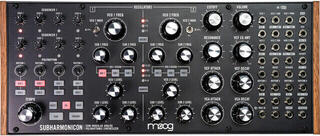
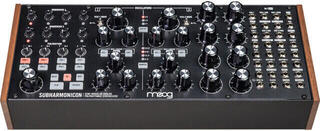
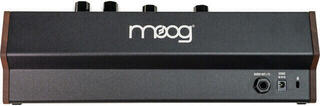
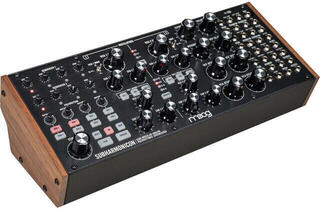
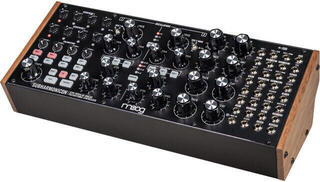
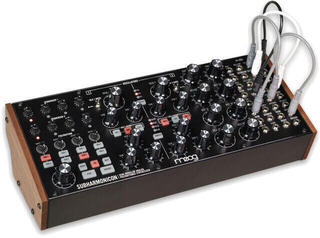
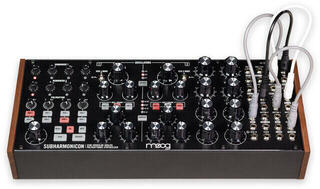
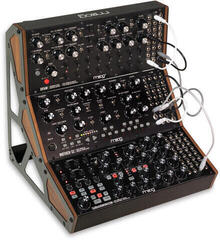
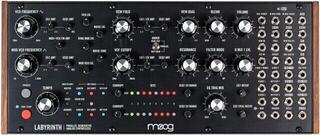
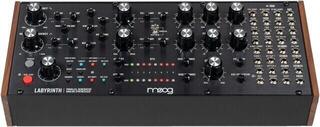
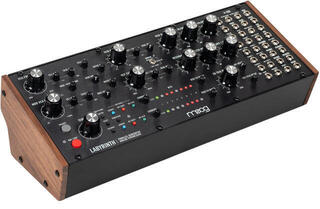
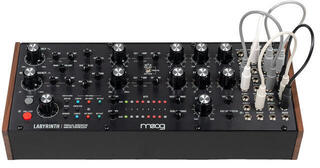
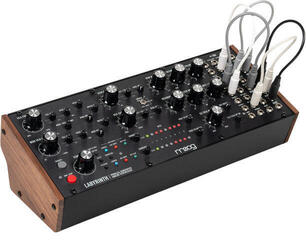
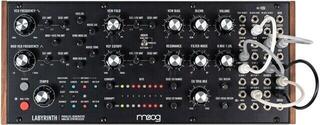
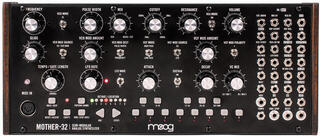
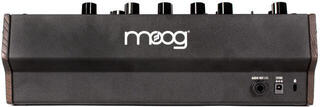
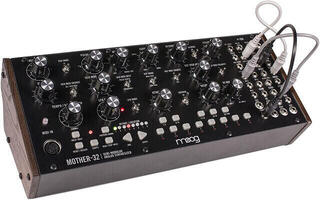
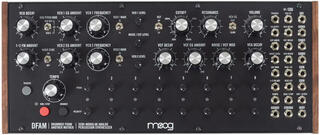
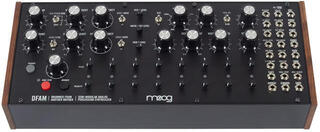
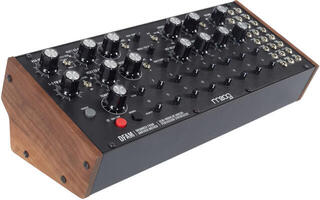
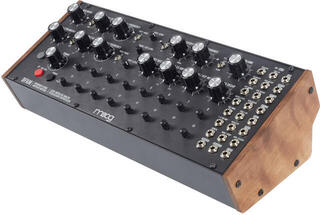
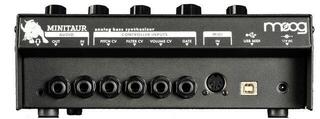
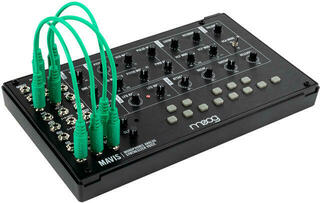
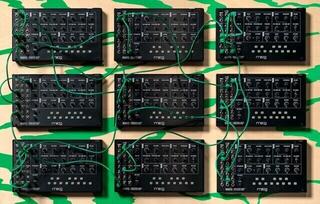
The keyboard instruments have both MIDI input and output, so you can control them from a computer and also use them to play other devices. The desktop Mother-32, DFAM, Subharmonicon and Labyrinth have 3.5 mm patch points for control voltage (CV) and gate signals, just like Eurorack modules. You can connect them to each other and to a modular system, while Mavis can be fitted directly into a Eurorack case. You'll also find these points on the Grandmother and Matriarch keyboard instruments. Audio comes out through a 6.3 mm jack, and most models also have a headphone output.
Who needs a sequencer built into the instrument?
A sequencer repeats a set pattern while you change the sound with the knobs, and it is the main way of playing desktop synthesizers. Mother-32 has a 32-step sequencer, DFAM has eight steps for rhythmic sounds, Subharmonicon has two four-step sequencers for polyrhythms and Labyrinth has two generative sequencers that gradually change the melody. Matriarch and Grandmother have an arpeggiator and sequencer alongside the keyboard. If you mainly play by hand, the keys and MIDI from a computer will be enough. You'll find bags, dust covers and stands for these instruments on the MOOG Keyboard Accessories page.