Albania
 Argentina
 Australia
 Austria
 Belgium
 Bosnia and Herzegovina
 Brazil
 Bulgaria
 Canada
 Chile
 Colombia
 Croatia
 Czech Republic
 Denmark
 Estonia
 Finland
 France
 Germany
 Greece
 Hungary
 Ireland
 Italy
 Latvia
 Lithuania
 Luxembourg
 Mexico
 Moldova
 Montenegro
 Netherlands
 New Zealand
 North Macedonia
 Norway
 Philippines
 Poland
 Portugal
 Romania
 Serbia
 Slovakia
 Slovenia
 South Africa
 Spain
 Sweden
 Switzerland
 Turkey
 Ukraine
 United Kingdom
 United States of America


Sewing / Embroidery
The sewing and embroidery category brings together sewing machines and overlockers, threads, needles, tools for measuring and cutting fabric, and cross stitch embroidery supplies. Machines come from Singer, Minerva, Texi, Husqvarna and Pfaff, machine needles from Schmetz and PRYM, and rotary cutters and mats from Olfa. For embroidery, there are Anchor threads and ready-made kits with a pattern, fabric and needle. This category is useful for repairing trousers, sewing your own clothes, patchwork or making an embroidered picture for the wall.
Sewing machine or overlocker: which do you need?
A sewing machine is the starting point: it joins pieces, inserts a zip, makes a buttonhole and handles T-shirt jersey with a stretch stitch. Look at the stitch programmes when choosing. A few utility stitches are enough for repairs and simple sewing, while decorative stitches and patchwork programmes are useful for decorations and quilting. For thick fabrics such as denim, there are machines with reinforced construction, such as the Singer Heavy Duty range.
An overlocker sews the seam, overcasts the edge and trims excess fabric in one go, preventing the edge from fraying. A coverstitch machine makes a covering stitch with two or three parallel rows of stitching, like those you see on a T-shirt hem. Neither replaces a regular sewing machine, so people who sew with knitted fabrics usually keep them side by side. You will find machines, overlockers and presser feet under sewing machines and accessories.
Which needle should you use for denim and which for knitted fabric?
Most domestic sewing machines use the 130/705 H needle system, and the Schmetz and PRYM needles in the selection also belong to this system. Needles differ in point and size. A universal needle is for woven fabrics, a rounded-tip needle (ball point) is for knitted fabrics so it does not break the loops, a jeans or denim needle is for denim, and a leather needle is for genuine leather and hard imitation leather. For soft imitation leather, the manufacturer Schmetz recommends trying a Microtex needle first, because the cutting point of a leather needle can damage the backing fabric. Numbers such as 80, 90 or 110 indicate thickness: a lower number for delicate fabrics, a higher one for denim and sailcloth. A twin needle sews two parallel lines of stitching at once.
A needle needs thread. For everyday sewing, use polyester threads that are strong and slightly stretchy, such as the Drima and Talia ranges. A 100 m reel is enough for repairs in one colour; a 500 m reel is useful in a colour you sew with often. If you want the seam to be inconspicuous, choose thread one shade darker than the fabric.
Scissors or a rotary cutter?
A rotary cutter looks like a pizza wheel and cuts fabric straight along a ruler, often through several layers at once. Always use it with a cutting mat, which protects both the table and the blade. For patchwork, where you cut dozens of identical squares, it is faster than scissors. Olfa cutters have a 45 mm or 60 mm blade, and the larger blade passes through a thicker layer more easily. Cutting supplies also include tailor's chalk or a marking pen, a tape measure and pins.
What do you need for cross stitch embroidery?
Cross stitch embroidery follows a chart on a fabric with a regular grid of holes, called aida. Each square on the chart represents one cross stitch. You need embroidery thread, a blunt needle with a larger eye, and a hoop or frame to keep the fabric taut. Anchor embroidery thread is sold in 8 m skeins and consists of six fine strands that you separate before stitching; on standard aida, you stitch with two.
If you are starting out, choose a ready-made kit from the kits and tapestry selection, containing a pattern, fabric, threads and a needle, and pick a smaller design. For your own design, choose embroidery threads by the colour numbers on the chart so the picture turns out as its designer intended.
5+1 Free
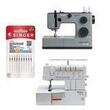
Sewing Machines and Accessories
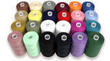
Threads for Sewing
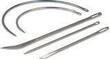
Needles
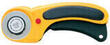
Cutters
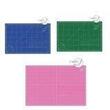
Cutting Mats
Patchwork Rulers
Embroidery Hoops and Frames
Sets and Tapestries
Embroidery yarns
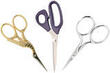
Scissors
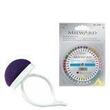
Pins / Pincushions
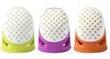
Thimbles for Sewing
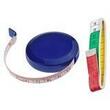
Tape Measures
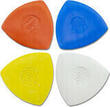
Tailors Chalks / Sewing Pens
Adhesives for Textiles
Accessories for Sewing
Popular Brands