Albania
 Argentina
 Australia
 Austria
 Belgium
 Bosnia and Herzegovina
 Brazil
 Bulgaria
 Canada
 Chile
 Colombia
 Croatia
 Czech Republic
 Denmark
 Estonia
 Finland
 France
 Germany
 Greece
 Hungary
 Ireland
 Italy
 Latvia
 Lithuania
 Luxembourg
 Mexico
 Moldova
 Montenegro
 Netherlands
 New Zealand
 North Macedonia
 Norway
 Philippines
 Poland
 Portugal
 Romania
 Serbia
 Slovakia
 Slovenia
 South Africa
 Spain
 Sweden
 Switzerland
 Turkey
 Ukraine
 United Kingdom
 United States of America



Headed Tambourines
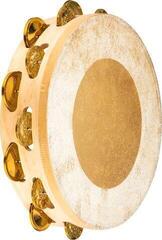
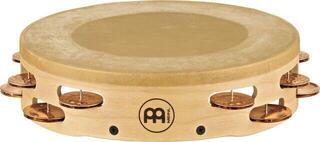
A headed tambourine is a frame drum with a stretched head and moving jingles in the frame. When struck, the head and jingles sound together to create a lively, penetrating tone. It is used in folk music, bands and rhythm education. When choosing, consider the diameter, frame depth, head material and number of jingles.
Which size should you choose?
| Diameter | Especially suitable for | What to expect |
|---|---|---|
| About 15 cm | Children, easier transport, gentler playing | A smaller instrument that is easier to control |
| About 20 cm | Band and live performance | A fuller sound and larger size |
With or without a head?
A headed tambourine sounds fuller and gives more emphasis to strikes, but is more sensitive to moisture and handling. If you prefer a purely jingling sound, see headless tambourines and jingle bars. For general playing, also compare classic tambourines, or mountable tambourines for attachment to a kit.
Caring for the head
A tambourine head is sensitive to moisture and temperature, so do not store it beside a radiator or in a damp environment. Play with control to avoid damaging the edge of the frame. A dry cloth is enough for routine maintenance.
What to check before choosing
- The diameter and depth of the frame so it fits comfortably in your hand.
- The material of the frame and head.
- The number and arrangement of the jingles.
- The holding method, such as a thumb hole.
You can find all types in the tambourines category. The range includes several models from Noicetone. Try how the instrument feels in your hand.
Headed tambourines differ from ordinary hand percussion by allowing you to play both the stretched surface and the jingles. This gives the frame drum more striking colours than a model without a head.