Albania
 Argentina
 Australia
 Austria
 Belgium
 Bosnia and Herzegovina
 Brazil
 Bulgaria
 Canada
 Chile
 Colombia
 Croatia
 Czech Republic
 Denmark
 Estonia
 Finland
 France
 Germany
 Greece
 Hungary
 Ireland
 Italy
 Latvia
 Lithuania
 Luxembourg
 Mexico
 Moldova
 Montenegro
 Netherlands
 New Zealand
 North Macedonia
 Norway
 Philippines
 Poland
 Portugal
 Romania
 Serbia
 Slovakia
 Slovenia
 South Africa
 Spain
 Sweden
 Switzerland
 Turkey
 Ukraine
 United Kingdom
 United States of America



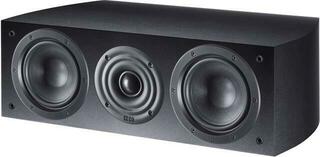
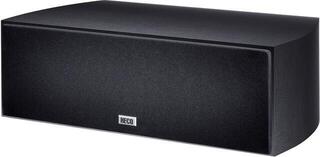
Hi-Fi Center speakers
The centre speaker in a home cinema generally reproduces dialogue and other sounds associated with the action in the middle of the screen. Its role is to create a cohesive front soundstage together with the left and right front speakers. When choosing one, it is therefore not enough to assess the speaker alone; you should also consider its compatibility with the amplifier, the other channels and the room. Correct placement and setup can improve dialogue intelligibility, but the result is also affected by room acoustics, the recording and the entire system.
Hi-Fi centre speakers in a home cinema
The centre channel is part of a multichannel system and is usually positioned as close to the screen as possible. In films and TV series, it helps anchor voices to the picture even when you are not sitting exactly in the middle. It may also reproduce music, ambient sounds and other parts of the soundtrack, so it should match the character of the front speakers without an obvious change in tonal balance.
A model from the same product range as the left and right front speakers can be a suitable starting point. However, this is not an absolute requirement: what matters is consistent sound, a suitable electrical load for the amplifier and the ability to balance the levels of the individual channels. If you are building your system gradually, compare the centre model with your existing Hi-Fi speakers and check the information provided by the manufacturer.
System compatibility and matching
Before buying, check whether your AV receiver or multichannel amplifier supports a centre channel. Compare the recommended connection, impedance and speaker requirements with the amplifier specifications. A power rating on its own is not enough without context; the conditions under which the manufacturer states it and the recommendations for the specific devices are what matter.
| Area to compare | What to check | Why it matters |
|---|---|---|
| Front channels | Product range, design and sound tuning | For smoother transitions of voices and effects across the front soundstage |
| Amplifier | Centre-channel support, impedance and connection method | To ensure that the system is connected in accordance with the manufacturers' instructions |
| Room | Space near the screen and distance from walls and equipment ventilation openings | So that the speaker does not obstruct the picture or interfere with the safe operation of the equipment |
| Setup | Channel level, distance, delay and crossover frequency | For time and volume alignment with the other speakers |
| Listening | Speech intelligibility from multiple seating positions | So you can assess the result in the actual room rather than from just one position |
If you are also choosing electronics, take a look at Hi-Fi amplifiers and preamplifiers. For a ready-made or gradually expandable solution, Hi-Fi systems can also be a useful starting point, but always check which channels and connection methods the particular system supports.
Centre-speaker placement
Place the speaker horizontally in the centre below or above the screen, depending on the available furniture space and the model's recommended orientation. Do not position its front edge unnecessarily deep inside a shelf, as the surrounding surfaces may affect the resulting sound. If the speaker is above or below ear level, angling it slightly towards the main listening position may help, provided that its design and safe placement allow this.
Do not cover the drivers or cabinet openings, and maintain the clearances specified in the manual. The speaker must be stable and must not obstruct the ventilation of the television, amplifier or other equipment. If you place it inside more enclosed furniture, follow the manufacturer's recommendations for the relevant cabinet type and then check the sound using typical content.
Setup for clear dialogue
After connecting the speaker, run the receiver's calibration if the device offers this function, and verify the result by listening. Automatic measurement can be a starting point, but it is not a substitute for checking. Pay particular attention to the speaker distance, centre-channel level, speaker size setting and crossover frequency according to the capabilities of your system.
Assess dialogue at different volume levels and from the places where people normally sit. If voices lack presence, do not adjust only the centre volume without careful consideration: first check its position, direction, any obstruction, calibration and balance relative to the left and right channels. Make adjustments in small steps and listen to the same familiar sample after each change.
Checklist before choosing and connecting
- Check that the amplifier or receiver supports a separate centre channel.
- Compare the impedance, recommended connection and other information in the manuals for both devices.
- Find out how the model matches the left and right front speakers in terms of sound and design.
- Measure the available space without blocking the screen, controls or equipment ventilation.
- Check the recommended speaker orientation and whether it can be positioned securely.
- Plan the cable routing so that the cables are not taut, damaged or in a walkway.
- After connecting, set the distance, channel level and crossover frequency according to the manual.
- Listen to speech and sound transitions between the front channels from multiple seating positions.
- Evaluate each setting change separately using familiar content.