Albania
 Argentina
 Australia
 Austria
 Belgium
 Bosnia and Herzegovina
 Brazil
 Bulgaria
 Canada
 Chile
 Colombia
 Croatia
 Czech Republic
 Denmark
 Estonia
 Finland
 France
 Germany
 Greece
 Hungary
 Ireland
 Italy
 Latvia
 Lithuania
 Luxembourg
 Mexico
 Moldova
 Montenegro
 Netherlands
 New Zealand
 North Macedonia
 Norway
 Philippines
 Poland
 Portugal
 Romania
 Serbia
 Slovakia
 Slovenia
 South Africa
 Spain
 Sweden
 Switzerland
 Turkey
 Ukraine
 United Kingdom
 United States of America



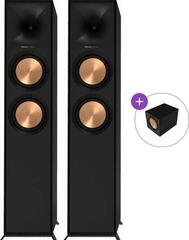
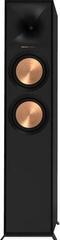
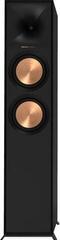
Hi-Fi Floorstanding speakers
Hi-Fi floorstanding speakers are designed to be placed directly on the floor and usually combine multiple drivers in a single cabinet. When choosing, consider the size of the room, positioning options, stability and connection to the amplifier. The resulting sound is affected by the distance from the walls, the listening position and the room’s furnishings. It is therefore important to assess the speakers as part of the entire system and the specific space.
Hi-Fi floorstanding speakers
A floorstanding design makes use of the cabinet’s height and does not require a separate stand. It is suitable where you can give both speakers a stable place on the floor and leave room to adjust them. In a small or crowded room, however, it can be difficult to maintain enough distance from walls, furniture and walkways.
When comparing models, check their dimensions including the base, construction, the manufacturer’s positioning requirements and the electrical specifications needed for connection. Neither the number of drivers nor the size of the cabinet alone determines whether a model is suitable. Assess the entire chain: the signal source, amplification, speakers, their position and the properties of the room.
Space, clearance and positioning
First decide where the left and right speakers will stand and where the main listening position will be. Both sides should have similar conditions wherever possible. If one speaker stands near a corner and the other in an open space, the room may affect their performance differently. Furniture, a large glazed surface or an opening into an adjoining room can also change the result.
In addition to the cabinet dimensions, allow space for connectors, cable routing and any toe-in. The speaker must not block doors, sockets or normal walkways. If you move it frequently, it will be harder to maintain the same setup and you will increase the risk of damaging the cable, floor or cabinet.
Distance from walls
Proximity to the rear and side walls can particularly affect the perception of low frequencies and spaciousness. There is no single correct distance for every model, so follow the manufacturer’s instructions and consider the location of the bass reflex port. Start with the most symmetrical arrangement possible and adjust the position gradually.
When fine-tuning, change only one thing at a time: the distance from the wall, the spacing or the toe-in. Use the same familiar recordings while doing so. Also consider the listening position, as sitting close to a wall can significantly change the impression of the whole system. Bare hard surfaces behave differently from carpets, curtains, bookcases or upholstered furniture, so the same model may not sound the same in every room.
Floorstanding type or another Hi-Fi solution
The Hi-Fi speakers category also includes bookshelf, stand-mounted, wall-mounted and other designs. A smaller cabinet may need a sturdy shelf, a suitable stand or mounting, while a floorstanding model occupies space directly on the floor. The deciding factor is the positioning you can realistically provide.
| Area | Floorstanding speakers | Other Hi-Fi solution |
|---|---|---|
| Positioning | They stand on the floor and need a stable surface as well as space around the cabinet. | Depending on the type, it requires a shelf, stand, bracket or other support. |
| Space requirements | You need to account for the base, height, toe-in and a safe walkway. | A smaller cabinet may make positioning easier, but a stand or mounting has its own requirements. |
| Stability | It depends on the base, the floor and correct installation of the supplied components. | It depends on the load capacity and stability of the shelf, stand or bracket. |
| Adjustment | Moving them can be less convenient, so it is worth checking the floor plan in advance. | Some types are easier to move, but they still require the correct position. |
| Amplifier | Compatibility is assessed from the specifications of the particular model. | The same principle applies; neither cabinet size nor type determines compatibility. |
The comparison does not establish a ranking of quality. The result depends on the particular product, electronics, room and setup. Therefore, do not choose a floorstanding model based only on size or assume that a larger cabinet will always be more suitable.
Amplifier and connection
Before connecting, compare the documentation for the speakers and amplifier. Check the impedance, power handling, connection method and operating warnings specified by the manufacturer. A single isolated figure is not enough to assess a combination, especially when manufacturers use different measurement conditions.
Choose Hi-Fi amplifiers and preamplifiers according to the entire system, the required inputs and the type of speakers. Check whether the speakers are passive or active and what connection the manufacturer specifies. With passive speakers, a preamplifier generally does not replace the required power amplifier stage, although the design of the particular device is decisive.
Use a cable and termination supported by the terminals on both devices. Maintain the same polarity for both channels and make connections according to the manufacturer’s instructions while the devices are switched off. Bare conductors must not bridge the terminals, and the cable must not be taut, bent sharply at the connector or routed across a walkway.
Stability and safe positioning
Check that the entire base rests on a firm, level floor and that the speaker does not wobble. Install the supplied feet, spikes, pads or base according to the instructions and with regard to the floor surface. Do not place a tall cabinet where doors, people or movable furniture may strike it.
Route cables away from paths where they could be caught. If children or pets are present, also consider the risk of impact or of the cable being pulled. Do not place unstable objects on the cabinet or improvise anchoring into it. Arrange complete Hi-Fi systems so that controls, connectors and power supplies remain accessible.
Checklist before choosing
- Measure the space for both speakers, including the base, toe-in and cables.
- Check whether you can create approximately symmetrical conditions on both sides.
- Read the manufacturer’s recommendations regarding distance from walls and cabinet openings.
- Check the strength of the floor and the suitability of the stabilising components.
- Plan cable routes away from doors, walkways and places where they could be caught.
- Find out whether the speakers are active or passive and what connection they require.
- Compare the electrical specifications of the speakers and amplifier in their documentation.
- Check the terminal type, supported cable termination and required inputs.
- When listening, use the same recordings at comparable volume levels.
During testing, pay attention to voice clarity, channel balance, instrument placement and the behaviour of low frequencies in the room. Treat listening in another space as information about those particular conditions, not as a guarantee of the same result at home. A practical choice is a model that you can position safely, connect correctly and fine-tune appropriately in your room.