 Albania
 Argentina
 Australia
 Austria
 Belgium
 Bosnia and Herzegovina
 Brazil
 Bulgaria
 Canada
 Chile
Chile
 Colombia
 Croatia
 Czech Republic
 Denmark
 Estonia
 Finland
 France
 Germany
 Greece
 Hungary
 Ireland
 Italy
Italy
 Latvia
 Lithuania
 Luxembourg
 Mexico
 Moldova
 Montenegro
 Netherlands
 New Zealand
 North Macedonia
 Norway
 Philippines
 Poland
 Portugal
 Romania
 Serbia
 Slovakia
 Slovenia
 South Africa
 Spain
Spain
 Sweden
 Switzerland
 Turkey
 Ukraine
 United Kingdom
 United States of America



Absorbent foam panels | page 12
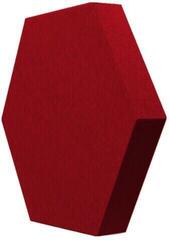
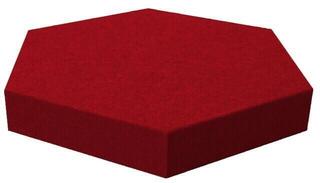
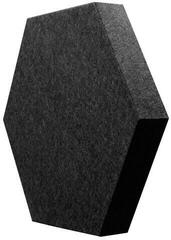
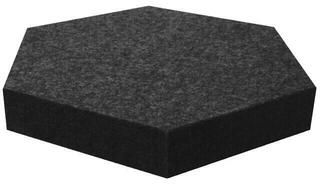
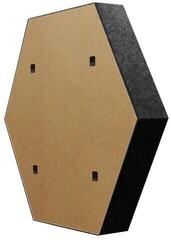
Foam absorption panels are a simple way to tame unwanted reflections, short echoes and excessive room reverb. Acoustic foam absorbs part of the sound energy, mainly at mid and higher frequencies, which can make voice, guitar, drums, podcasts and reproduced music clearer. Do not confuse it with complete soundproofing: foam panels improve acoustics inside a room but do not by themselves stop noise reaching neighbours or entering from outside.
Foam absorption panels for clearer room sound
Foam panels are used to manage reflections from hard walls, ceilings or desks. Products differ in size, thickness, profile, colour and material. Check the product type too: besides acoustic foam, this category contains absorbers, isolators, diffusers and self-adhesive items that do not perform the same function.
When to choose acoustic foam
Home studio and vocal or instrument recording
A microphone captures reflections from walls, a desk, windows and the ceiling together with the source. Foam panels may help manage early reflections around the recording position, but their effect depends on thickness, area and placement. Do not judge by surface shape alone; model data and room conditions matter.
Rehearsal room and music room
Well-placed foam may reduce some reflections that obscure vocals or instruments. It will not automatically reduce sound transmitted to adjacent rooms and does not replace structural soundproofing. Start with surfaces that return sound to players or microphones and check the result by listening or measurement.
Podcasting, streaming and office use
For speech, the nearest reflective surfaces around the microphone and desk are often the most relevant. Depending on its position, a panel behind a screen or on a side wall may reduce room tone in the recording. You do not need to cover the whole room; begin with specific reflection points.
How to choose foam panels
Choose by room and application
- Placement: identify the surface causing the troublesome reflection and check whether the panel is designed for wall or ceiling mounting.
- Material and type: items may use acoustic foam, PET or other materials and be labelled absorber, diffuser, isolator or self-adhesive element. Follow the data for the specific product.
- Thickness and size: greater thickness alone does not guarantee performance at a specific frequency. Compare material, construction, dimensions and manufacturer data.
- Profile, surface and colour: pyramid, wave or flat surfaces change construction and appearance; do not infer acoustic performance from shape alone.
- Quantity: check whether dimensions and price refer to one panel or a pack. The required amount depends on the room, reflective area and objective.
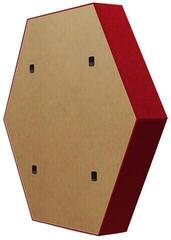
- Mounting: some products are self-adhesive, while others require adhesive or separate fittings. Always check the chosen model.
Start with a smaller area. This makes changes easier to assess and reduces the risk of uneven or excessive damping in part of the spectrum.
Where to place the panels
With studio monitors, begin at first-reflection points on the side walls and, where appropriate, the ceiling above the listening position. For recording, pay attention to hard surfaces close to the microphone. The right position depends on room dimensions, source direction and the listening or recording point.
Low-frequency problems are often noticeable in corners, but an ordinary foam panel is not automatically a bass trap. Without measurements or a stated application, do not infer performance only from thickness or corner placement.
Foam, wooden or other acoustic panels?
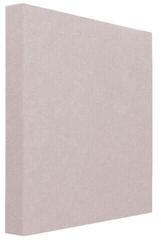
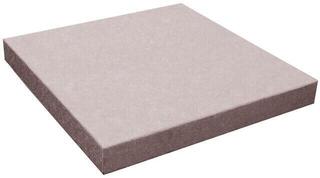
- Foam panels: choose by type, material, thickness, size and mounting. They suit targeted reflection control when the model data matches the intended use.
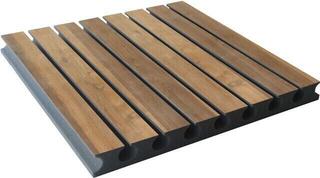
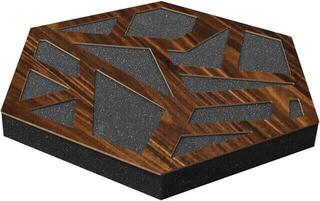
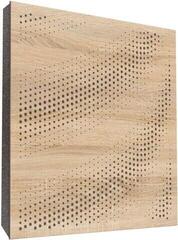
- Wooden absorption panels: may combine visible wood, plywood or HDF with another material. Check whether each model is an absorber or diffuser.
- Isolators, diffusers and bass products: these terms are not interchangeable. Isolation addresses sound transmission, diffusion scatters reflections and absorption takes up part of the sound energy.
Match the choice to early reflections around a microphone, reverb in a rehearsal room or listening accuracy. Without measurements and product data, the same result cannot be promised in every room.
Practical selection at Muziker
At Muziker you can choose foam absorption panels by brand, colour, size, profile and pack type. Mega Acoustic offers a large selection, with panels from Audiotec, Veles-X, Vicoustic and BS Acoustic also available. Choose according to whether you need to treat one work area, a recording corner or a larger music room. With suitable placement, foam panels may provide clearer, less tiring sound without rebuilding the entire room.