 Albania
 Argentina
 Australia
 Austria
 Belgium
 Bosnia and Herzegovina
 Brazil
 Bulgaria
 Canada
 Chile
Chile
 Colombia
 Croatia
 Czech Republic
 Denmark
 Estonia
 Finland
 France
 Germany
 Greece
 Hungary
 Ireland
 Italy
Italy
 Latvia
 Lithuania
 Luxembourg
 Mexico
 Moldova
 Montenegro
 Netherlands
 New Zealand
 North Macedonia
 Norway
 Philippines
 Poland
 Portugal
 Romania
 Serbia
 Slovakia
 Slovenia
 South Africa
 Spain
Spain
 Sweden
 Switzerland
 Turkey
 Ukraine
 United Kingdom
 United States of America



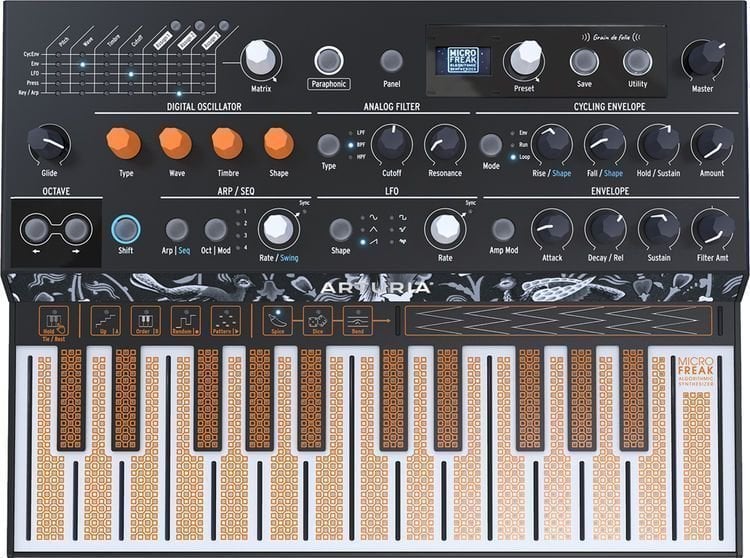
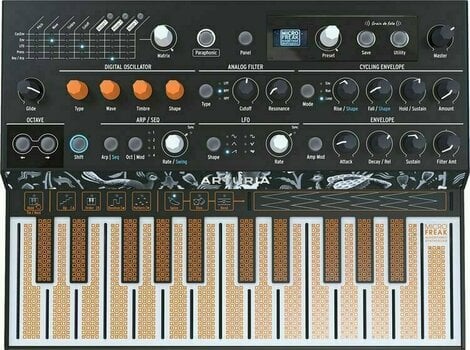
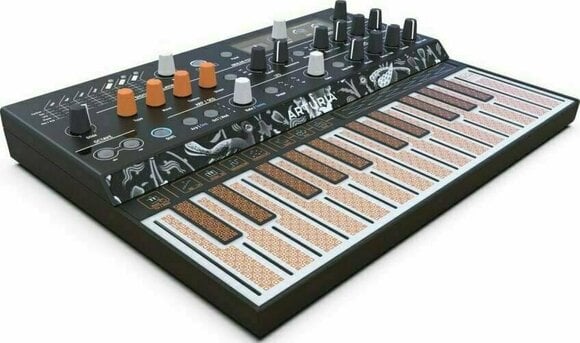




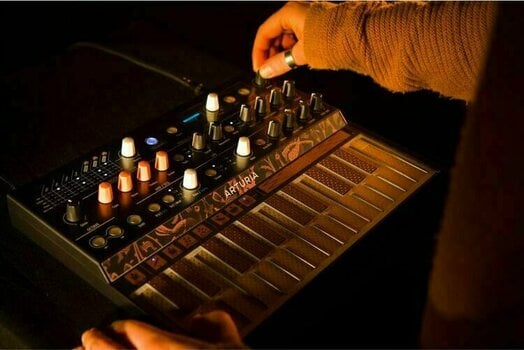
- Тype: Desktop Synthesizer
- Sound Engine: Digital Oscillators, Wavetable Synthesis
- Number of Keys: 25
- Keyboard Type: Polyphonic Aftertouch, Touch-Sensitive Capacitive Keybed
- Polyphony: 1
Arturia Microfreak Synthesizer
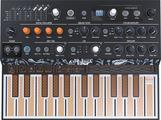
The Arturia MicroFreak is a hybrid hardware synthesizer that pairs a multi-algorithm digital oscillator with an analog SEM-style filter, all played through a flat 25-key capacitive PCB keybed with polyphonic aftertouch. It packs 21 oscillator modes, a 64-step sequencer with four automation lanes, and a 5×7 modulation matrix into a 1.02 kg chassis that runs from USB power.
- 21 digital oscillator modes covering wavetable, Karplus-Strong, virtual analog, granular, speech synthesis, and a vocoder
- Analog 12 dB/octave state-variable filter inspired by the classic SEM design, with self-oscillation
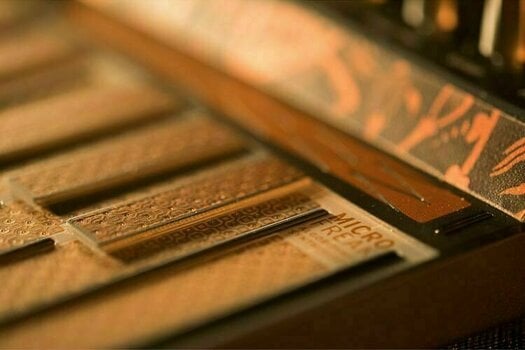
- 25-key flat capacitive keybed with polyphonic aftertouch for per-key expressive control
- 64-step sequencer with Spice & Dice randomizers and four parameter automation tracks per preset
- Compact 1.02 kg body powered via USB, with CV/Gate, MIDI, and clock I/O for studio and stage setups
Arturia MicroFreak Hybrid Synthesizer — A 25-Key Capacitive Keybed Meets 21 Digital Oscillator Modes
The Arturia MicroFreak is an experimental hybrid synthesizer that fuses a multi-algorithm digital oscillator engine with a true analog SEM-style filter, all driven by a flat capacitive PCB keybed. This model gives producers, sound designers, and live performers a single compact instrument capable of wavetable, virtual analog, granular, physical modeling, and speech synthesis tones. With 21 oscillator modes, polyphonic aftertouch, and a 64-step sequencer, this synth delivers an unusually wide sonic palette for its size and price tier.
Standout Features: A Capacitive Keybed, a Hybrid Engine, and a Mod Matrix
What separates the unit from conventional hardware synths is its flat, touch-sensitive 25-key capacitive PCB keybed that registers both velocity and polyphonic aftertouch based on the firmness and surface area of finger contact. The hybrid architecture routes a fully digital oscillator through a 12 dB/octave analog state-variable filter inspired by the classic Oberheim SEM, capable of low-pass, band-pass, and high-pass operation with self-oscillation. A 5-source by 7-destination modulation matrix with three user-defined routings, plus Spice and Dice randomizers in the sequencer, lets adventurous players generate patterns that surprise even the person programming them.
Oscillator Engine — 21 Modes, One Instrument
The digital oscillator is the heart of this synth and the reason it can sound like dozens of different synths in a single preset. Modes range from Basic Waves and Virtual Analog through Wavetable, Karplus-Strong physical modeling, Harmonic additive synthesis, and three granular engines, with seven algorithms adapted from Mutable Instruments' Plaits and three co-designed with Noise Engineering.
- Oscillator modes offer 21 digital algorithms covering wavetable, virtual analog, FM, granular, speech, vocoder, and physical modeling in one engine.
- Polyphony: monophonic, paraphonic, or unison up to 4 voices — switchable architecture for leads, stacked basses, or four-note chords
- Filter: analog 12 dB/octave state-variable LPF/BPF/HPF — SEM-inspired circuit that can self-oscillate for squelchy resonance
Keyboard & Expression — Polyphonic Aftertouch on a Flat PCB
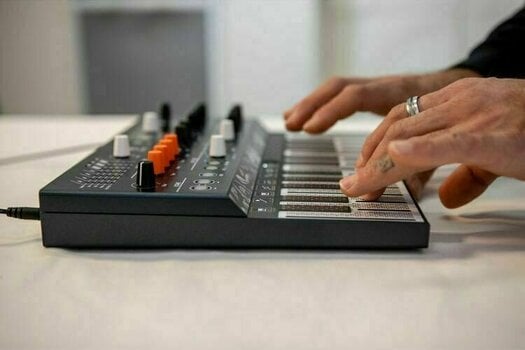
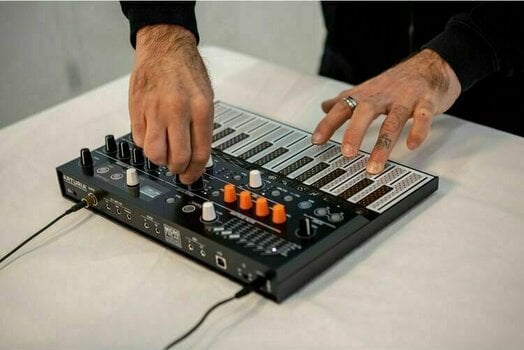
The 25-key capacitive keybed is its most divisive and most expressive feature. Each key senses pressure through the contact area of the fingertip, so rolling a finger flatter increases the aftertouch value, opening the door to per-note modulation that traditional moving keys cannot match.
- Keys Number: 25 capacitive PCB keys — flat, rugged, and immune to mechanical wear from transport
- Keyboard Type: Touch-Sensitive Capacitive Keybed — registers velocity from the moment of contact
- Aftertouch: polyphonic — each of the 25 keys can drive a different modulation target simultaneously
Sequencer, Modulation & Connectivity — Built for the Studio and the Stage
Beyond the oscillator and keybed, this instrument ships with a deep performance sequencer and a flexible modulation system that turns the front panel into a patchable playground. The 64-step sequencer stores two patterns per preset and four lanes of parameter automation, while the cycling envelope can act as either an envelope or a second LFO with variable rise and fall times.
- Sequencer: 64-step polyphonic sequencer with 4 automation tracks — long enough for full four-bar phrases with evolving parameter motion
- Envelope: ADSR plus Cycling Envelope — main ADSR shapes amplitude, while the cycling modulator doubles as envelope or LFO
- LFO: 1 LFO with Sine, Tri, Saw, Square, Random, and Slew Random shapes — syncable for tempo-locked movement
- Modulation: 5 sources × 7 destinations matrix with 3 user slots — virtually rewire the signal chain without cables
- Preset Memory: 512 slots including 320 factory presets — generous storage for both stock and user patches
- I/O: USB, MIDI in/out, CV/Gate/Pressure, analog clock in/out — integrates with DAWs, Eurorack, and vintage hardware
- Power: USB or included PSU — low-voltage digital oscillators mean no bulky power brick required
Who Is It For — Producers, Sound Designers, and Live Performers
The MicroFreak is the right choice for electronic producers, sound designers, and live performers who want a hybrid synth that can morph between wavetable leads, Karplus-Strong plucks, granular textures, and analog-filtered basses without switching instruments. Bedroom producers benefit from the 64-step sequencer with Spice and Dice randomizers, which can generate evolving patterns even when inspiration is low. Modular players will appreciate the CV/Gate and Pressure outputs that let the unit drive Eurorack voices, while the polyphonic aftertouch keybed makes it a capable controller for software instruments in a DAW. At 1.02 kg and USB-powered, it travels easily to gigs, jam sessions, and studio setups where space is tight.
Brand & Product Story — Arturia's Hybrid Mutiny
Arturia built this instrument as a deliberate departure from the analog monosynth trend, blending digital oscillator algorithms borrowed from Mutable Instruments' open-source Plaits engine with a true analog SEM-style filter. The instrument carries the phrase "Grain de folie" — a touch of madness — on its front panel, signaling its experimental intent. Since launch, ongoing firmware updates have expanded the oscillator count from the original 12 modes to 21, adding sample playback, granular processing, and a vocoder.
",description_sk: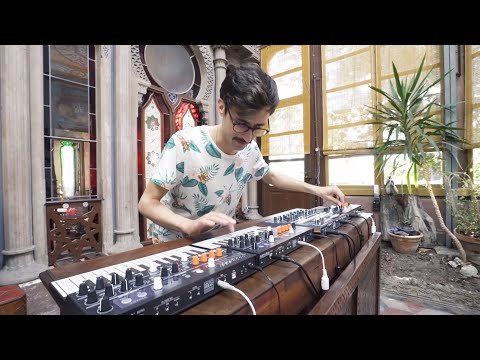
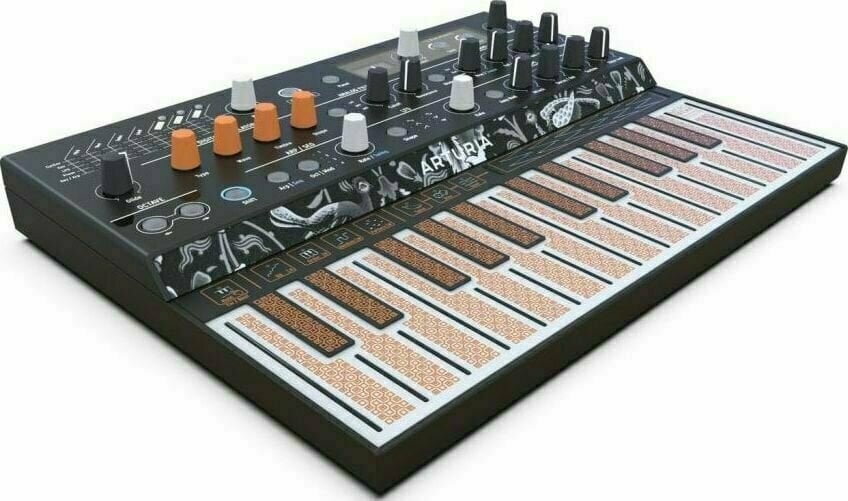
Number of Keys: 25
This instrument has 25 keys, equivalent to 2 octaves, providing a wide range of tones for a variety of musical applications.

Keyboard Type
- Polyphonic Aftertouch
- Touch-Sensitive Capacitive Keybed
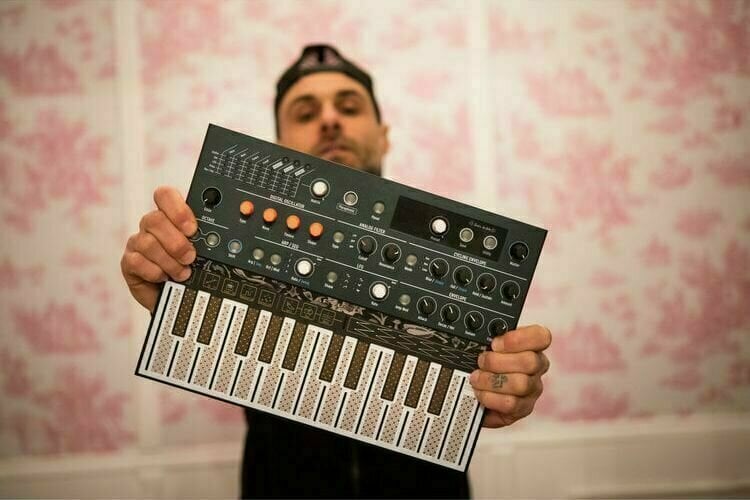
Aftertouch: Yes
Aftertouch technology on the keys allows musicians to add a new level of expression to their playing. When a key reaches the bottom of its stroke, the pressure exerted on the key can continue to be sensed and used to control various aspects of the sound, such as vibrato, volume, or tone modulation.

Polyphony: 1
This instrument is monophonic, meaning it plays only one note, which cannot be combined simultaneously with another.
LFO: 1
An LFO, or low frequency oscillator, brings electronic sound to life. It adds movement and interest to synthetic sounds and effects, playing an important role in both subtle synthesis and bold sound design. However, you won't hear the LFO itself because it acts as a modulator. This means that it does not directly affect the audio signal, but adjusts other parameters such as oscillator pitch and filter clipping.
Envelope
- ADSR
- Cycling Envelope
Oscillators: Yes
A powerful oscillator system allows users to create rich and variable sound textures. Oscillators can generate a variety of waveforms, including sine, square, triangle, and noise, allowing for creativity and experimentation.
Modulation: Yes
Modulation allows you to change different aspects of the sound in real time, opening up a wide range of creative possibilities. For example, it can affect the pitch of the sound, creating a vibrato effect, or it can change the amplitude of the signal, creating a tremolo effect. It can also adjust filtering to create smooth transitions between frequency bands and dynamic textures. Modulation can also be used to change the character of the sound depending on the time or intensity of playing, giving the sound a lively and moving character.
Sequencer: Yes
The sequencer provides musicians with a tool for composing and arranging music, allowing them to create and edit musical sequences. This feature allows you to record and play back repeating patterns. This makes it easy to create complex rhythms and melodies. The sequencer also allows you to layer different musical elements on top of each other, sync with other devices, and adjust parameters in real time. This flexibility makes the sequencer an invaluable tool for producing music, experimenting with new sounds and creating original compositions.
Arpeggiator: Yes
The Arpeggiator transforms chords into sequences of individual notes played in various rhythmic and melodic patterns. Instead of playing the chords as a harmonic whole, the Arpeggiator breaks the chords into individual notes and plays them sequentially according to the selected algorithm.
Headphone Output: Yes
The headphone output allows direct connection of headphones for private listening. This output provides a convenient way to enjoy the sound without disturbing others or ambient noise.
Inputs
- MIDI IN
- Clock IN (3,5 mm TS)
Outputs
- Headphone/Line Jack 6,3 mm TRS
- CV (CV, Gate, Pressure)
- MIDI OUT
MIDI Interface: Yes
It supports MIDI, allowing you to connect and communicate with other MIDI-compatible devices. This feature extends control and integration into the larger music environment, increasing flexibility and creativity in music creation.
Package Contents
- Adapter
- Manual

Тype
Desktop Synthesizer
Aftertouch
LFO
Envelope
ADSR (1 ), Cycling Envelope
Oscillators
Modulation
Arpeggiator
Effect Types
Number of Presets
MIDI Interface
Bluetooth
Sound Engine
Number of Keys
Keyboard Type
Polyphonic Aftertouch, Touch-Sensitive Capacitive Keybed
Key Size
Standard
Polyphony
Pitch Bend
No
Storage Medium
Colour
Headphone Output
Inputs
Pedal Inputs
USB MIDI
USB to Device
USB to Host
Filter
Analog State Variable Filter, 12dB/Octave, Low Pass, High Pass, Band Pass
Sequencer
Yes
UK/EU Power supply included
Width (cm)
31.1
Height (cm)
5.5
Depth (cm)
23.3
Weight
1 kg
Net Weight (kg)
1.02
Made in
China


All reviews come from verified customers who have purchased a product from us in the past.
AI summary of reviews
Based on the number of reviews: 54
Strengths
- Sound versatility: Customers appreciate the wide range of sound possibilities due to its unique oscillator and numerous oscillator types, allowing for extensive sound design and experimentation.
- Portability and size: The synthesizer is noted for its lightweight and compact design, making it easy to transport for live performances or on-the-go music creation.
- Unique keyboard: The non-traditional capacitive keyboard is highlighted as a key feature, offering new sonic possibilities and an engaging physical playing experience.
- Value for money: Many customers consider this synthesizer an excellent investment, offering high quality and extensive features at an affordable price point.
- USB power option: The ability to power the device via USB, including power banks, is a convenient feature that enhances its portability and usability.
Weaknesses
- USB connectivity issues: Some users reported occasional problems with USB connectivity on macOS, requiring a device restart to re-establish the connection.
- Lack of built-in effects: The absence of integrated effects is noted as a limitation, though customers suggest it can be easily compensated for with external software or pedals.
What customers repeat
Verdict
Documents
Instructions for use
Manufacturer information
Safety instructions
Please refer to the user manual for the specific safety instructions for this product.


