 Albania
 Argentina
 Australia
 Austria
 Belgium
 Bosnia and Herzegovina
 Brazil
 Bulgaria
 Canada
 Chile
Chile
 Colombia
 Croatia
 Czech Republic
 Denmark
 Estonia
 Finland
 France
 Germany
 Greece
 Hungary
 Ireland
 Italy
Italy
 Latvia
 Lithuania
 Luxembourg
 Mexico
 Moldova
 Montenegro
 Netherlands
 New Zealand
 North Macedonia
 Norway
 Philippines
 Poland
 Portugal
 Romania
 Serbia
 Slovakia
 Slovenia
 South Africa
 Spain
Spain
 Sweden
 Switzerland
 Turkey
 Ukraine
 United Kingdom
 United States of America



How to choose a cello and learn to play it
Have you always been drawn to the deep, singing tone of the cello and finally want to learn it? You can start at any age. We will tell you where the cello comes from, which one to choose, what accessories you need and how to make the first steps so you play sooner than you think.
A short history of the cello
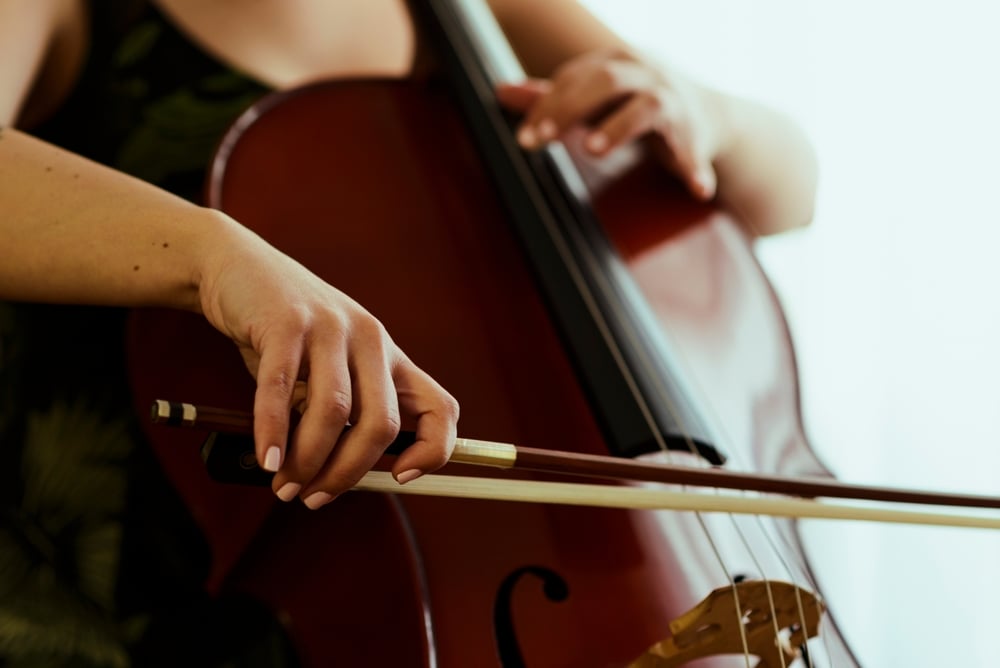
The cello emerged in the first half of the 16th century in northern Italy as part of the violin family. Its Italian name, violoncello, essentially means a little violone, that is a smaller relative of the large bass instrument of the time. At first it mostly served as an accompanying bass voice, but it gradually grew into a full-fledged solo instrument.
The turning point came with the Baroque. The six solo suites for cello by Johann Sebastian Bach are to this day a kind of bible for every cellist and proved the instrument can sing on its own. A fun fact to close with: the cello was originally held only between the calves, and the metal endpin it now rests on the floor with only became widespread in the 19th century. Its beautiful tone, close to the human voice, made it one of the most beloved instruments in classical music, and thanks to bands like Apocalyptica and 2Cellos it now sounds in rock and pop too.
What to consider before buying a cello
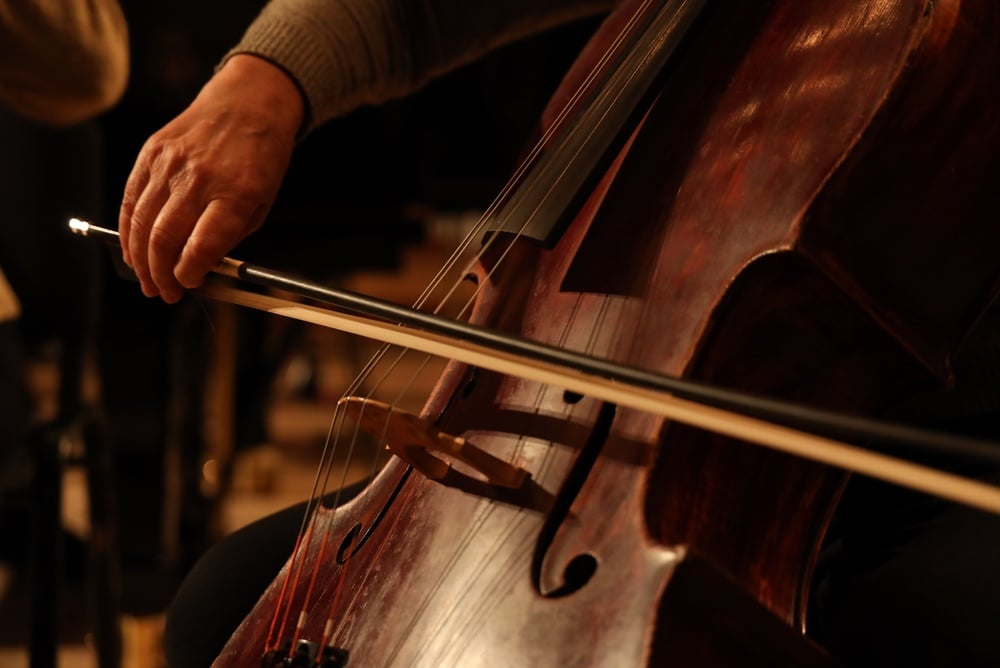
With your first cello you deal with three things: the right size, the quality of the instrument and the accessories. The cello belongs among the string instruments and, like the violin, it is made in several sizes. Most adults play the full 4/4 size, but if you are shorter or have shorter arms, a smaller size may feel more comfortable.
Do not overpay at the start. A quality student cello gives a clean tone, holds its tuning and can last you years of learning. The most practical option is to buy it as an outfit that already includes the bow and a case, so from day one you have everything and do not have to shop for extras.
What size cello is right for you?
You choose the size by height and arm length, not by age. With the right size you comfortably reach the whole fingerboard and sit upright, without stretching or hunching. Adults and taller teenagers almost always play the full 4/4, while smaller sizes suit shorter players and children. If you are exactly between two sizes, go for the smaller one, it plays more comfortably.
| Size | Player height | Who it suits |
|---|---|---|
| 1/4 | ~115–125 cm | smaller children |
| 1/2 | ~125–135 cm | older children |
| 3/4 | ~135–155 cm | teenagers and shorter adults |
| 4/4 | 155+ cm | most adults |
What accessories you need for a cello
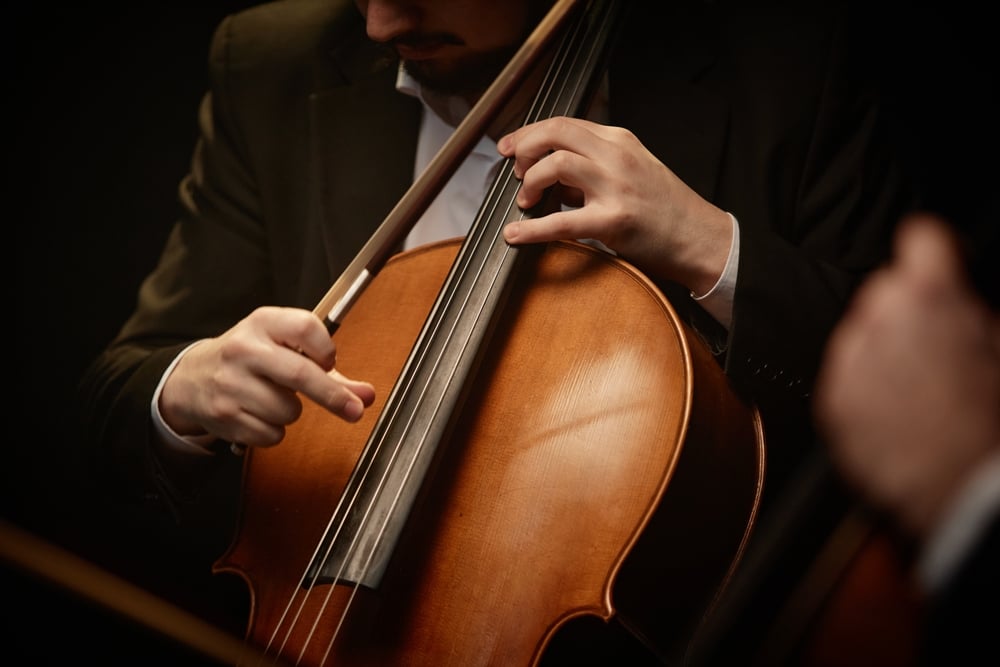
The instrument alone is not enough, you will use a few things right from the start. Most student outfits already include the bow and a case, the rest you buy as needed. The most important are rosin, without which the bow will not grip the strings and give a proper tone, and a sturdy case if you will carry the instrument.
| Accessory | What it is for |
|---|---|
| Cello with a bow | the basics, ideally as an outfit |
| Rosin | coat the bow with it, otherwise no tone |
| Case or bag | protects the instrument when carrying |
| Endpin stopper | keeps the cello from sliding on the floor |
| Tuner | tune the strings C, G, D, A |
| Spare strings | when one snaps |
Which cello for a beginner
For your first instrument bet on a proven brand with service and available parts. A classic for students and adult beginners is Stentor, whose Stentor cellos we have recommended for years thanks to the excellent price-to-performance ratio. They are well built, hold their tuning and come as complete sets, so it is a carefree start.
Deciding between an acoustic and an electric cello? For classical tuition and a full, natural tone go acoustic. But if you live in a flat or want to practise in the evenings without disturbing anyone, consider an electric (silent) cello with a headphone output. You play at full volume and almost nothing gets out.
How to learn to play the cello
Start with body posture and a clean tone, not with hard pieces. Once you master a straight, smooth bow stroke on the open strings, you have the most important basics behind you. The cello has no frets, so you find every note by ear, and it is exactly with intonation and correct posture that a teacher or a few opening lessons help most. The rest you can pick up on your own from videos and books; regularity is what matters.
| Step | What to do |
|---|---|
| Sitting and endpin | sit upright on the edge of the chair, cello between your knees, set the endpin to your height |
| Bow | hold it relaxed and draw it parallel to the bridge |
| Left hand | place fingers upright on the strings, thumb loose behind the neck |
| First tone | practise long tones on the open strings C, G, D, A |
| Intonation | find notes by ear; fingerboard stickers help at the start |
| Routine | rather 15 to 20 minutes daily than an hour once a week |
Frequently asked questions about the cello
Can you start the cello as an adult?
Absolutely, it is never too late to start playing. Adults learn in a focused way and with a clear goal, so with regular practice they progress very well. The first months are about patience, then it goes faster.
What size cello for an adult?
Almost always the full 4/4. Smaller fractional sizes are for children and shorter players. Height and arm length decide, not age.
Acoustic or electric cello?
For a full, natural tone and classical tuition go acoustic. Choose an electric (silent) cello if you want to practise quietly with headphones, for example in a flat.
Can you learn the cello on your own?
You will produce your first tone quickly, but for correct posture and intonation without frets a teacher helps a lot, at least at the start. The basics and regular practice you can manage on your own.
Choose your cello
The cello is an instrument for many years and with the right choice it will reward you with its tone for a lifetime. For a start the Stentor outfit in the right size is ideal. Have a look at the whole range of cellos, electric cellos and other string instruments, and do not forget rosin, strings, a bow and a case. With notes the article how to read sheet music helps, and if you are also considering the violin, check how to choose a violin.