Albania
 Argentina
 Australia
 Austria
 Belgium
 Bosnia and Herzegovina
 Brazil
 Bulgaria
 Canada
 Chile
 Colombia
 Croatia
 Czech Republic
 Denmark
 Estonia
 Finland
 France
 Germany
 Greece
 Hungary
 Ireland
 Italy
 Latvia
 Lithuania
 Luxembourg
 Mexico
 Moldova
 Montenegro
 Netherlands
 New Zealand
 North Macedonia
 Norway
 Philippines
 Poland
 Portugal
 Romania
 Serbia
 Slovakia
 Slovenia
 South Africa
 Spain
 Sweden
 Switzerland
 Turkey
 Ukraine
 United Kingdom
 United States of America


Hi-Fi Amplifiers and preamplifiers
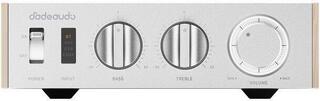
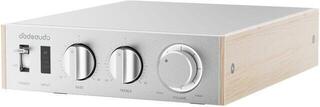
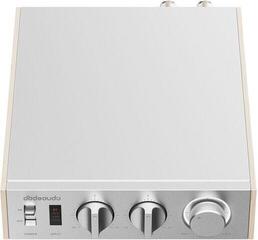
Hi-Fi amplifiers and preamplifiers connect music sources to speakers and determine how the signal is controlled and amplified within the system. An integrated amplifier combines several tasks in one device, while a preamplifier and power amplifier divide them between separate components. When choosing, you need to know your sources, speakers, room size, and preferred controls. A high figure for a single parameter is not enough to assess the entire system.
Hi-Fi amplifiers and preamplifiers: differences in their roles
Integrated amplifier
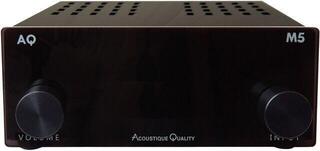
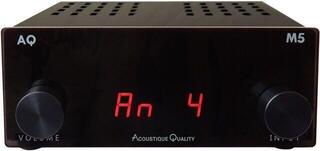
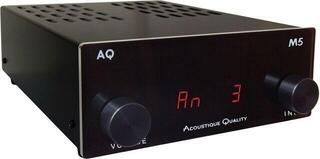
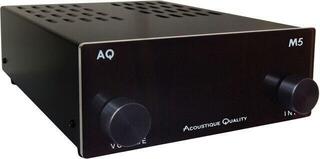
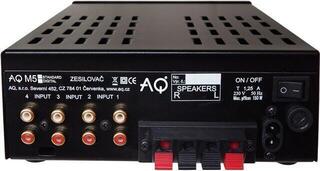
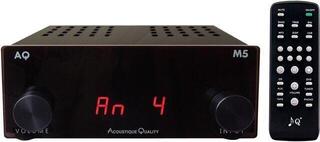
An integrated amplifier combines a preamplifier section and power stage in one chassis. You connect supported sources to it, select between them, adjust the volume, and then connect suitable passive speakers. It is practical if you want fewer separate devices and simpler cable management. However, the specific inputs, outputs, and supported features vary from model to model.
Preamplifier
A preamplifier receives signals from sources and lets you select them and control the volume, but it generally requires a separate power amplifier to drive passive speakers. It is suitable for a system in which you want to keep the control and power sections separate. The term preamplifier can cover different purposes, so check whether it is a main stereo component, a phono preamplifier, or another specialised type.
Power amplifier
A power amplifier takes the prepared signal from a preamplifier or compatible device and delivers it to the speakers. It usually does not provide the same range of source selection and everyday controls as an integrated model. With separate components, you need to check the connection between the preamplifier and power stage as well as their matching with the speakers.
Comparison of the three solutions
| Solution | What it combines or handles | When to consider it |
|---|---|---|
| Integrated amplifier | Source selection, volume control, and a power stage in one device. | You want a straightforward stereo system with fewer components. |
| Preamplifier | Selection and adjustment of the signal level before a separate power stage. | You are building a system from separate components or need a specific control function. |
| Power amplifier | The power section between a compatible preamplifier and passive speakers. | You already have suitable signal control and want a separate power section. |
Separate components are not automatically more suitable for everyone. They take up more space, require additional connections, and call for more thorough compatibility checks. An integrated solution can be more practical without compromising a carefully planned system. Decide according to how you will use it, not the number of boxes on the shelf.
Choosing according to music sources
Start with a list of the devices you will connect. For each one, note the output type and whether it requires a specific input. An analogue source, digital player, and turntable may not have the same requirements. If a product does not list a particular feature or input, do not assume that it is present.
Also consider how you will switch sources and use the controls. For everyday listening, you will appreciate clearly labelled inputs and accessible controls. If several members of the household will use the system, complicated reconnection before every listening session may be a bigger problem than the absence of a minor feature.
Matching the speakers and room
Your choice of amplifier must respect the requirements of the specific speakers. Compare the manufacturer's recommendations, connections, and conditions for safe operation; do not choose solely according to the maximum power rating. You can find an overview of suitable types among Hi-Fi speakers, but always assess matching at the level of specific models.
In a smaller room, precise volume adjustment, quiet operation, and sensible placement may be more important than a large power reserve. In a larger space, consider the listening distance and speaker sensitivity, but do not rely on a universal numerical formula. The amplifier needs a stable surface and ventilation in accordance with the instructions; do not enclose it in a tight space merely for the sake of the system's appearance.
Connecting it to the complete Hi-Fi system
The amplifier is the centre of the signal chain, not a separate island. When planning, return to the full Hi-Fi systems category and check the order of sources, amplification, and speakers. A suitable cable can be used for an analogue source connection; choose Hi-Fi AUX cables only if their connectors and purpose match both devices.
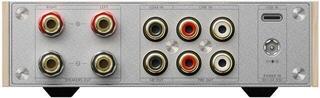
Before making connections, switch off the devices according to the manufacturer's instructions and route the cables so that they are not under tension. Do not confuse speaker outputs with line-level outputs, and do not connect terminals simply because they fit together mechanically. If a combination of components is unclear, ask a specialist to confirm compatibility.
What to check before choosing
- Decide whether you want an integrated amplifier or a separate preamplifier and power stage.
- List all sources and the required input for each one.
- Check compatibility with the specific speakers according to the documentation from both manufacturers.
- Consider the room size, listening distance, and usual volume level.
- Plan the location, ventilation, access to connectors, and cable routing.
- Compare everyday controls and the features you will actually use.
The most practical amplifier is one that accepts your sources, works safely with your speakers, and fits into the space without restricting ventilation. If you do not know which part of the signal chain your device already contains, check this first. This will help you avoid both duplicated functions and a missing power stage.