Albania
 Argentina
 Australia
 Austria
 Belgium
 Bosnia and Herzegovina
 Brazil
 Bulgaria
 Canada
 Chile
 Colombia
 Croatia
 Czech Republic
 Denmark
 Estonia
 Finland
 France
 Germany
 Greece
 Hungary
 Ireland
 Italy
 Latvia
 Lithuania
 Luxembourg
 Mexico
 Moldova
 Montenegro
 Netherlands
 New Zealand
 North Macedonia
 Norway
 Philippines
 Poland
 Portugal
 Romania
 Serbia
 Slovakia
 Slovenia
 South Africa
 Spain
 Sweden
 Switzerland
 Turkey
 Ukraine
 United Kingdom
 United States of America



Horns
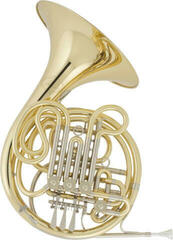
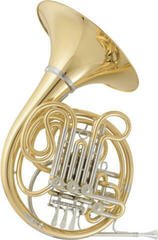
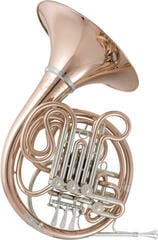
The French horn combines a wide bell with long coiled tubing, so it responds sensitively to your embouchure and breath control. A single F or Bb horn may be lighter, while a double F/Bb gives you two lengths of tubing controlled by a thumb valve. Your choice depends on your school, physical strength and repertoire, not only on the number of valves.
Single versus double horn
A single model is lighter and may suit you as a younger player. A double horn expands your options for intonation and fingering, while also placing more strain on your left hand. A compensating system is another design; consult your teacher before switching.
The valve layout must fit your hand
Your thumb must reach the change valve without twisting, and the little-finger hook must not cause pressure. The rotors should return quickly and quietly. When testing it, play long notes in the middle register first, then test the high register, where embouchure errors can easily mask mechanical problems.
Mouthpiece and right hand
The rim diameter affects your comfort, while the cup shape affects resistance and tone colour. Your right hand in the bell adjusts the sound and intonation, so the bell size and body position must suit you. Hunting signal instruments have a different role; you can find them among hunting horns.
Where it belongs in the wind section
The horn connects the tone colours of woodwind and brass instruments, but its technique places it among the brass. If you are looking for a more direct, bright tone and a valve instrument for a wind band, compare the trumpet, cornet and flugelhorn family.
Choose the system according to your teacher and check that you can support the instrument and reach the thumb valve without tension.