Albania
 Argentina
 Australia
 Austria
 Belgium
 Bosnia and Herzegovina
 Brazil
 Bulgaria
 Canada
 Chile
 Colombia
 Croatia
 Czech Republic
 Denmark
 Estonia
 Finland
 France
 Germany
 Greece
 Hungary
 Ireland
 Italy
 Latvia
 Lithuania
 Luxembourg
 Mexico
 Moldova
 Montenegro
 Netherlands
 New Zealand
 North Macedonia
 Norway
 Philippines
 Poland
 Portugal
 Romania
 Serbia
 Slovakia
 Slovenia
 South Africa
 Spain
 Sweden
 Switzerland
 Turkey
 Ukraine
 United Kingdom
 United States of America


Line Array Systems
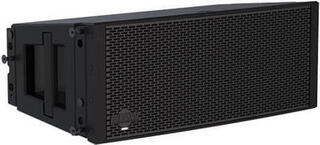
A line array system combines multiple compatible loudspeaker enclosures in a vertical array so a sound engineer can control audience coverage differently than with one conventional PA speaker. It is used for concerts, events and fixed installations where sound direction must be designed according to the shape of the venue and listening areas. The modular design allows the configuration to change, but every element must belong to an approved system and the setup must be calculated, mechanically secured and correctly configured. When choosing, you therefore address not only sound, but also flying or ground support, amplification, signal processing, cabling and safe operation.
When a conventional PA speaker is not enough
Such a system is chosen for a specific audience and venue. Distance to the first and last rows, auditorium width, mounting height and areas where sound should not be directed are important. The aim is usable and predictable coverage, not automatically the highest possible volume. A design for an open area will differ from one for a hall with a balcony.
For a smaller event, a simpler PA system or column system may be sufficient. A line array helps only when its directionality, number of elements and height suit the task. Without the right configuration, even a more expensive system can cover a space unevenly.
Comparison of sound reinforcement approaches
| Solution | Typical advantage | What to check |
|---|---|---|
| Line array | Modular vertical array and coverage design for more complex or longer listening areas | System calculation, compatibility, mechanics, processing and operation |
| Conventional PA speakers | Simpler deployment for an appropriately sized venue | Dispersion angle, placement and required bass reinforcement |
| Column system | Compact setup and faster handling when appropriately used | Coverage, inputs and the limits of the particular configuration |
| Complete PA system | Basic system components selected to work together | What the package actually includes and whether it suits the number of sources |
Active and passive systems
An active element has an amplifier built in; a passive one needs a suitable external power amplifier. In a larger system, this affects power distribution, signal cabling, the weight of flown parts and servicing. If you build a system from passive modules, choose power amplifiers solely according to the loudspeaker manufacturer's requirements and the planned wiring.
Do not combine elements merely because they look mechanically similar. Control of individual bands, protection limiters, timing and crossover frequencies are often part of the system design. The order and method of interconnection are equally important. Manufacturer instructions take precedence over a general rule.
Mechanics and safety
Only a qualified person may fly a system above people. You need approved frames, connecting hardware, safety devices and an assessment of the load-bearing structure. The permitted configuration depends on the particular modules and angles between them. A missing or non-original mechanical part cannot be replaced by improvisation.
- Verify the maximum permitted number and arrangement of elements according to the documentation.
- Before every installation, inspect frames, pins, suspension points and safety devices.
- Do not allow unauthorized persons in the space beneath a raised system.
- Provide strain relief for cables so they do not load connectors or obstruct mechanical movement.
- For ground-stacked systems, use only designated bases or frames and maintain stability.
Smaller PA speakers can be mounted on a stand with suitable fixing, but a stand is not a substitute for line-array rigging. You can find conventional options among PA speaker stands. Always compare permitted load, mounting type and the manufacturer's conditions.
Coverage design and setup
The number of modules and angles between them are determined by the geometry of the venue and data for the specific system. Preliminary simulation helps estimate where the array will direct sound, but the result must be verified on site through measurement and listening. Adding elements later without recalculation can change both mechanical load and resulting coverage.
Signal processing
A system processor can provide crossover bands, time alignment, equalization and protection limiting according to manufacturer presets. Suitable tools include crossovers and loudspeaker systems, but the specific device must be intended for the setup. A universal setting without measurement is not a safe shortcut.
Subwoofers and crossover bands
The bass section is designed together with the main array. Subwoofer placement affects low-frequency coverage and stage space. Active and passive solutions require different power and amplification; the presence of a subwoofer alone does not guarantee the same result in every venue.
Signal path and operation
List all sources, the number of mixer outputs, processor, amplifiers and individual loudspeaker branches. Label every link and route cables so they are not reconnected blindly when the programme changes. A digital mixer can make it easier to save scenes and work with multiple output paths; however, its capabilities must meet the system's requirements.
After connection, begin by checking every branch at a low level. Verify polarity, direction and that every module receives its intended signal. Only then proceed to system setup. A limiter protects equipment within the configured conditions, not against incorrect cabling or an improper mechanical configuration.
What the complete plan must include
- Compatible main-array modules and, where applicable, the bass section.
- Specified amplification, processor and control software.
- Frames, connecting hardware and safety devices for the chosen installation method.
- Signal, speaker and power distribution with suitable protection.
- Transport cases, carts and storage space.
- Design, installation, measurement and operation by a qualified team.
A line array is a system, not an individual cabinet chosen by one parameter. Only after considering the venue, mechanical options and required coverage should you compare complete compatible configurations. That is how you determine whether a modular array makes sense for the given event.