 Albania
 Argentina
 Australia
 Austria
 Belgium
 Bosnia and Herzegovina
 Brazil
 Bulgaria
 Canada
 Chile
Chile
 Colombia
 Croatia
 Czech Republic
 Denmark
 Estonia
 Finland
 France
 Germany
 Greece
 Hungary
 Ireland
 Italy
Italy
 Latvia
 Lithuania
 Luxembourg
 Mexico
 Moldova
 Montenegro
 Netherlands
 New Zealand
 North Macedonia
 Norway
 Philippines
 Poland
 Portugal
 Romania
 Serbia
 Slovakia
 Slovenia
 South Africa
 Spain
Spain
 Sweden
 Switzerland
 Turkey
 Ukraine
 United Kingdom
 United States of America



Nylon Strings for Classical Guitars | page 2
Nylon strings give a classical guitar a softer feel under the fingers and a tone suited to classical music, flamenco and fingerstyle. When choosing a set, compare its tension, the material of the treble strings, the construction of the bass strings and the method of attachment at the bridge. Lower tension may feel more comfortable, while higher tension provides firmer resistance; neither option is automatically better. The instrument manufacturer's recommendation and your playing technique are what matter.
Why classical guitars need nylon strings
A classical guitar is designed for a different level of tension than most steel-string acoustic guitars. Do not use a steel acoustic set as a substitute unless the manufacturer expressly allows it. It can place excessive strain on the neck, bridge and soundboard. If you are unsure what type of instrument you have, check its designation and bridge construction before buying.
How to choose the tension
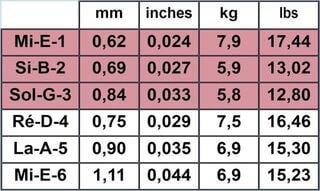
Manufacturers use terms such as light, normal or hard tension, but the actual tension may vary between brands. Lower-tension strings are easier to press and may suit a more sensitive touch. Normal tension is a practical starting point if you do not yet know what works for you. Higher tension offers greater resistance and may suit a player with a stronger right-hand attack, provided the instrument supports it.
| Tension | Feel under the fingers | When to consider it |
|---|---|---|
| Lower | More yielding feel | Sensitive fingers, gentler playing or less pressure from the left hand |
| Normal | Balanced resistance | A versatile starting point and switching between techniques |
| Higher | Firmer response | Stronger attack; always after checking the manufacturer's recommendation |
When changing tension, listen for clarity of tone and pay attention to how the strings feel. If playing becomes strenuous, the strings buzz or the instrument behaves differently, do not rely solely on the label on the packaging. Returning to the original set or consulting a guitar technician may be more appropriate.
Treble and bass strings are not the same
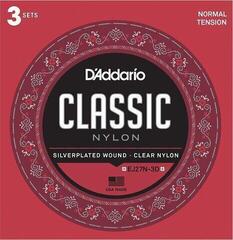
Treble strings are usually made from clear or coloured nylon, or another synthetic material specified by the manufacturer. Bass strings have a flexible core wrapped in metal winding. Material and diameter affect both response and playing feel, but specifications cannot be compared by appearance alone. The simplest option is to start with a complete classical guitar string set in which the treble and bass strings are designed to work together.
Choosing by playing style
A beginner may find a more yielding set suitable if it helps them play cleanly without excessive pressure from the left hand. A player of classical repertoire may prefer a balanced response between melody and bass, while a firmer feel can be important for a strong rhythmic attack. The name of the genre alone does not determine the choice. Consider your own technique, the force of your attack and the response of the particular guitar.
A set or an individual string
If a recently fitted string becomes damaged, you can replace it from the individual classical guitar strings category. Check that the material, tension and gauge match so the new string behaves similarly to the rest of the set. If the strings are older, dirty or uneven in tone, replacing the complete set is more suitable.
What to expect after replacement
New nylon strings stretch after fitting and need more frequent tuning during the first few days. Secure them neatly and safely at both the bridge and the tuning machines, leaving only an appropriate number of wraps. Settle the strings gradually without pulling them sharply. Once the tuning stabilises, make smaller adjustments and check each note separately.