 Albania
 Argentina
 Australia
 Austria
 Belgium
 Bosnia and Herzegovina
 Brazil
 Bulgaria
 Canada
 Chile
Chile
 Colombia
 Croatia
 Czech Republic
 Denmark
 Estonia
 Finland
 France
 Germany
 Greece
 Hungary
 Ireland
 Italy
Italy
 Latvia
 Lithuania
 Luxembourg
 Mexico
 Moldova
 Montenegro
 Netherlands
 New Zealand
 North Macedonia
 Norway
 Philippines
 Poland
 Portugal
 Romania
 Serbia
 Slovakia
 Slovenia
 South Africa
 Spain
Spain
 Sweden
 Switzerland
 Turkey
 Ukraine
 United Kingdom
 United States of America



Overdrives | page 6
Overdrive effects add tube-like breakup, longer sustain and touch-sensitive response without completely masking the character of your guitar and amp. An overdrive pedal can push a clean channel, create blues drive, handle rock rhythm or work as the first stage before another distortion. Unlike more aggressive distortion, it responds strongly to playing dynamics. A lighter touch or lower guitar volume cleans up the tone, while a harder attack adds gain and compression.
How to choose an overdrive effect
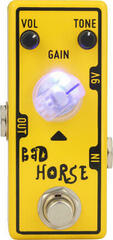
Focus on gain or drive, tone or EQ and level or volume. Gain sets the amount of distortion, tone shaping controls brightness, mids and bass, and level determines whether the pedal matches the bypassed volume or pushes the amp. Low to medium gain is enough for natural breakup; heavier rock benefits from more gain range or separate bass and treble controls.
The combination of amp and pickups matters too. Tube amps usually react well to an overdrive used as a boost, while transistor or modelling amps may benefit from fuller EQ and smoother highs. Humbuckers often pair well with a transparent circuit and tight bass. A mid-focused pedal can help single coils cut through the band.
Overdrive, distortion, fuzz or boost?
| Effect type | Sound | Typical use |
|---|---|---|
| Overdrive | Softer clipping, dynamic response, natural drive | Blues, rock, country, indie and pushing an amp |
| Distortion | Harder, more compressed high-gain distortion | Hard rock, punk, metal riffs and a main distorted sound |
| Fuzz | Coarse, grainy or almost synthetic distortion | Garage rock, stoner, psychedelia and strong vintage textures |
| Booster | Higher signal level with possible mild coloration | Solos, louder passages and driving an amp or another gain pedal |
Choose overdrive when distortion should stay articulate and respond to your picking hand. Distortion provides a firmer base from a clean channel, fuzz is deliberately rougher, and a booster mainly changes signal level. With two gain pedals, their order shapes what enters the second stage.
Sound for different styles and rigs
For blues and classic rock, look for natural compression, good response to the guitar volume and useful mids. A mid-focused overdrive can lift a solo and tighten bass, while a transparent type retains more of the amp's original tone. Indie and alternative players may prefer lower gain, broad tone control and compatibility with modulation and ambience effects.
In hard rock and metal, overdrive is often not the main source of distortion. Low gain and high level before a high-gain channel can tighten the low end, sharpen attack and improve riff definition. At home, also test the tone at low volume because bright pedal and amp settings can become harsh. When stacking gain pedals, test both orders and match their output levels first. A booster before overdrive usually adds saturation; after it, the volume can rise more if the amp still has clean headroom. This also reveals which stage adds colour, compression or unwanted noise.
What to check before buying
- Gain range: a narrow range suits one specific sound; a broad range adapts to more guitars and amps.
- Tone controls: one tone knob is quick, while two- or three-band EQ allows more precise adjustment.
- Volume headroom: a pedal used as a boost needs enough level above rhythm volume.
- True bypass or buffer: true bypass removes the circuit when off; a buffer can help with long cables and larger boards.
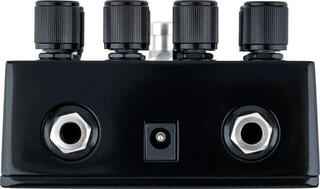
- Power and size: check voltage, polarity, current draw and space between neighbouring pedals.
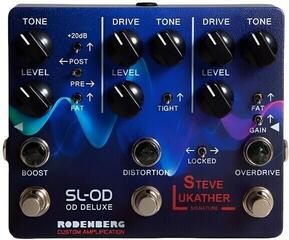
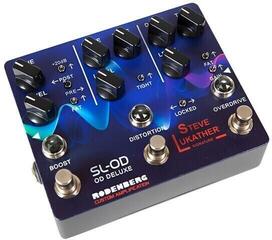
- One or two footswitches: the second switch may control boost, higher gain or another mode.
Placing overdrive in the signal chain
It usually sits before modulation, delay and reverb, but both orders are worth testing when stacking gain. A booster before overdrive adds distortion; after it, the volume may rise more, depending on amp headroom. Start with low gain on both pedals and match levels gradually to hear which stage adds colour, compression or noise. Use your own guitar and a similar amp to the one used in rehearsal. Humbuckers may need less gain and tighter bass, while single coils can benefit from upper mids. Check the treble at low home volume too, because a stage setting may sound thin or harsh when quiet.
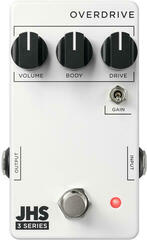
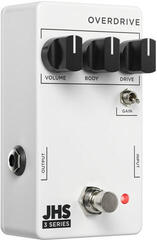
A simple three-knob overdrive is enough for one core sound. If you change guitars, amps or roles in a band, broader EQ, selectable clipping or two gain stages may be more useful. Choose by how the pedal responds in your rig, not just by the amount of distortion in an isolated demo. A simple three-knob pedal covers one core sound. Players who change guitars, amps or band roles may benefit from broader EQ, selectable clipping and two gain stages. Judge the response of the complete rig rather than the maximum distortion in an isolated demo.