 Albania
 Argentina
 Australia
 Austria
 Belgium
 Bosnia and Herzegovina
 Brazil
 Bulgaria
 Canada
 Chile
Chile
 Colombia
 Croatia
 Czech Republic
 Denmark
 Estonia
 Finland
 France
 Germany
 Greece
 Hungary
 Ireland
 Italy
Italy
 Latvia
 Lithuania
 Luxembourg
 Mexico
 Moldova
 Montenegro
 Netherlands
 New Zealand
 North Macedonia
 Norway
 Philippines
 Poland
 Portugal
 Romania
 Serbia
 Slovakia
 Slovenia
 South Africa
 Spain
Spain
 Sweden
 Switzerland
 Turkey
 Ukraine
 United Kingdom
 United States of America



Strings for Acoustic Guitar | page 2
Acoustic guitar strings affect tone colour, volume and the resistance you feel beneath your fingers. When choosing, compare the type of instrument, scale length, tuning, material and the gauge of the entire set. A lighter set can make fretting and bending notes easier, while a heavier set usually feels firmer during forceful accompaniment. Compatibility with the guitar is what matters, not just the number printed on the pack.
A steel-string acoustic is not a classical guitar
This category is intended mainly for acoustic guitars designed for metal strings. Nylon strings belong on a classical guitar and have a different construction, tension and attachment method. Do not fit a metal acoustic set to a classical guitar unless the manufacturer expressly permits it; the higher tension could damage the instrument. Before buying, check the guitar's designation and the manufacturer's recommendation.
How to choose a gauge
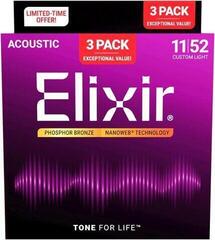
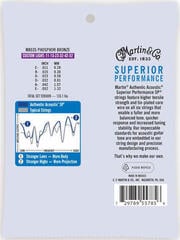
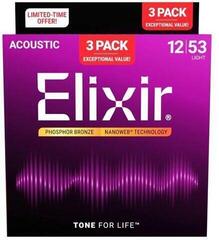
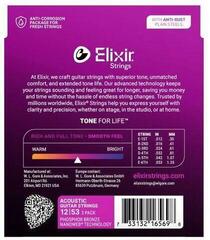
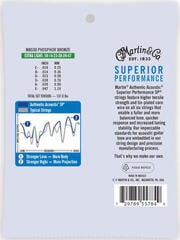
The number .009, .010, .011 or .012 usually indicates the diameter of the thinnest string in inches. It is not a uniform scale of stiffness: two sets with the same first string can use different gauges for the bass strings. .009 acoustic strings are a starting point for players seeking a lighter feel; between these and a firmer option, you will find .010 sets and .011 sets. A .012 set feels firmer and often suits rhythm accompaniment if the guitar is set up for that tension. .013 strings offer even more resistance.
| Set gauge | What the player feels | What to consider |
|---|---|---|
| Lighter | Less resistance when playing chords and bending notes | May be more sensitive to a very forceful attack |
| Medium | A balance between comfort and firmness | A good starting point for varied playing |
| Heavier | More resistance and a stable feel during accompaniment | Check the manufacturer's recommendation and the guitar's setup |
When changing gauge, monitor the action and tuning in different positions. The guitar may need adjustments to the neck, nut or intonation. If you use a lower tuning, a firmer set can reduce an excessively loose feel, but there is no universal gauge.
Material and tonal character
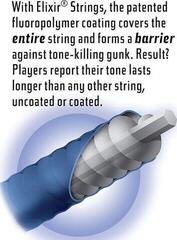
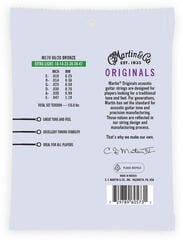
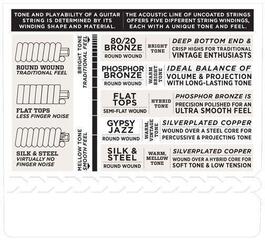
Steel acoustic sets are available in materials such as phosphor bronze or an alloy labelled 80/20 bronze. The material affects the tone colour and how the sound develops, but the result also depends on the wood, construction, age of the strings and playing style. Coated strings may resist dirt and sweat for longer, although they can also feel different beneath the fingers. When comparing options, follow the description of the specific set rather than a promise that one material is best for everyone.
Fingers, pick and playing style
Gentle fingerpicking often benefits from an easy-to-control set and a clear response from each string. Forceful accompaniment with a pick places greater demands on stability under attack. If you alternate between these techniques, look for a compromise that lets you play a clean chord without unnecessary effort while preventing the strings from hitting the frets when you strike harder.
Six-string and twelve-string guitars
A twelve-string guitar uses pairs of strings, so it needs a specially configured set. In the 12-string sets category, you will find gauges designed for this type of instrument. Before replacing them, note the tuning of the pairs and change the strings gradually so that their order is easier to follow.
When a single string is enough
You can replace a recently fitted string that has broken from the selection of individual acoustic guitar strings. If the other strings are tarnished, rough or no longer tune evenly, replace the entire set. Keeping strings of the same age helps maintain a more consistent feel and sound across the instrument.