 Albania
 Argentina
 Australia
 Austria
 Belgium
 Bosnia and Herzegovina
 Brazil
 Bulgaria
 Canada
 Chile
Chile
 Colombia
 Croatia
 Czech Republic
 Denmark
 Estonia
 Finland
 France
 Germany
 Greece
 Hungary
 Ireland
 Italy
Italy
 Latvia
 Lithuania
 Luxembourg
 Mexico
 Moldova
 Montenegro
 Netherlands
 New Zealand
 North Macedonia
 Norway
 Philippines
 Poland
 Portugal
 Romania
 Serbia
 Slovakia
 Slovenia
 South Africa
 Spain
Spain
 Sweden
 Switzerland
 Turkey
 Ukraine
 United Kingdom
 United States of America



Tongue Drums
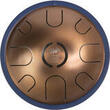
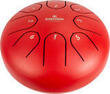
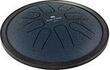
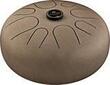
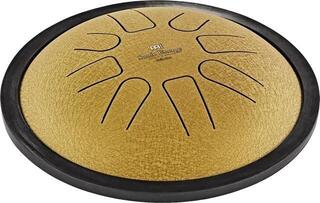
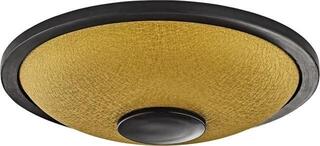
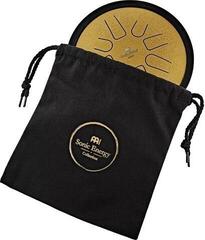
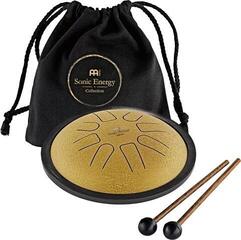
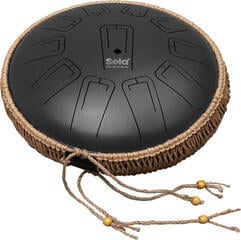
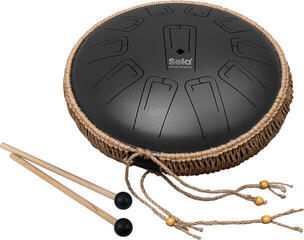
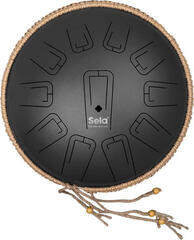
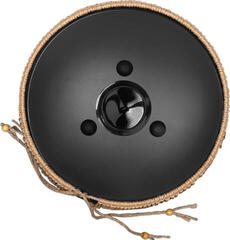
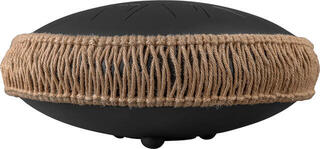
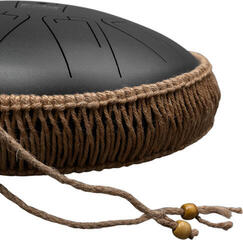
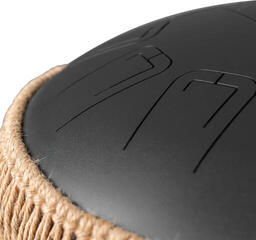
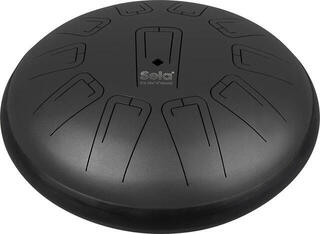
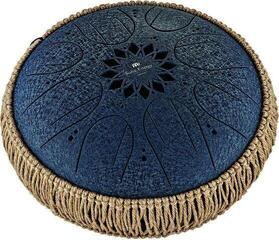
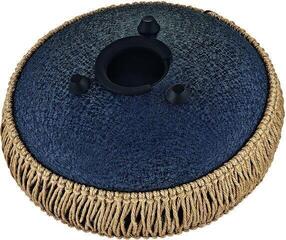
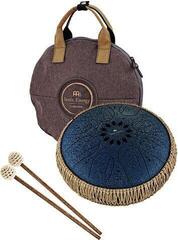
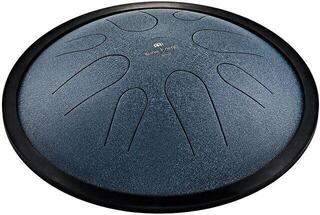
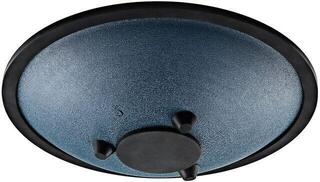
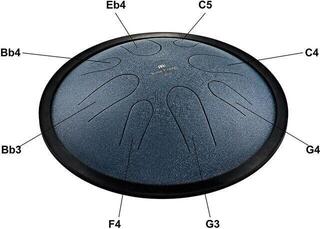
A tongue drum is a melodic steel drum with cut tongues that produce a clear, long-sustaining note when struck. It is sometimes called a tongue or rain drum, but size, number of notes and scale matter more than the name when choosing one. It works as a handheld musical instrument for home playing, relaxation, school activities and a first contact with melody without difficult technique. In this category you will find compact travel models, larger instruments with a fuller sound and tongue drums for beginners.
How to choose a tongue drum
Size and portability: mini, small or large model
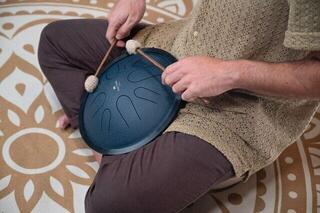
If you want to carry the instrument in a backpack, choose mini tongue drums; they are light, quieter and good for short motifs. small tongue drums offer a better balance between portability and resonance, while large tongue drums have a deeper tone, longer sustain and a fuller room sound.
Number of notes, scale and tuning
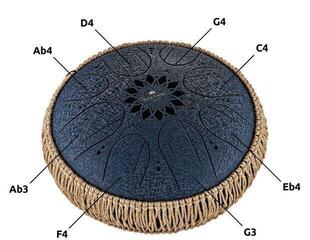
For a first instrument, 8 to 11 notes are practical because they are easy to navigate and many models use a pentatonic or diatonic scale. More notes expand melodic options, but they need more accurate playing and more attention when choosing note sheets. The price of a tongue drum often depends on size, workmanship and note range, not only on the brand.
Sustain, volume and playing method
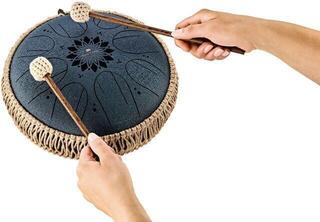
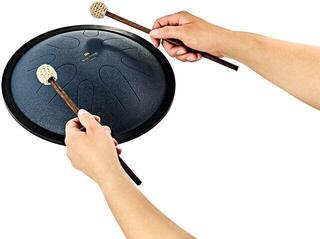
Longer sustain creates a calm, meditative decay, while shorter decay is clearer for rhythmic playing. Mallets make the tone and volume more pronounced, fingers sound softer and naturally quieter, so they suit evening practice at home. Compared with handpans, a tongue drum is usually more accessible, easier to store and more forgiving for beginners.
Who is a tongue drum suitable for
Beginner and first melodic instrument
Tongue drums for beginners are useful when you want to play intuitively without reading a complex score. Many instruments include note marks or simple tongue drum notes, so you can build a short melody quickly.
Children, school and intuitive playing
For children and schools, the solid metal body, simple striking and pleasant tuning are useful even when tones are played in a random order. A smaller diameter and lower weight make holding easier, while a larger model works better for shared circle playing.
Relaxation, meditation and music therapy without health promises
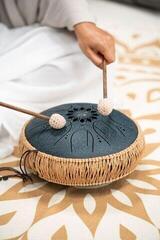
A tongue drum can support a calmer atmosphere during rest, yoga or creative activities, but it should not be presented as a substitute for treatment. If you want a wider selection of instruments for similar use, see Music Therapy and Meditation.
Quick model comparison
| Type | Typical use | Plus and minus | When to choose |
|---|---|---|---|
| Mini | travel, children, short motifs | light and compact, but with lower tone volume | when portability matters most |
| Small | home playing, first instrument | good compromise, less deep bass | when you want a versatile start |
| Large | relaxation, group playing, room sound | fuller sound, but higher weight | when you want longer sustain |
| Beginner | learning by numbers or simple notes | clear note layout, narrower range | when you want to play right after unpacking |
Accessories and care
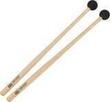
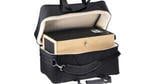
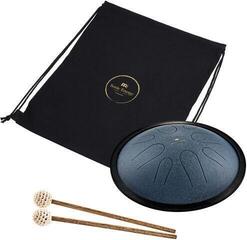
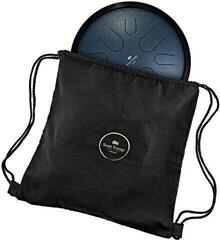
For frequent carrying, add suitable cases and bags for percussion to protect the surface from scratches. If you lose the original mallets or want a different attack character, choose suitable percussion mallets. Place the instrument securely on a soft surface, keep it away from moisture and wipe dust with a dry, soft cloth.