 Albania
 Argentina
 Australia
 Austria
 Belgium
 Bosnia and Herzegovina
 Brazil
 Bulgaria
 Canada
 Chile
Chile
 Colombia
 Croatia
 Czech Republic
 Denmark
 Estonia
 Finland
 France
 Germany
 Greece
 Hungary
 Ireland
 Italy
Italy
 Latvia
 Lithuania
 Luxembourg
 Mexico
 Moldova
 Montenegro
 Netherlands
 New Zealand
 North Macedonia
 Norway
 Philippines
 Poland
 Portugal
 Romania
 Serbia
 Slovakia
 Slovenia
 South Africa
 Spain
Spain
 Sweden
 Switzerland
 Turkey
 Ukraine
 United Kingdom
 United States of America



How to learn to play the clarinet
Drawn to the soft, singing tone of the clarinet and want to learn to play it? You can start at any age. We will show you how to make the first steps from embouchure to your first clean tone, how to practise so you keep improving and what you need to get started.
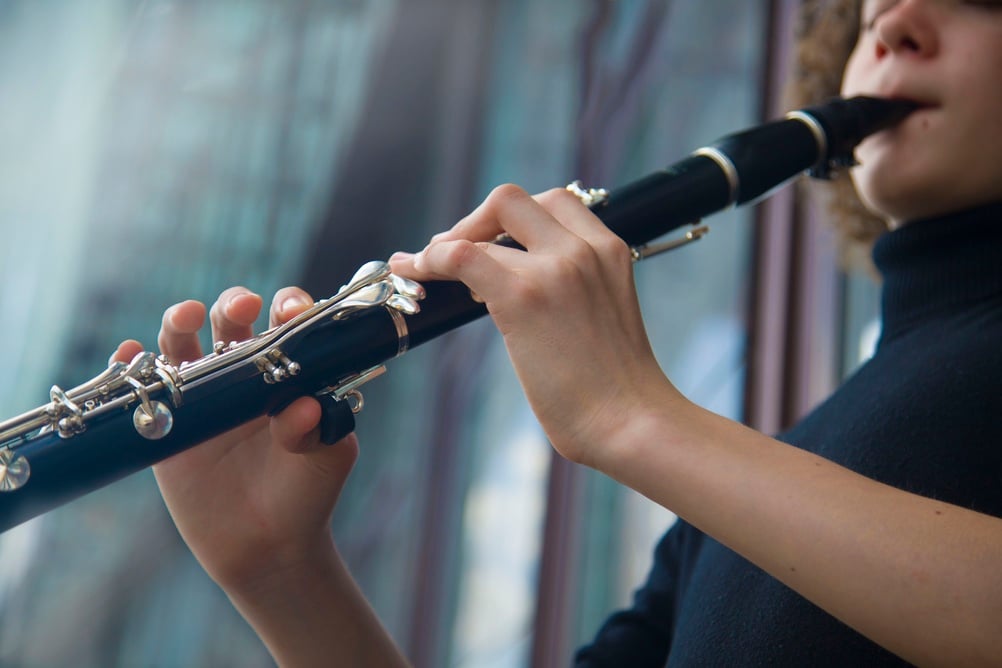
A short history of the clarinet
Among wind instruments the clarinet is fairly young. It was created around 1700 in Nuremberg, when the instrument maker Johann Christoph Denner developed it from the simpler chalumeau. It quickly won over composers thanks to its unusually wide range and its ability to play both quietly and at full volume.
Real fame was brought to it by Wolfgang Amadeus Mozart, who wrote the famous clarinet concerto for it and raised it to a full solo instrument. In the 20th century the clarinet became a star of swing and jazz thanks to names like Benny Goodman, nicknamed the King of Swing, and Artie Shaw. To this day it is the heart of klezmer, Balkan music and brass bands, and you recognise its warm tone instantly.
What you need to get started
To get going you only need one instrument and a few small things. For the vast majority of beginners the clear choice is a plastic (ABS) Bb clarinet, which is not afraid of changes in temperature and humidity, is cheaper and more durable than a wooden one. A proven and affordable start is offered by the Latone brand, or Yamaha and Jupiter. With the instrument you will right away need reeds, which create the tone and are a consumable, a ligature that holds the reed, and a case for carrying. For a beginner softer reeds around strength 1.5 to 2 work well. You will find more about choosing in the article on how to choose a clarinet.
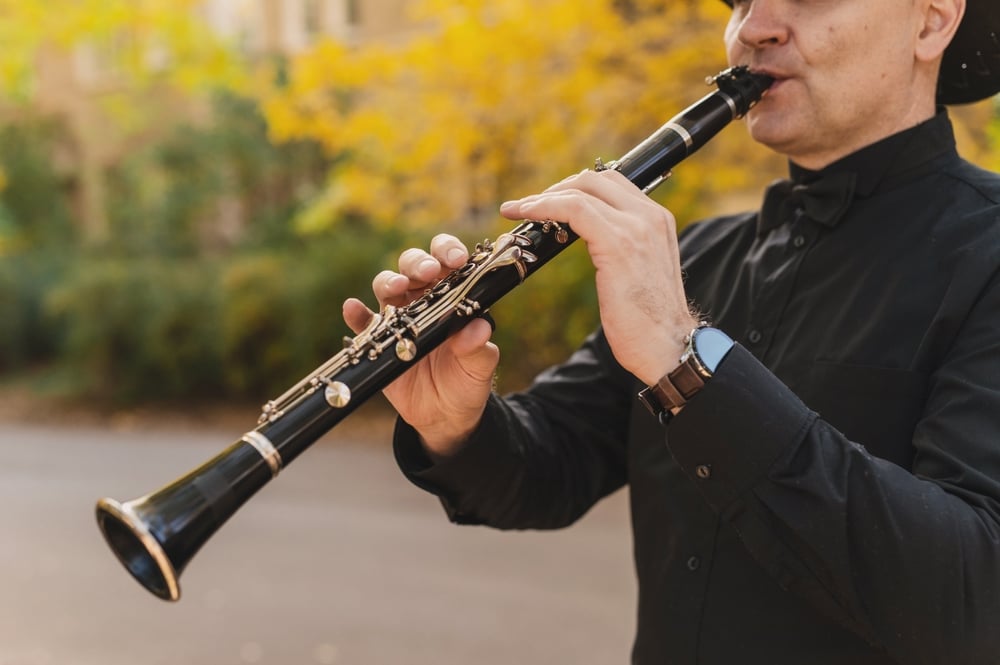
First steps: embouchure, breath and your first tone
Start with embouchure and breath, not with songs. On the clarinet the tone is created by the vibration of the reed on the mouthpiece, so the very first thing you learn is to place your lips correctly and get the mouthpiece alone to sound, without the rest of the instrument. Roll your lower lip gently over your teeth, rest your upper teeth on the mouthpiece and keep the corners of your mouth relaxed but firm. Once you get a stable tone out of the mouthpiece, you fit it onto the whole clarinet.
The key is breathing from the diaphragm. Do not blow from the chest and do not blow tensely, but push a steady, even airflow, as if you were breathing onto a warm glass. In the first weeks you may squeak or the tone may jump into a higher register, and that is completely normal. A clean, firm tone comes gradually, as you build your embouchure and learn to meter the air.
Fingers, keys and your first songs
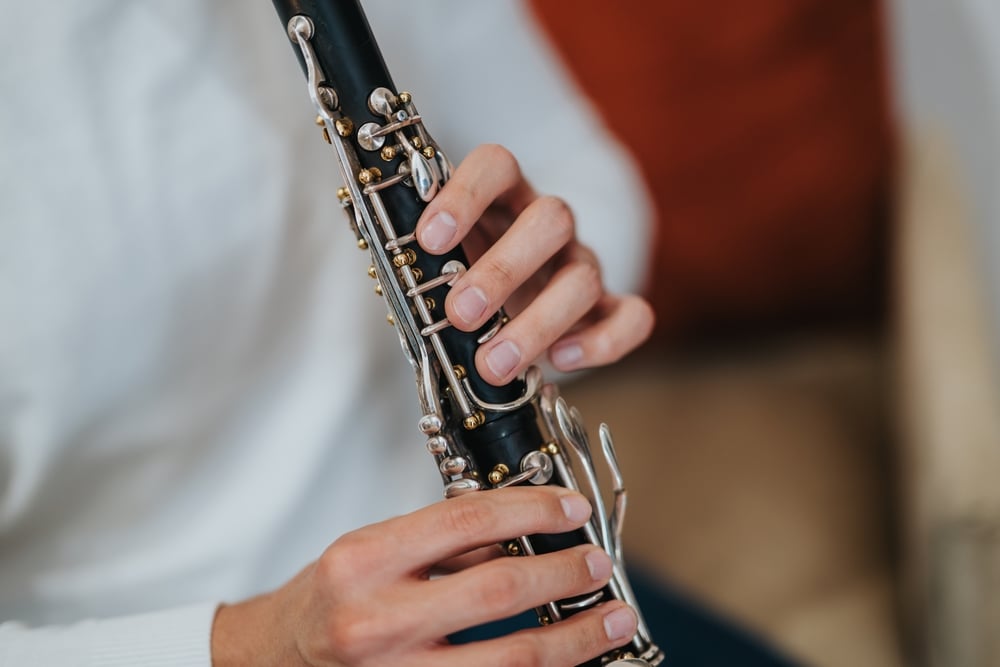
When you have a stable tone, the fingers come next. The clarinet has many tone holes and keys, so learn to cover the holes calmly and precisely with the full pads of your fingers, so that no air escapes anywhere, otherwise it will squeak. Start with a simple scale in the low register, then add the move to the higher register using the so-called register key. Only once your basic notes are secure should you tackle your first song. A simple melody you know by heart will move you forward faster than random practice.
Regularity does the most. Better to practise 15 to 20 minutes every day than an hour once a week. Short daily practice builds both the embouchure and finger memory, while a one-off long session tires the lips and puts you off. With embouchure, breath and posture a teacher or a music school helps the most, at least at the start, but you can manage the basics on your own from videos.
| Step | What to do |
|---|---|
| Embouchure | lower lip gently over the teeth, upper teeth on the mouthpiece, relaxed corners |
| Breath | breathe from the diaphragm and push a steady, even airflow |
| First tone | first get the mouthpiece alone to sound, then the whole instrument |
| Fingers | cover the holes with full finger pads, learn a simple scale |
| Registers | practise the move to the higher register with the register key |
| Routine | rather 15 to 20 minutes daily than an hour once a week |
| Care | after playing dry the instrument with a swab and let the reed dry |
Frequently asked questions about playing the clarinet
Can you start the clarinet as an adult?
Definitely yes, it is never too late to play. Adults learn in a focused way and progress well. The first weeks are about building the embouchure, then it goes faster.
How long does it take to play your first song?
You will produce your first tone on the very first day. A simple melody in the low register you can manage with regular practice usually within a few weeks. A short daily routine is what matters.
Can you learn the clarinet on your own?
You will manage the first tone and basic notes on your own from videos. But for the right embouchure, breath and posture a teacher helps a lot, at least at the start, so that bad habits do not set in.
Why does my clarinet squeak?
Most often the embouchure, too hard a reed, leaky fingers or a badly fitted mouthpiece are to blame. Try a softer reed, cover the holes with full finger pads and relax the corners of your mouth, that usually helps.
Choose your clarinet
The clarinet is an instrument for many years and its warm tone is worth the initial effort. For a start the plastic Bb clarinet from Latone, Yamaha or Jupiter is ideal. Have a look at the whole range and do not forget the reeds, a ligature and a case. You will find more among the wind instruments.