Albania
 Argentina
 Australia
 Austria
 Belgium
 Bosnia and Herzegovina
 Brazil
 Bulgaria
 Canada
 Chile
 Colombia
 Croatia
 Czech Republic
 Denmark
 Estonia
 Finland
 France
 Germany
 Greece
 Hungary
 Ireland
 Italy
 Latvia
 Lithuania
 Luxembourg
 Mexico
 Moldova
 Montenegro
 Netherlands
 New Zealand
 North Macedonia
 Norway
 Philippines
 Poland
 Portugal
 Romania
 Serbia
 Slovakia
 Slovenia
 South Africa
 Spain
 Sweden
 Switzerland
 Turkey
 Ukraine
 United Kingdom
 United States of America


Cables, Connectors and Adapters
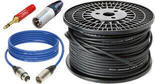
Cables, connectors and adapters link instruments, microphones, mixing consoles, amplifiers and speakers into one working system. Your choice depends on the type of signal you are carrying, the connectors on your devices at both ends and the cable length you need. A quality cable helps you avoid noise, interference and dropouts while playing, so it is worth choosing carefully rather than at the last minute.
Ready-made cable or custom assembly?
The quickest solution is ready-made cables with connectors that you can plug in immediately. If you need an exact length or non-standard routing, choose bulk cable and suitable connectors that you can fit yourself. Where the connectors between devices do not match, connector adapters and couplers can help.
| You need to | Look for |
|---|---|
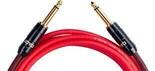
| Connect an instrument or microphone | An instrument or microphone cable with the correct connectors, such as jack or XLR |
| Connect devices in a rack or on a pedalboard | Short patch cables |
| Carry a signal over longer distances | Bulk cable or a cable of suitable length and quality |
| Connect different connector types | Adapters and couplers |
Order and safety on stage
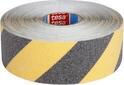
Coiled and tied cables are less likely to become damaged and are quicker to pack. Use cable ties and clips to organise them, cable ramps to protect cables on the floor, and adhesive tape for temporary fastening. If you have many cables, label them so you do not mix them up when setting up.
What to check before choosing
- The connector type at both ends (jack, XLR, RCA, USB and others).
- The signal type: instrument, microphone, speaker, digital or power.
- A length that is not unnecessarily long.
- The durability of the jacket and connectors for frequent setup and teardown.
- Function testing, for example using a cable tester.
Do not confuse a speaker cable with an instrument cable, even if they have similar connectors.
The most common connectors
In music equipment, you will most often encounter jack, XLR, RCA and USB connectors. Jack is used for instruments and line signals, XLR for microphones and balanced connections, and RCA for home and DJ equipment. A speaker cable has thicker conductors than an instrument cable, so do not mix them up. Choose the cable length so you have a little extra, but not so much that noise increases unnecessarily or the cables become tangled.