Albania
 Argentina
 Australia
 Austria
 Belgium
 Bosnia and Herzegovina
 Brazil
 Bulgaria
 Canada
 Chile
 Colombia
 Croatia
 Czech Republic
 Denmark
 Estonia
 Finland
 France
 Germany
 Greece
 Hungary
 Ireland
 Italy
 Latvia
 Lithuania
 Luxembourg
 Mexico
 Moldova
 Montenegro
 Netherlands
 New Zealand
 North Macedonia
 Norway
 Philippines
 Poland
 Portugal
 Romania
 Serbia
 Slovakia
 Slovenia
 South Africa
 Spain
 Sweden
 Switzerland
 Turkey
 Ukraine
 United Kingdom
 United States of America


Complete PA systems
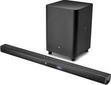
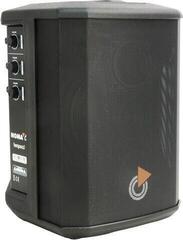
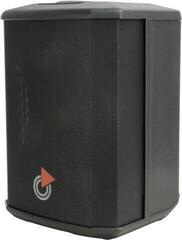
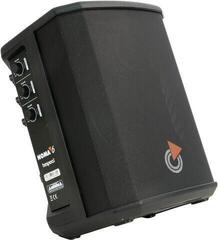
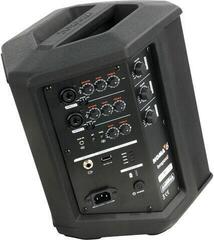
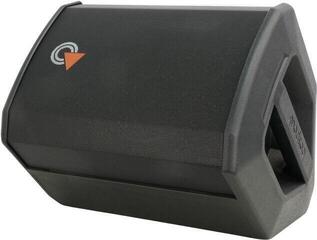
A complete PA system combines the main components required for music playback and voice amplification in one setup or matched package. It is useful when you do not want to select every component separately, but you still need to check exactly what the package contains. The size and type of event, number of microphones or instruments, available power and transport requirements all matter. The right choice is not automatically the largest system, but one you can connect, operate and position safely.
What a “complete” system may mean
The category name does not mean that every product has the same contents. One system may include two PA speakers and a mixing console, another a portable speaker with a microphone, and another a column system with integrated mixing. Stands, cables, covers or microphones may or may not be included. Compare the component list with what you already own and what you still need to buy.
- PA speakers convert the amplified signal into sound for the audience.
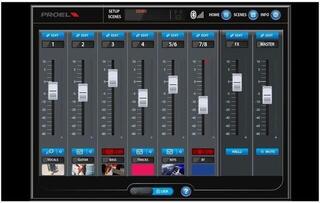
- The mixing section accepts microphones, instruments and players and lets you adjust their relative levels.
- Amplification may be built into active PA speakers or provided separately.
- Stands help project high frequencies above the first rows of listeners.
- Cables, power and transport covers determine whether the system is practical to use.
Comparison of system concepts
| Concept | Most common use | Advantage | Limitation to check |
|---|---|---|---|
| Portable battery-powered system | Spoken word, smaller events, locations without a power outlet | Quick start-up and easy transport | Operating time, number of inputs and expansion options |
| Pair of active PA speakers with a console | Band, hosting, recorded music | Separate adjustment of multiple sources | More power and signal cables |
| Passive PA speakers with an amplifier | Permanent or expandable system | Amplification can be selected separately | Electrical compatibility and correct connections are essential |
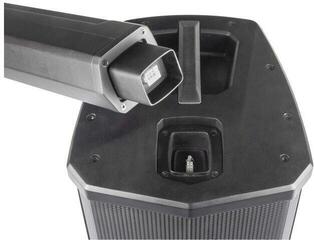
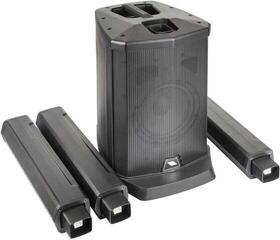
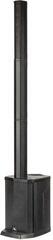
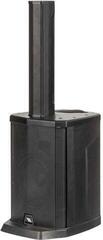
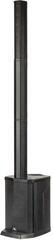
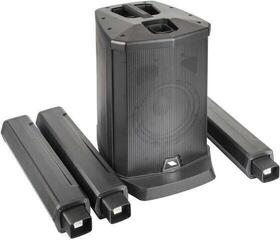
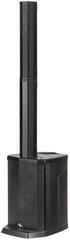
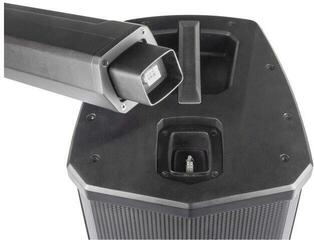
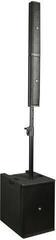
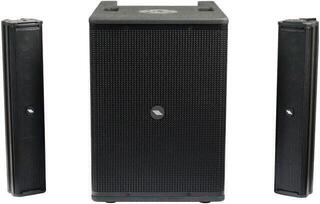
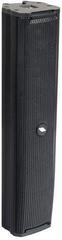
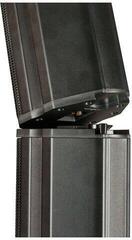
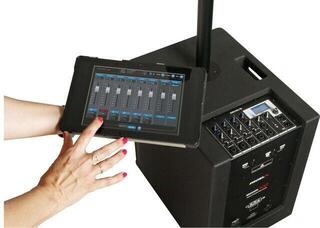
| Column system | Host, acoustic performance, smaller band | Compact footprint and vertically arranged design | Number of inputs, transport components and suitability for the venue |
If you want to select the system component by component, start with PA speakers and mixing consoles. A preconfigured PA system can shorten the selection process, but you should still check every part of the package. Column systems offer a compact alternative, particularly when quick setup and transport matter.
Choose according to the programme, not only the venue
Spoken word and presentations
Priorities include intelligibility, enough microphone inputs and straightforward operation. One speaker needs fewer channels than a discussion where you want to control the voices separately. If the presenter moves around, allow for a wireless system and a safe location for its receiver. Background music requires another input.
Solo performer and acoustic duo
In addition to vocals, you may connect an instrument, player and stage monitor. Check the input types, individual channel controls and signal-routing options. An effects unit can be practical, but it is no substitute for correctly set gain and sensible speaker placement.
Band and event with several performers
As the number of sources grows, so do the channels, cables, monitor paths and soundcheck time. A complete package can provide a good foundation, but check that the console accepts every source and that the system supports the required monitoring. For a more complex programme, it is useful to keep the main PA and stage monitors separate.
Recorded music and mobile events
Player connectivity, packing speed and equipment protection matter here. Bluetooth is a convenient extra, but prepare a tested wired connection as well for an important programme. Outdoors, protect the power supply and equipment according to the manufacturer's instructions; a standard PA system cannot automatically be considered rain-resistant.
A signal path without guesswork
- Connect the source to the corresponding input on the console or speaker.
- Turn down the volume and set input gain at the actual singing or playing level.
- Connect the console output to the input of the active PA speaker or amplifier.
- Switch on the PA speakers only after the signal sources; reverse the order when switching off.
- During the soundcheck, test every channel, the main output and the monitors.
In a passive system, the amplifier and PA speaker must form an electrically compatible pair. Do not connect devices solely because a connector physically fits. Active PA speakers also require power at each enclosure, which must be considered when routing cables. Route signal and power cables so that people cannot trip over them.
Placement and feedback
Position the main PA speakers in front of the microphones and aim them at the audience. A stand must be placed on a firm surface with its joints secured; choose suitable speaker stands according to compatibility and rated load. A higher position often improves coverage, but this is no reason to exceed a safe mounting height.
If the system feeds back, do not mask the problem by raising the volume further. Check the direction of the microphones and PA speakers, the singer's distance from the microphone, input gain and monitor level. Equalisation may help after obvious placement errors have been corrected.
Transport and hidden budget items
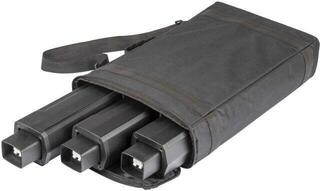
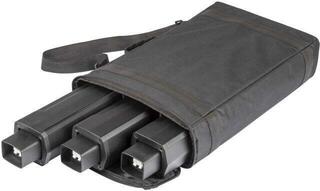
Count the components, the weight of each part and the space available in the car. A hard case protects controls, while a soft bag makes routine transport easier; suitability depends on how often the equipment is moved. Before ordering, add signal cables, extension leads, stands and secure mounting equipment to the list. Without the correct cable or stand, an otherwise suitable system may be unusable on the day of the event.
Checking the package contents
| Item | Question to ask before choosing |
|---|---|
| PA speakers | Are they active or passive, and how many does the package include? |
| Mixing section | How many separate sources do you need to connect? |
| Microphones | Are they included and are they suitable for singing or spoken word? |
| Stands | Are they compatible, stable and rated for the load? |
| Cables | Is any signal, speaker or power cable missing? |
| Cases | Do you need them for regular transport and storage? |
A complete system should save setup time, not conceal missing compatibility. Draw a simple plan of the inputs, outputs and placement, then compare it with the contents of the particular package. This will give you a system suited to the programme and help you avoid buying a basic component at the last minute. Take the list to the first rehearsal as well, where you can quickly identify missing adapters or a cable run that is too short.