 Albania
 Argentina
 Australia
 Austria
 Belgium
 Bosnia and Herzegovina
 Brazil
 Bulgaria
 Canada
 Chile
Chile
 Colombia
 Croatia
 Czech Republic
 Denmark
 Estonia
 Finland
 France
 Germany
 Greece
 Hungary
 Ireland
 Italy
Italy
 Latvia
 Lithuania
 Luxembourg
 Mexico
 Moldova
 Montenegro
 Netherlands
 New Zealand
 North Macedonia
 Norway
 Philippines
 Poland
 Portugal
 Romania
 Serbia
 Slovakia
 Slovenia
 South Africa
 Spain
Spain
 Sweden
 Switzerland
 Turkey
 Ukraine
 United Kingdom
 United States of America



Drums
Percussion instruments create the pulse of a song and determine how firmly the entire band will hold the rhythm. This category includes classic drums, electronic drum kits, cymbals, percussion instruments, and practical accessories that a drummer needs for practice, rehearsals, or concerts. When making your selection, it’s worth starting by considering where you’ll be playing, how much noise you can make, and whether you’re looking for a ready-made kit or want to gradually build your own set. There’s also a difference depending on whether you’re buying a child’s first drum set, a quieter option for an apartment, or an instrument ready for the rehearsal room and the stage.
How to Navigate Drum Sets
Acoustic drums are the choice for a natural sound, powerful dynamics, and the feel of playing real drums. A set typically consists of a bass drum, snare drum, toms, floor tom, cymbals, and hardware, though the exact contents vary by set type. If you want to play rock, pop, jazz, or metal with a full acoustic sound, start right here and check to see if the set includes stands, a pedal, a stool, and cymbals.
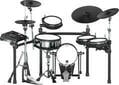
Electronic drum kits offer greater control over volume. The pads detect the strike of the drumsticks, and you hear the sound through headphones, a speaker, or an audio interface. They’re practical for apartments, evening practice sessions, and for drummers who want to change sounds without swapping out drums and cymbals. However, you should still factor in the mechanical noise of the hits and the space needed for the rack stands.
What Beginners, Children, and Advanced Players Need
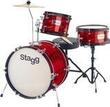
Beginners will appreciate a set that doesn’t require complicated additions. When making your first purchase, therefore, consider not only the number of drums but also the included hardware: a bass drum pedal, a drum throne, drumsticks, and basic cymbals. For younger players, children’s drum sets with smaller dimensions are recommended so that the child can reach the pedals, snare, and toms without having to sit in an unnatural position.
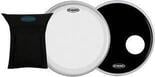
More advanced drummers usually focus on achieving a specific sound. In that case, it makes sense to select individual cymbals, change the drumheads, choose a different snare, or add toms based on your playing style. Drumsticks and brushes are also important: a lighter pair supports a more sensitive playing style, while a heavier pair helps with harder strikes and more pronounced articulation.
Space, Noise Level, and Accessories
Acoustic drums sound natural, but they’re loud and require a suitable space. For an apartment or regular quiet practice, electronic drums, practice pads, or sound-dampening accessories are more practical. In a rehearsal space or on stage, however, it’s worth investing in sturdy drum hardware, spare heads, drum bags, and basic maintenance accessories.
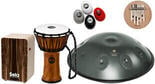
You can also expand your rhythm section beyond a classic drum set. Percussion instruments such as tambourines, bongos, cajons, or small rhythm instruments are great for singing, acoustic ensembles, music education, and as a simple introduction to the world of rhythm. If you’re unsure about your first choice, check out our blog guide Get to Know Drum Instruments, which explains the basic types and their uses.
| Situation | The Best Approach to Choosing | What to Look Out For |
|---|---|---|
| First-time playing at home | Electronic drums or a smaller complete set | Volume, space, what’s included |
| Band and rehearsal space | Acoustic drums, cymbals, sturdy hardware | Bass drum, snare drum, drumheads, and compatible stands |
| Child | Children’s drum set appropriate for the player’s height | pedal reach, smaller dimensions, easy adjustment |
| Add-ons for an existing set | Cymbals, drumheads, drumsticks, individual drums | dimensions in inches, tuning, mounting |
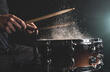
Ako sa naučiť hrať na bicie
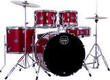
Drums for beginners
Deals Drums
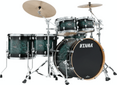
Latest Products: Drums
Bundles: Drums
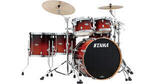
Acoustic Drums
Electronic Drums
Junior Drum Sets

Drum Hardware
Percussion

Sticks and Brushes
Drum Heads

Cymbals

Drum Accessories

Hearing Protection

Orchestra drums
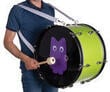
Marching and Cheering Drums

Drum Microphones

Bags and Cases for Drums
Bags and Cases for Percussion
Drum Cleaning

Drum Hardware Spare Parts

Sheet music for drums and percusion
Popular Brands

Alesis Drums

Roland Drums

Meinl Drums

Evans Drums

Yamaha Drums

DDRUM

Tama Drums

Vater Drums

Stable Drums

Terre Drums

Sela Drums

Pearl Drums

Mapex Drums

Zildjian Drums

Paiste Drums

Pro Mark Drums

Remo Drums

Goodwood Drums

On-Stage Drums

Zuriel Drums

Nino Drums

Gibraltar Drums

Cascha Drums

Wittner Drums

Nux Drums

Stagg Drums

Bolf Kalimbas

Mukikim Drums

Sonor

Victory Drums

Cherub Drums

Korg Drums


