 Albania
 Argentina
 Australia
 Austria
 Belgium
 Bosnia and Herzegovina
 Brazil
 Bulgaria
 Canada
 Chile
Chile
 Colombia
 Croatia
 Czech Republic
 Denmark
 Estonia
 Finland
 France
 Germany
 Greece
 Hungary
 Ireland
 Italy
Italy
 Latvia
 Lithuania
 Luxembourg
 Mexico
 Moldova
 Montenegro
 Netherlands
 New Zealand
 North Macedonia
 Norway
 Philippines
 Poland
 Portugal
 Romania
 Serbia
 Slovakia
 Slovenia
 South Africa
 Spain
Spain
 Sweden
 Switzerland
 Turkey
 Ukraine
 United Kingdom
 United States of America



How to choose speakers for a turntable
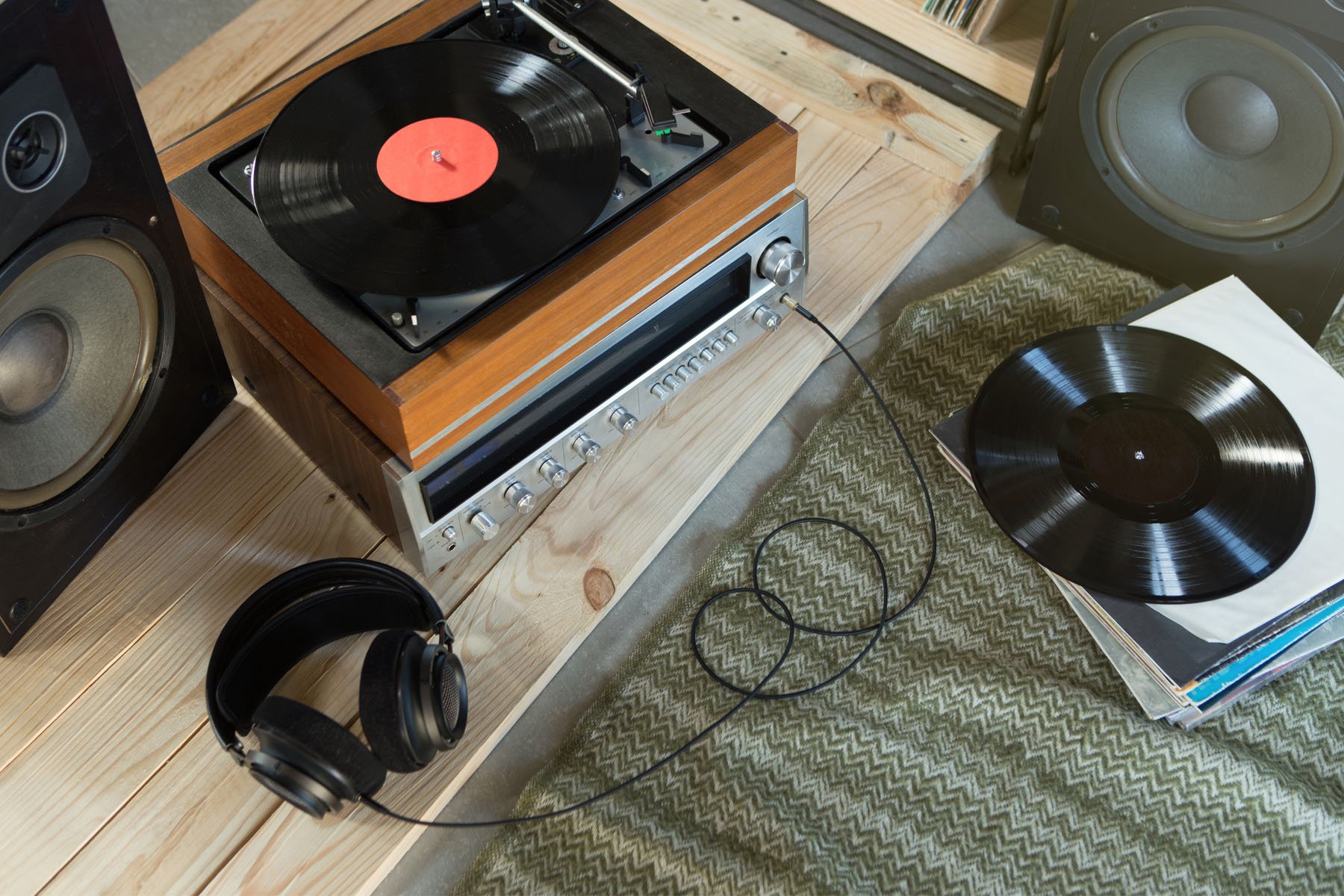
Which speakers should you choose for a turntable?
The easiest choice is active speakers if the turntable has a built-in preamp or a phono/line switch set to line. Connect them directly with a cable, set the volume and listen. If you want a classic hi-fi setup with passive speakers, prepare a Hi-Fi AV receiver, amplifier or separate phono preamp.Built-in speakers in cheap turntables are practical for the first play, but they usually lack space, bass and detail. If you want to hear more from vinyl than basic sound, focus on the preamp, speaker input and room size.
A quick choice can look like this: active bookshelf speakers for a bedroom or office, passive Hi-Fi speakers with an amplifier for a living room, or a turntable with speakers in one set for a first start. Treat Bluetooth as a convenient extra, not the only path to the best sound.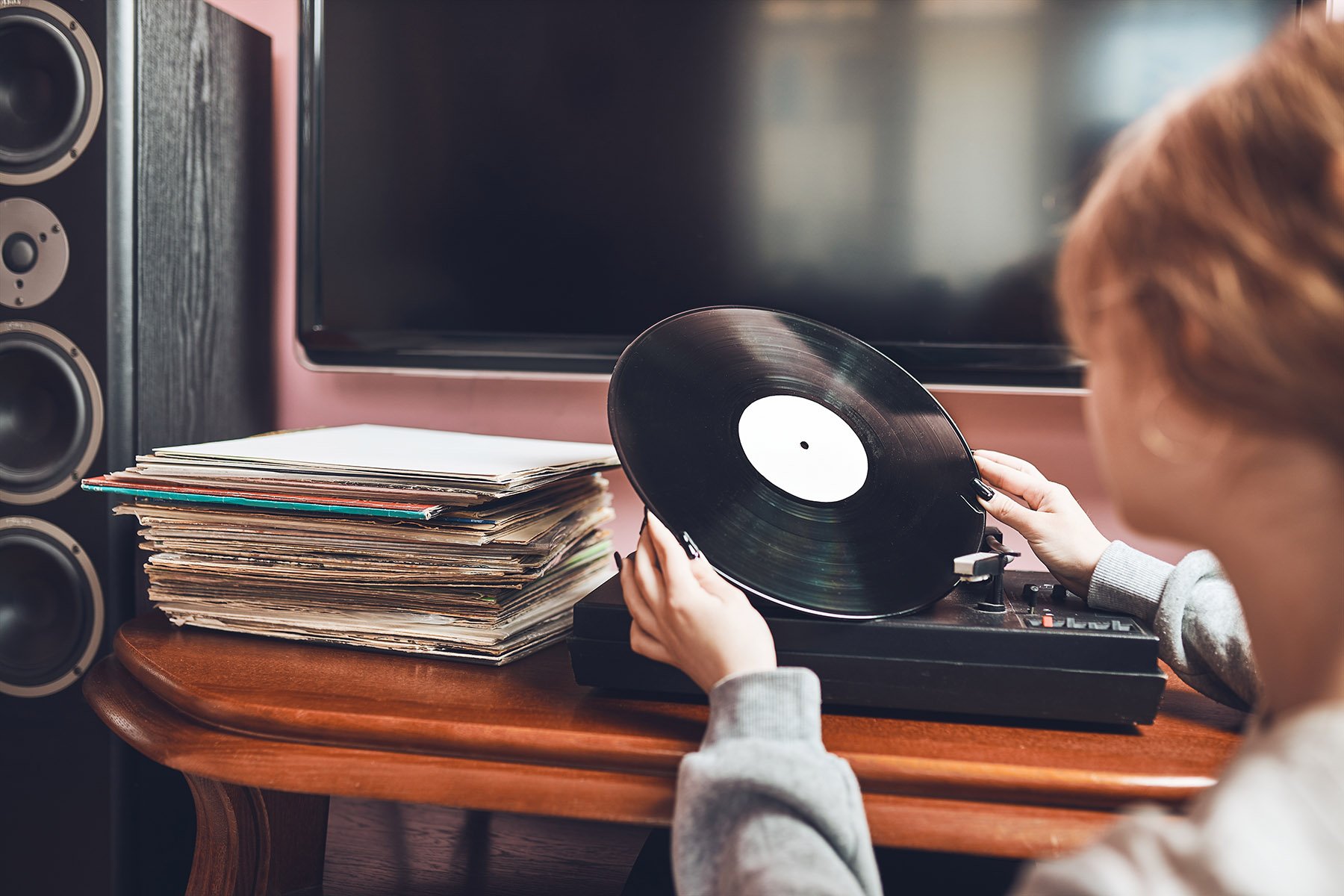
Active or passive speakers for a turntable
The difference is simple: active speakers have an amplifier built in, while passive speakers need a separate amplifier or receiver. The best active speakers are the ones with the right input, suitable power and a good match for your turntable and room.
When active speakers are the best choice
Choose active speakers when you want fewer boxes and cables. They suit beginners, small flats, offices and student rooms. With RCA or AUX input, they connect to most turntables with line output; some also add Bluetooth, optical input, USB-C or a subwoofer output.
Before buying, check whether the active speaker accepts a line signal. If your turntable sends only a weak phono signal, the sound will be very quiet and thin without a preamp. In that case add turntable preamps or choose a turntable with an integrated preamp.When passive speakers, a receiver and an amplifier make sense
A passive solution makes sense if you want to upgrade the system gradually, have a larger room or prefer classic hi-fi wiring. Passive speakers need an amplifier or receiver; if it has a phono input, it can also accept a turntable without a built-in preamp.
The advantage is flexibility: later you can replace only the speakers, only the amplifier or add another source. The disadvantage is a higher total price, more shelf space and the need to match components correctly.
Do you need a preamp? Check the phono/line output
A turntable cartridge creates a very weak signal. A preamp boosts and equalizes it so active speakers, a receiver or a normal AUX input can handle it. That is why the phono/line check is the key step before buying.
- Phono output means you need a phono input on the receiver or a separate preamp.
- Line output means the preamp is already in the turntable and the signal can go directly to active speakers or a line/AUX input.
- Set the phono/line switch according to the device you connect to. Use phono for a phono input and line for active speakers.
If you are unsure, look at the back of the turntable and the manual. Search for PHONO/LINE, PRE AMP or built-in preamp. With older turntables without this equipment, count on an external preamp.
How to connect a turntable to speakers step by step
- First find out whether the turntable has phono or line output.
- Check the inputs on the speakers, amplifier or receiver.
- If you use active speakers, connect the turntable via RCA or an AUX adapter and set the turntable output to line.
- If you use passive speakers, connect the turntable to a receiver or amplifier and connect the speakers with speaker cable.
- If the signal is too quiet, the preamp is missing or the switch is set incorrectly.
- Place speakers away from the turntable so vibrations do not return to the stylus.
RCA, AUX, optical input and USB-C
Most often you will see RCA connectors, the red and white cinch cable. AUX input uses a 3.5 mm jack, often through an RCA adapter. Optical input and USB-C are useful on newer active speakers, but you usually cannot connect a turntable to them directly without a suitable converter.
Bluetooth is convenient, but not always the highest quality
You can also connect a turntable to a Bluetooth speaker if the turntable transmits Bluetooth or you use a suitable transmitter. It is convenient for casual listening, but expect compression, possible delay and another link in the chain. For the most stable sound, use a cable connection.
Muziker tip: If you are also choosing the turntable itself, read the guide how to choose a turntable. It will help you decide between a model with a preamp, Bluetooth features and a classic hi-fi connection.Choosing by room, power and placement
You do not need large floorstanding speakers in a smaller room. Compact active or bookshelf Hi-Fi speakers on stands or a solid shelf are often enough. Clean sound at normal volume and correct placement matter more than extreme power.Keep speakers slightly away from the wall, aim them toward the listening spot and do not put them on the same unstable board as the turntable. In a small room avoid excessive bass; in a larger living room consider a passive setup or stronger active speakers with a subwoofer option.
Treat design as a pleasant bonus, not the only criterion. Wood, black or light finishes can match the turntable, but connectors, preamp and suitable size are more important for the final sound.
Comparison of turntable solutions
| Solution | What you need | Advantages | Disadvantages | Best for |
|---|---|---|---|---|
| Active speakers | Turntable with line output or preamp | Simple connection, fewer cables, suitable for smaller rooms | Fewer upgrade options | Beginner, flat, office |
| Passive speakers + receiver | Receiver or amplifier, possibly phono input | Flexibility, classic hi-fi sound, more inputs | Higher system price, more space and cables | Listener who wants to grow the setup |
| Bluetooth speaker | Turntable with Bluetooth output or transmitter | Convenient wireless listening | Compression, possible delay, not always the best sound | Casual listening without cables |
| Turntable with speakers in a set | Complete set or all-in-one solution | Quick start, simple purchase | Less room to replace parts and often limited sound | First turntable, gift, occasional listening |
Muziker tips for choosing
If you are starting out, first look at Hi-Fi turntables with a clearly stated preamp or line output. Active speakers are easiest to choose for them because you do not have to build the whole hi-fi chain immediately.If you have an older turntable without a preamp, focus on a separate phono preamp or a receiver with phono input. With a passive setup, do not choose speakers in isolation; also count the amplifier, cables and placement.
To expand your collection, you can also browse LP records and CDs. Test new speakers on recordings you know well — you will hear differences in space, bass and detail more easily.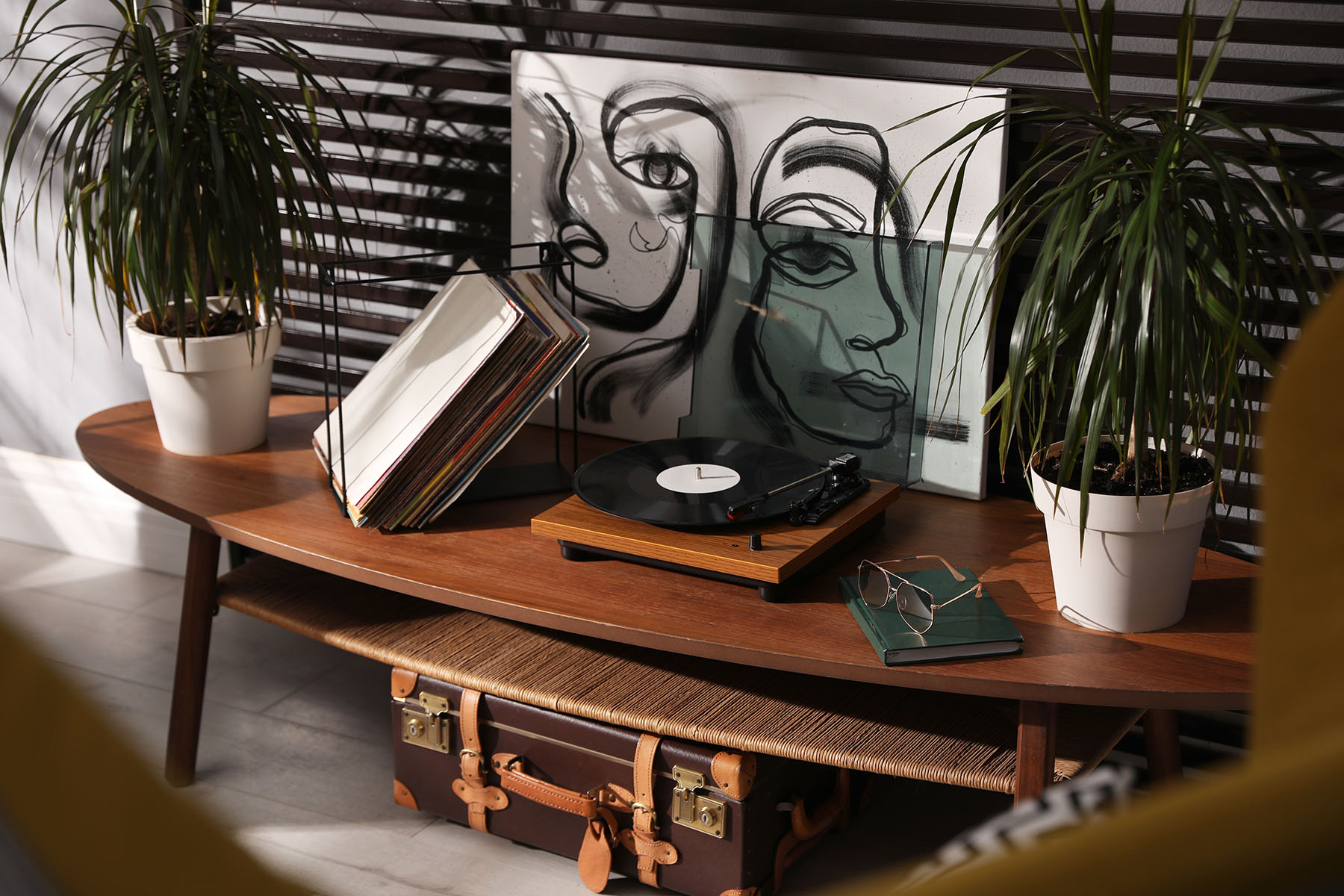
Frequently asked questions about turntable speakers
Which turntable speakers are the easiest choice?
The easiest option is active speakers connected to a turntable with line output. You do not need a separate amplifier and the whole connection works through an RCA or AUX cable.
Do I need a preamp for a turntable?
Yes, if the turntable sends only a phono signal and the device you connect it to has no phono input. If the turntable has a built-in preamp or line output, you usually do not need a separate preamp.
Can I connect a turntable to a Bluetooth speaker?
Yes, if the turntable has a Bluetooth transmitter or you use an external transmitter. It is enough for convenient listening, but if sound quality matters, a cable connection is better.
Are active or passive speakers better?
For simple connection, active speakers are better. For an expandable hi-fi setup, passive speakers with an amplifier or receiver are better. Decide by space, budget and whether you want to change the system over time.
How much speaker power is enough for a smaller room?
For a smaller room, compact bookshelf or active speakers with clean sound at normal volume are usually enough. Do not focus only on watts; also watch driver size, connection options and placement in the room.