 Albania
 Argentina
 Australia
 Austria
 Belgium
 Bosnia and Herzegovina
 Brazil
 Bulgaria
 Canada
 Chile
Chile
 Colombia
 Croatia
 Czech Republic
 Denmark
 Estonia
 Finland
 France
 Germany
 Greece
 Hungary
 Ireland
 Italy
Italy
 Latvia
 Lithuania
 Luxembourg
 Mexico
 Moldova
 Montenegro
 Netherlands
 New Zealand
 North Macedonia
 Norway
 Philippines
 Poland
 Portugal
 Romania
 Serbia
 Slovakia
 Slovenia
 South Africa
 Spain
Spain
 Sweden
 Switzerland
 Turkey
 Ukraine
 United Kingdom
 United States of America



How to Learn to Play Kalimba – Beginner Guide
The kalimba is the ideal first musical instrument. No sheet music, no sore fingers, no months of frustration. This guide shows you how to start, what to buy and how to keep progressing.
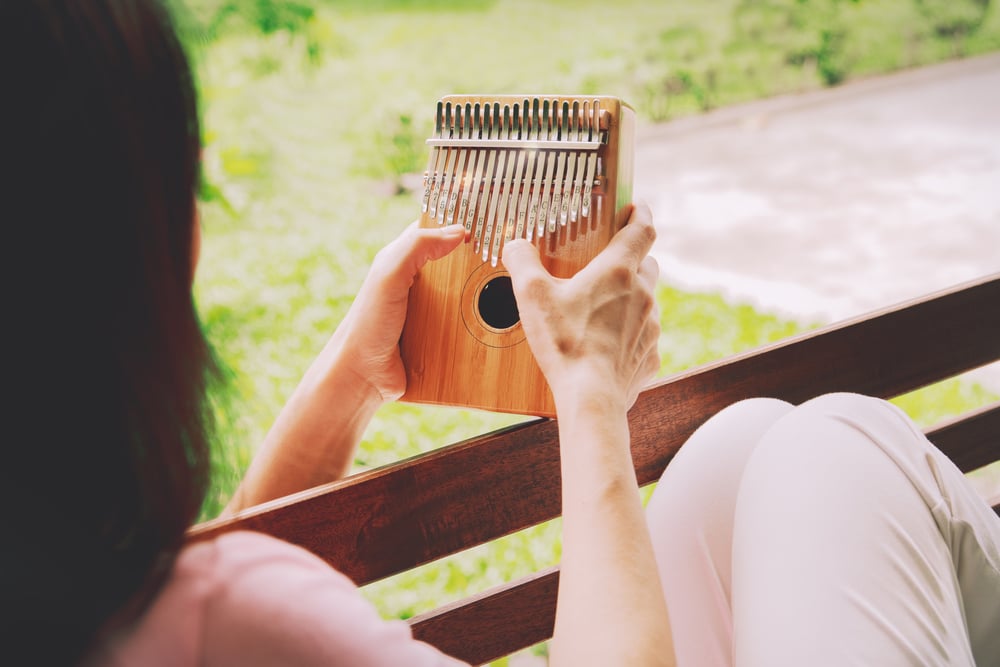
What Is a Kalimba and Why You Will Love It
The kalimba is an African idiophone – an instrument that sounds by vibrating metal tines mounted on a wooden board. Its history stretches thousands of years back to sub-Saharan Africa, where it was called the mbira. The modern kalimba is its accessible, contemporary version that has conquered the world. Why is it so popular? Because it is incredibly rewarding. The notes are arranged so that almost any combination of tines sounds harmonious. You cannot play a wrong note. That is why the kalimba is a favourite instrument for relaxation, meditation and serious music-making alike.
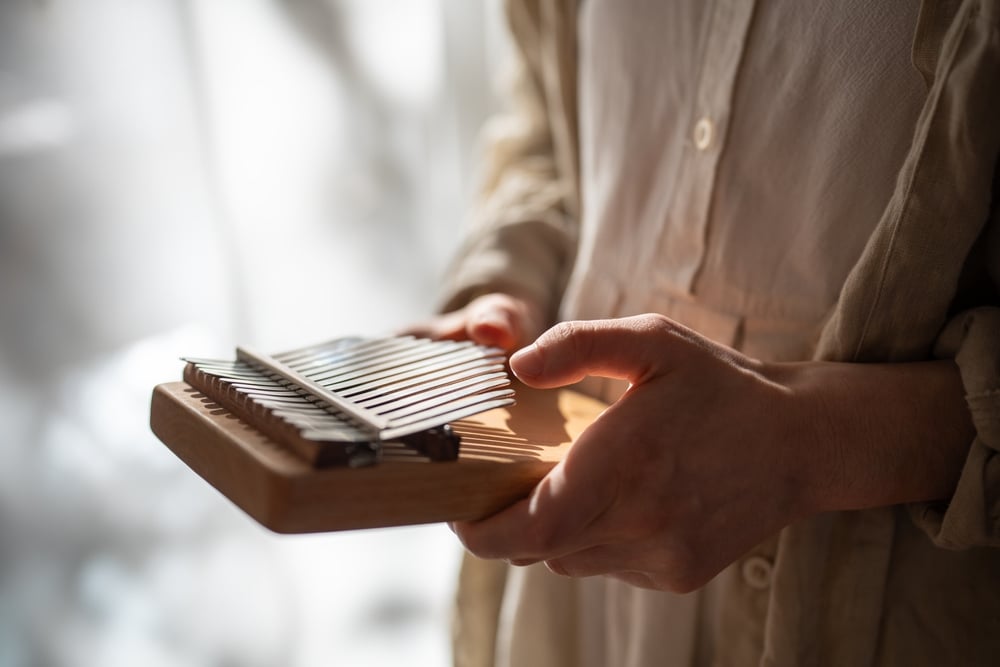
How to Choose Your First Kalimba
The first purchase is the most important. The wrong kalimba will put you off before you even start. The right choice will keep you playing for hours.
How Many Notes Do You Need?
Kalimbas vary in the number of tines – from 7 to 21 and above. For beginners the best choice is a 17-note kalimba. Why 17?
- They cover two full octaves including sharps and flats
- They are rich enough for the songs in YouTube tutorials
- They are not too complex to navigate
Wood or Acrylic?
Solid wood kalimbas have a warmer, more resonant sound. Wood absorbs vibrations and the result is a soft, organic tone ideal for relaxation and meditation. Acrylic kalimbas sound brighter and crisper, are visually attractive and more durable. For a first instrument we recommend wood.
With or Without a Sound Hole?
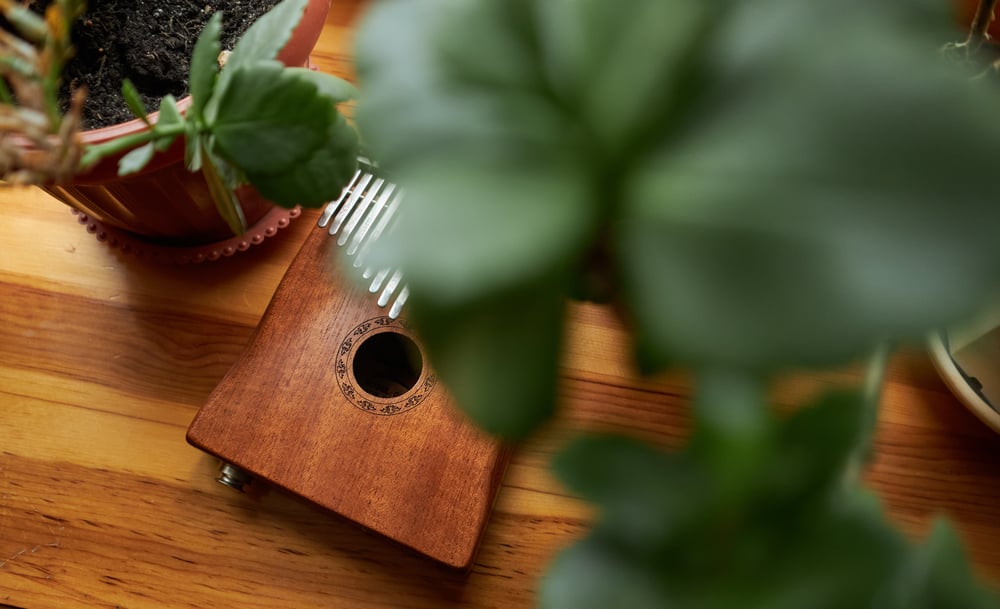
Kalimbas with a sound hole let you change the sound by covering the hole with your thumb – this creates the characteristic wah-wah vibrato effect. It is a great technique to have in any kalimba player's repertoire. For beginners, however, it is easier to start with a solid board without a hole.
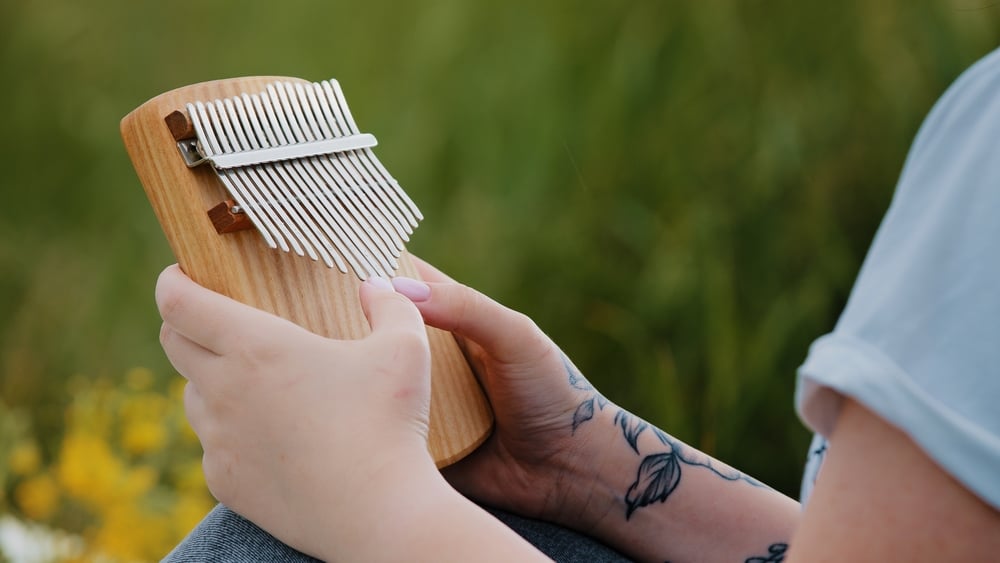
Shamann – the Most Popular Percussion Brand at Muziker
Shamann kalimbas stand out in several areas. The tines are precisely tuned and hold their pitch even under intensive playing. The resonating body is made from quality wood that gives the instrument a warm, full sound. The finish is flawless – no sharp edges, no rattles. Add to that a fair price, a carry bag, a tuning hammer and sheet music for your first melodies.
Shamann offers kalimbas for every level:
- For beginners – straightforward 17-note models that sound great from the very first minute
- For advanced players – solid wood kalimbas with a sound hole and richer tone
- For meditation – special series from the Shamann Music Therapy section, designed specifically for therapeutic and relaxation practice
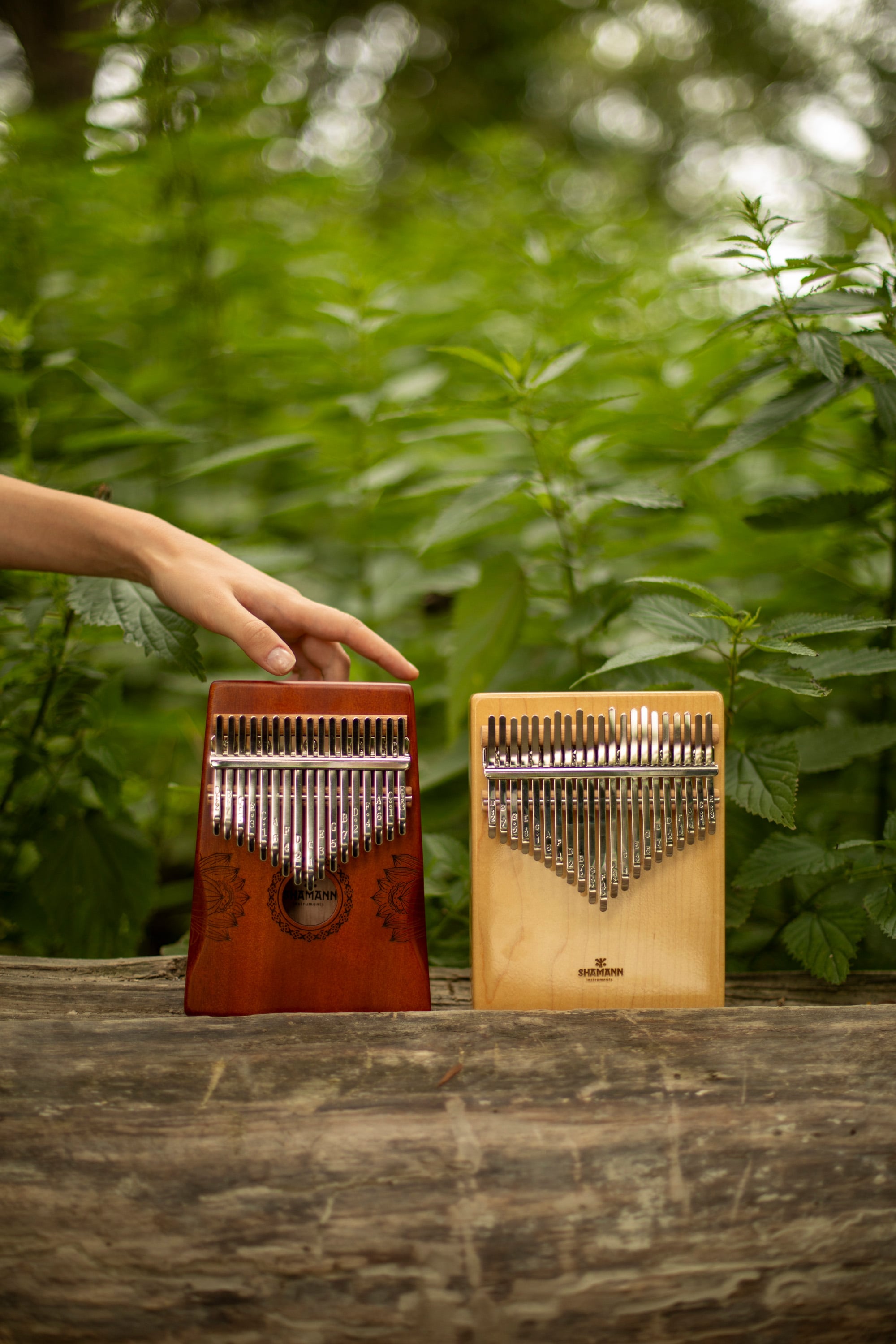
Kalimba Playing Basics – How to Start
Correct Holding Position
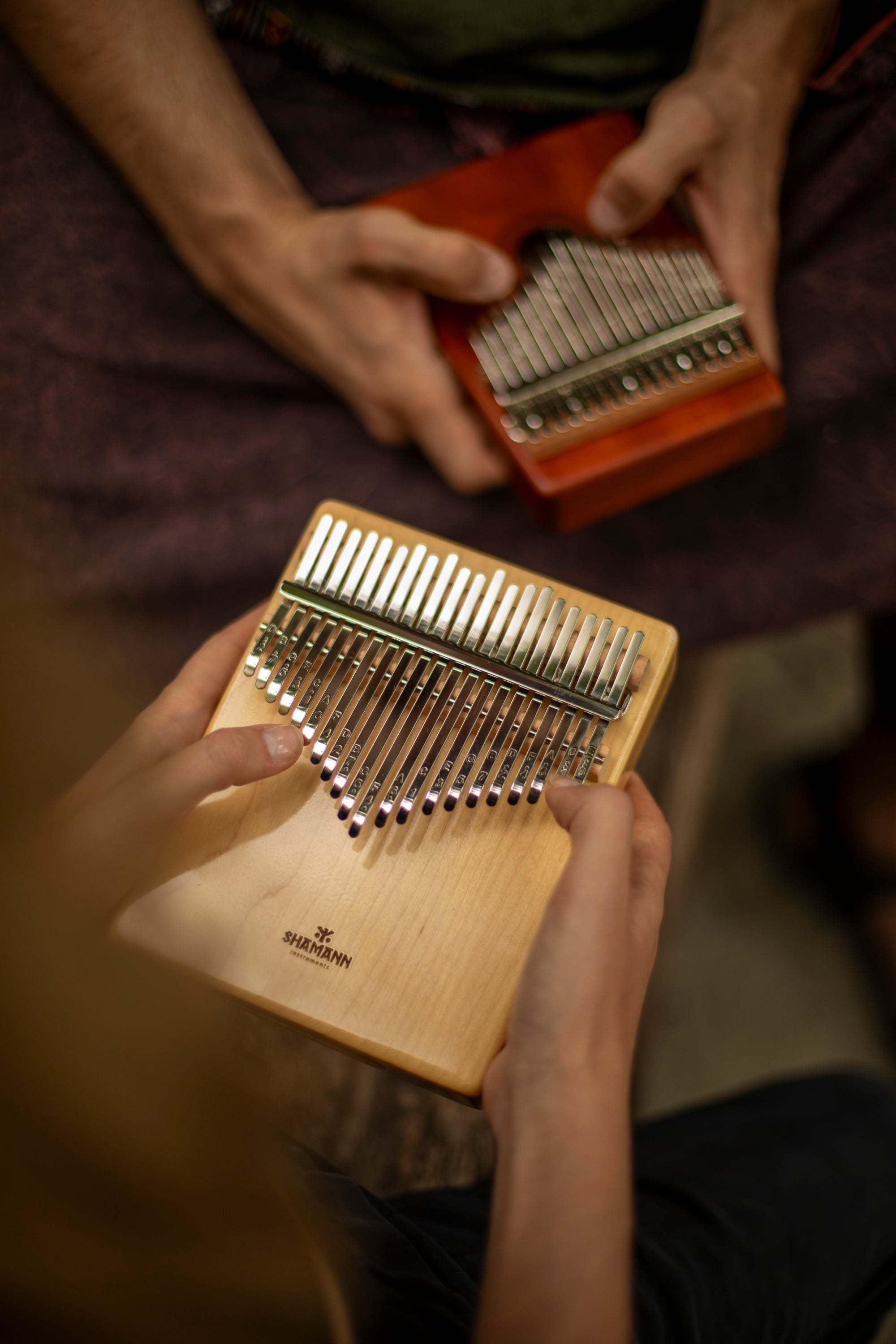
Hold the kalimba with both hands so that your thumbs point towards the tines. The remaining fingers grip the instrument from the sides and underneath. The kalimba should rest naturally in your palms, not be gripped tightly. You play the tines with your thumbs alternately or simultaneously. The movement comes from the thumb joint – not the whole hand. Imagine tapping a keyboard with one finger, only doing it very gently and lovingly.
Finding Your Way Around the Instrument
At first glance the arrangement of the tines can look chaotic. In fact it has a simple logic:
- The centre tine is the lowest note (usually C)
- Notes alternate to the right and left as they ascend
- Your right thumb plays tines on the right, left thumb plays tines on the left
- The further from the centre, the higher the note
First Melodies
Start with simple popular melodies. On YouTube you will find hundreds of kalimba tutorials using number notation – a system of numbers where each number corresponds to a tine. It requires no sheet music and anyone can pick it up in a few minutes. Great first melodies: Twinkle Twinkle Little Star, Happy Birthday, Canon in D (simplified version), Kiss the Rain by Yiruma.
Techniques That Will Level Up Your Playing
Once you have the basics down, it is time for techniques that add depth to your playing:
- Sound-hole vibrato – if you have a kalimba with a sound hole, cover and uncover it with your thumb or index finger while a note rings out. This creates the beautiful wah-wah vibrato effect typical of African kalimbas.
- Glissando – quickly sweeping across several tines in a row.
- Harmonic chords – playing two or three tines at the same time. The kalimba is designed for this and most combinations sound harmonious.
- Body tapping – tapping the wooden body of the instrument during playing adds a rhythmic element.
Tuning Your Kalimba
Your kalimba may go out of tune over time – especially if temperature or humidity changes. This is not a problem, it is simply part of life with the instrument. Use the included tuning hammer to adjust it. To raise a note, gently push the tine upwards (away from the body). To lower a note, push it downwards (towards the body). Check the tuning with a free mobile app such as GuitarTuna or Chromatic Tuner.
Most Frequently Asked Questions About the Kalimba
Is the Kalimba Suitable for Complete Beginners With No Musical Background?
Yes, the kalimba is one of the few instruments where no musical education is needed. The number system instead of sheet music lets you play melodies from day one. Most people play their first melody within 15 minutes.
How Many Notes Should a Beginner Kalimba Have?
Ideally 17 notes. It covers two octaves and gives you access to most of the popular melodies in tutorials. You will find 17-note kalimbas across various price ranges at Muziker.
Can I Play Any Melody on the Kalimba?
Most of them, yes. A standard C major kalimba with 17 notes covers almost all the popular melodies on YouTube. Some pieces in other keys require retuning or a special tuning – but beginners do not need to worry about that.
What If My Kalimba Goes Out of Tune?
Fix it yourself without worry. Solid wood kalimbas and cheaper models alike come with a tuning hammer. The process is simple: download a chromatic tuner app, check each note and gently nudge the tine. The whole process takes 5 minutes.
Is the Kalimba Good for Meditation?
The kalimba might have been made for meditation. Its sound is quiet, focused and naturally calming. Many therapists incorporate it into sound therapy. If this area interests you, browse the Shamann Music Therapy section, where you will find instruments designed specifically for this purpose.
How Long Does It Take to Learn the Kalimba Basics?
You will play your first melody within 30 minutes. Fluent playing takes 2 to 4 weeks of daily 15-minute practice. The kalimba is exceptionally rewarding in this regard.
Your Kalimba Is Waiting
The kalimba is one of the few instruments where music does not take months to hook you – it takes minutes. The first note, the first melody, the first moment you close your eyes and just play. That is exactly the feeling worth starting for. Find the full range of kalimbas including the Shamann collection at Muziker. If you are unsure about your choice, drop us a message in the chat or come to our showroom. We are happy to help.