 Albania
 Argentina
 Australia
 Austria
 Belgium
 Bosnia and Herzegovina
 Brazil
 Bulgaria
 Canada
 Chile
Chile
 Colombia
 Croatia
 Czech Republic
 Denmark
 Estonia
 Finland
 France
 Germany
 Greece
 Hungary
 Ireland
 Italy
Italy
 Latvia
 Lithuania
 Luxembourg
 Mexico
 Moldova
 Montenegro
 Netherlands
 New Zealand
 North Macedonia
 Norway
 Philippines
 Poland
 Portugal
 Romania
 Serbia
 Slovakia
 Slovenia
 South Africa
 Spain
Spain
 Sweden
 Switzerland
 Turkey
 Ukraine
 United Kingdom
 United States of America



Musical Instruments for Children: What Age to Start and What to Choose?
Music develops children more than you think. Rhythm, coordination, hearing, patience: everything starts with the first instrument. Which to choose for a 2-year-old, which for a 6-year-old, and what does it mean that a guitar must be 3/4 size? Here is a concrete guide by age.
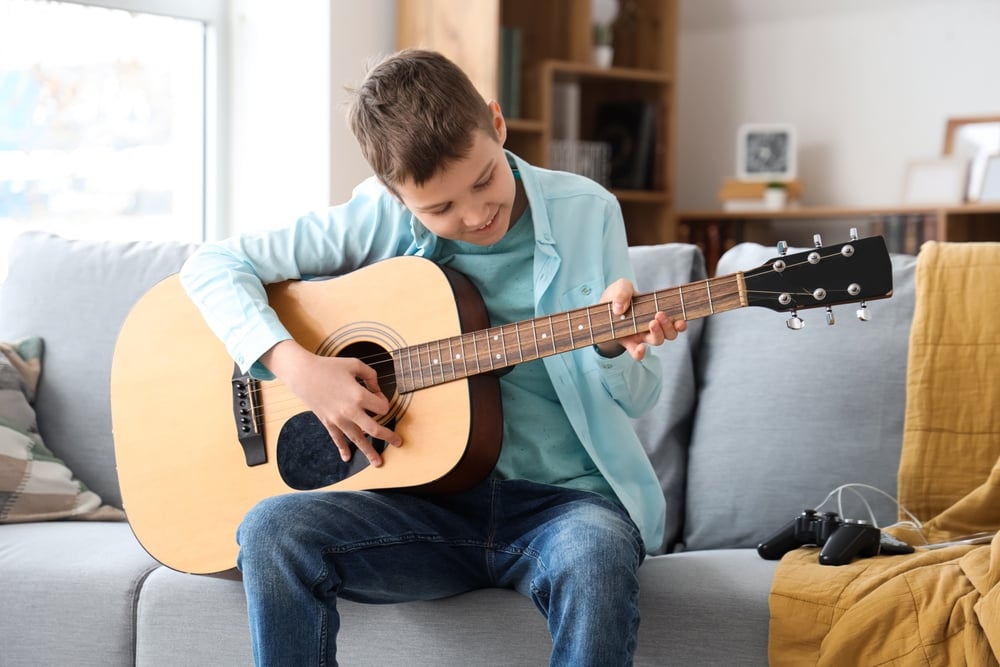
At What Age Should Your Child Start Music?
Earlier than you think. Children respond to rhythm and sound from birth. Research shows that even newborns distinguish rhythmic patterns and prefer music over random noise. Formal lessons can wait, but playing with instruments does not have to. The sooner a child encounters sound as something they can create themselves, the more natural their relationship with music will be.
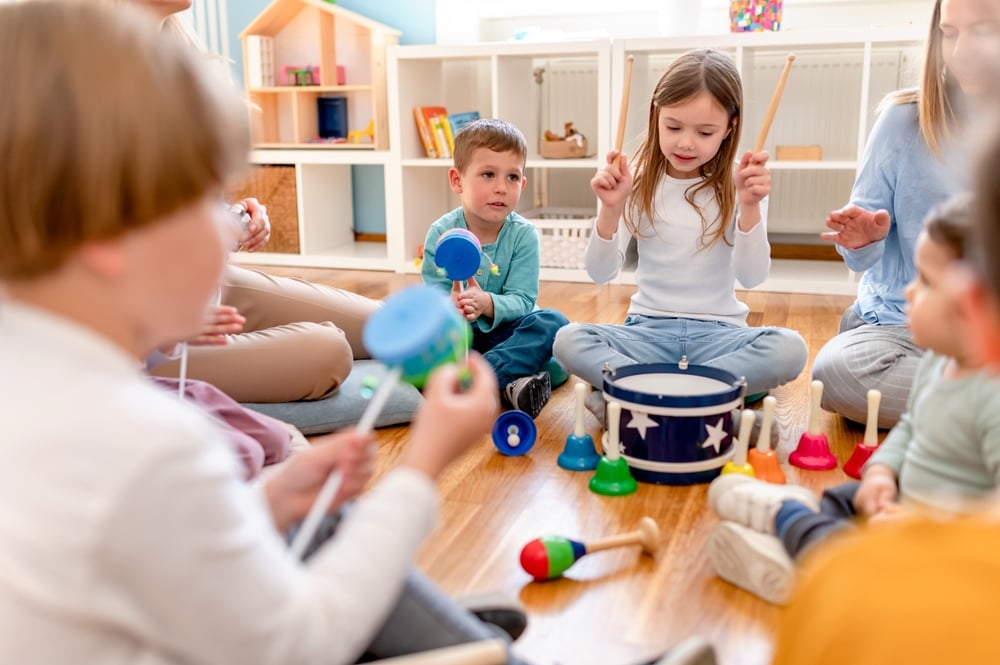
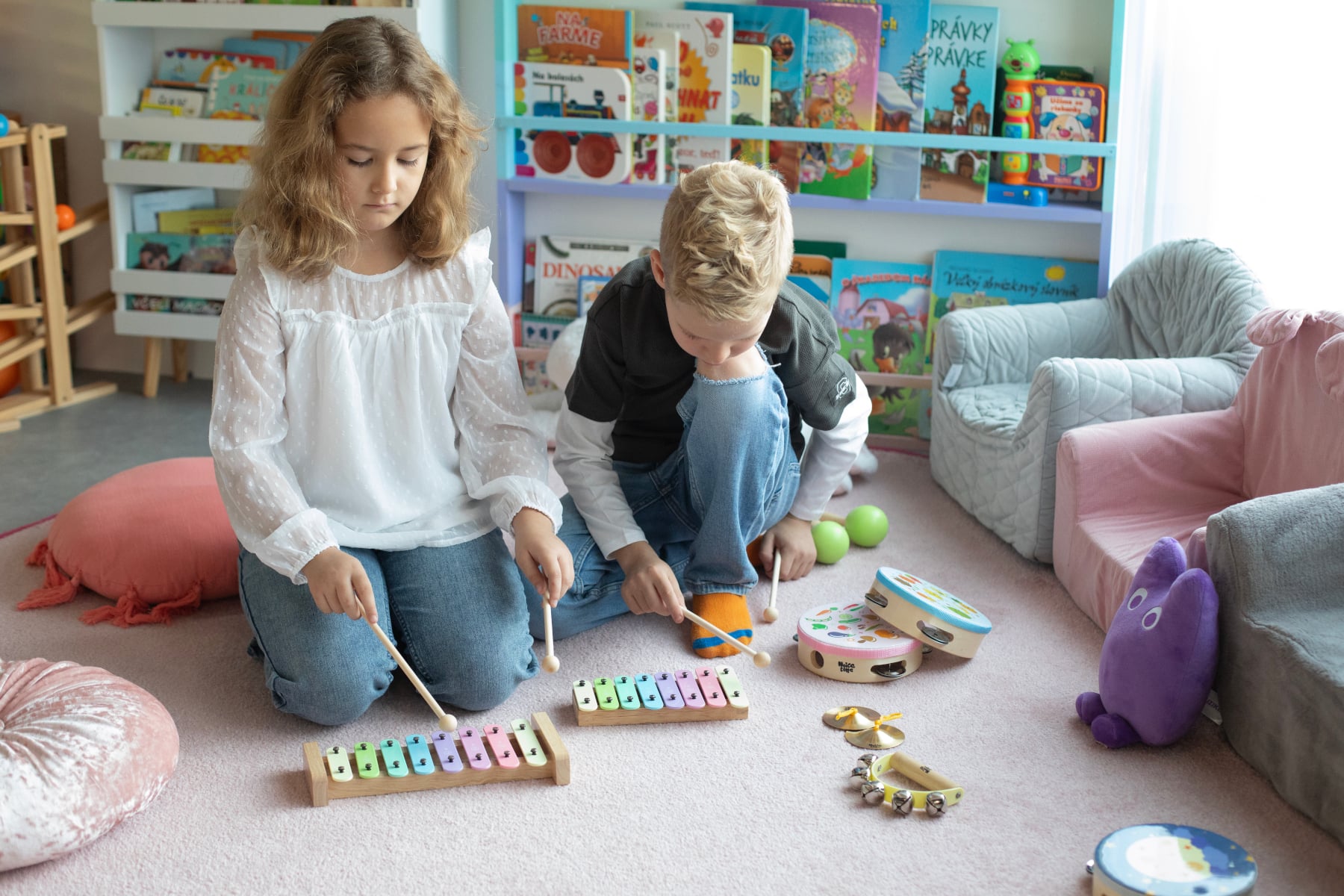
Up to age 3, children do not play in the true sense — they explore. Every tap, every shake is a musical experiment for them. You need a sturdy, safe instrument with no small parts. Maracas, tambourines or a complete children's percussion set are ideal at this age: light, colourful, durable, pleasant-sounding.
Up to age 3, children do not play in the true sense — they explore. Every tap, every shake is a musical experiment for them. You need a sturdy, safe instrument with no small parts. Maracas, tambourines or a complete children's percussion set are ideal at this age: light, colourful, durable, pleasant-sounding.
Around age 3, a turning point arrives. The child starts repeating rhythmic patterns, reacting to melody and showing interest in specific instruments. This is where children's keyboards or a melodica make sense. Fine motor skills are not perfect yet, but interest and motivation are at their peak and those are the most important factors in learning.
Between ages 6 and 9, the time comes for systematic lessons. The child can sustain attention, read music, follow a teacher's instructions and practise regularly. The instrument should be a proper one at this age, not a toy. Keyboards with 61 keys and touch sensitivity will carry through the first years of learning without compromise. For drums, cajons or djembes step in — instruments your child will not grow out of for ten years.
Between ages 6 and 9, the time comes for systematic lessons. The child can sustain attention, read music, follow a teacher's instructions and practise regularly. The instrument should be a proper one at this age, not a toy. Keyboards with 61 keys and touch sensitivity will carry through the first years of learning without compromise. For drums, cajons or djembes step in — instruments your child will not grow out of for ten years.
From age 9, most children are ready for any instrument from the standard adult range. It all comes down to interest.
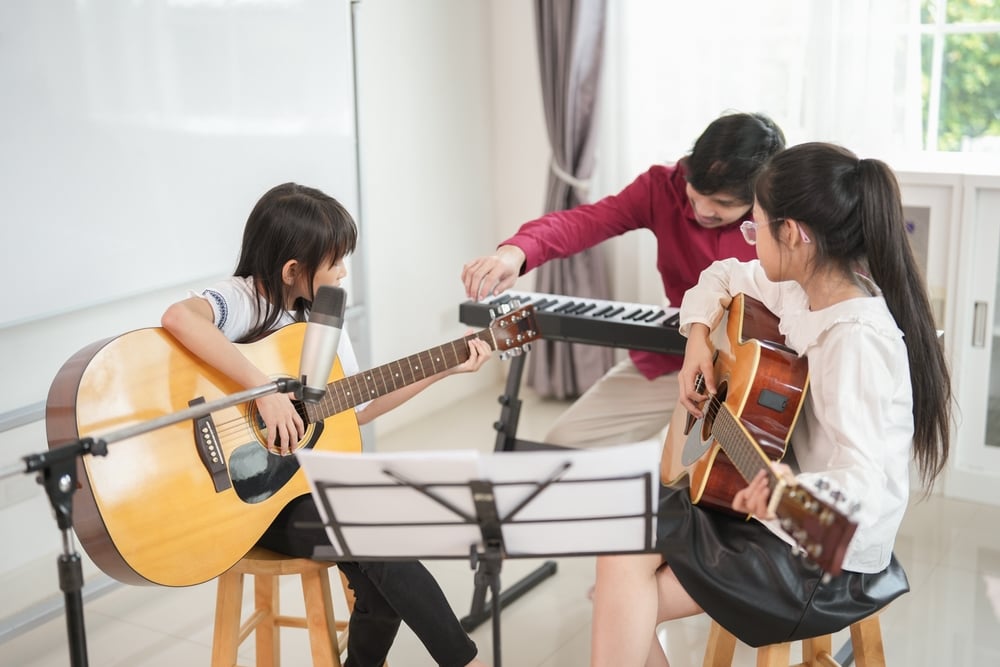
Rhythm Instruments and Percussion
Rhythm instruments are the best possible entry point into music for every child regardless of age. They require no prior preparation, reward immediately and develop exactly the qualities your child will need when playing any other instrument later: rhythmic sense, hand coordination and the ability to listen.
Maracas, castanets, claves and wooden blocks are instruments you will find in every music kindergarten in Europe. Not by accident: they are simple to understand, tonally accurate and appropriately sized for small hands. The complete children's percussion set is a great starter kit that covers the first years of playful music-making.
Noicetone has an equally strong range. Besides tambourines and maracas, their portfolio includes agogo, castanets, wood blocks and claves. Check out the complete children's percussion set too: one kit covers the first years.
When the child grows a little and wants more than just handheld percussion, it is time for bongos, djembe or a cajon. The cajon is a special chapter — an instrument you can play professionally even after twenty years. Cajons come in models for smaller children too, so you do not have to wait for adolescence.
Drum Kits
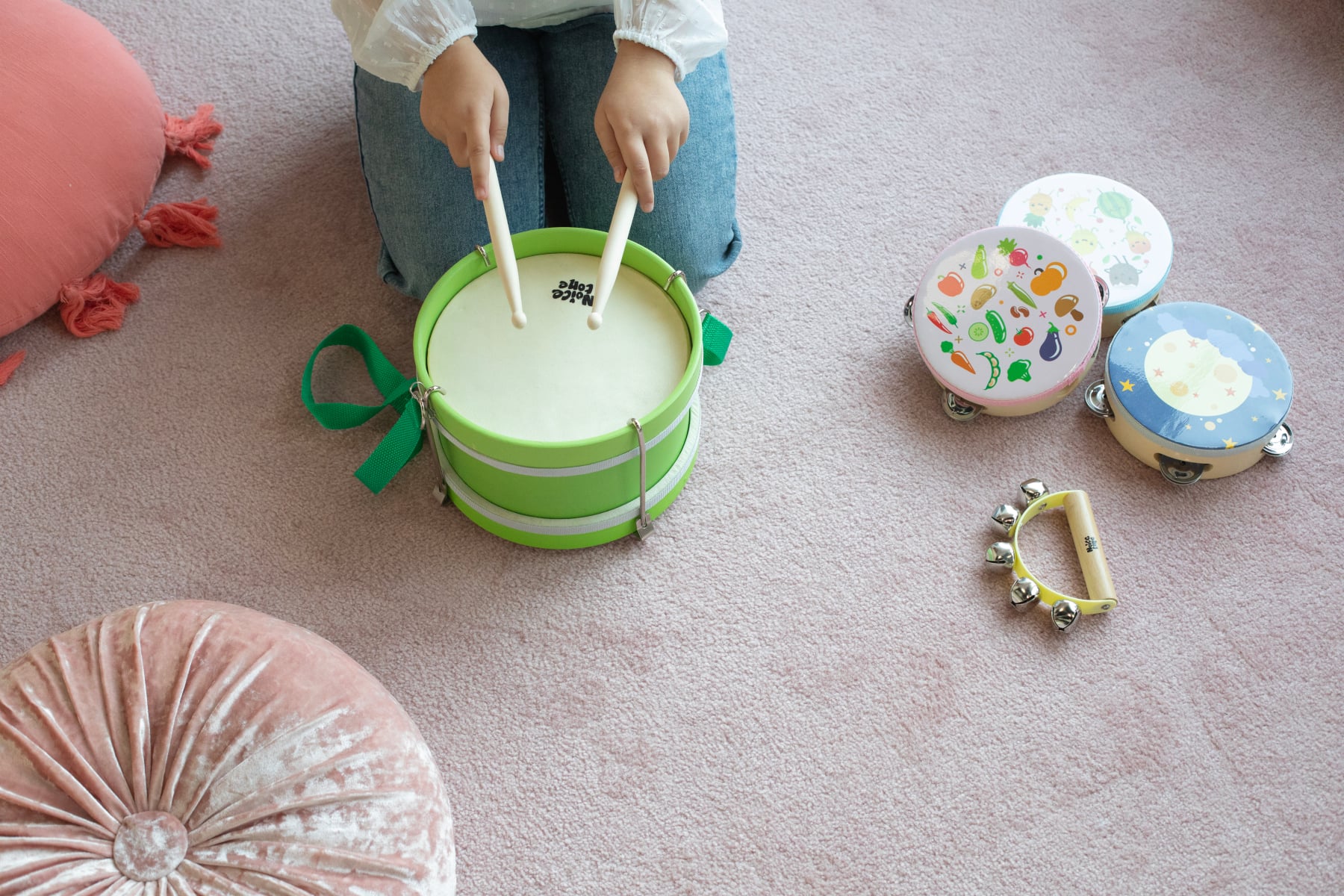
Children's drum kits are louder, but kids love them. And that is actually the most important argument: a child who looks forward to practice, practises. A child who has to sit at an instrument they find boring never practises.
Children's drum kits are designed specifically for young drummers: smaller dimensions, correct height, realistic sound. NRG is a brand with a long track record in drums, and the children's range is no exception. For slightly older and more capable beginners, it is worth checking out the full drum range.
Children's drum kits offer another reliable option if you are looking for an entry-level set with a good price-to-performance ratio. If you live in a flat or simply do not want to hear acoustic drums every day, electronic drums are the solution. The headphone output takes neighbours completely out of the equation. For smaller spaces, the compact electronic drums are also practical — minimal space, surprisingly convincing sound through speakers or headphones.
We recommend a children's drum kit from age 5 to 7, and a standard kit from age 7 to 8. Before that, hand drums and percussion are a better choice.
Piano and Keyboards
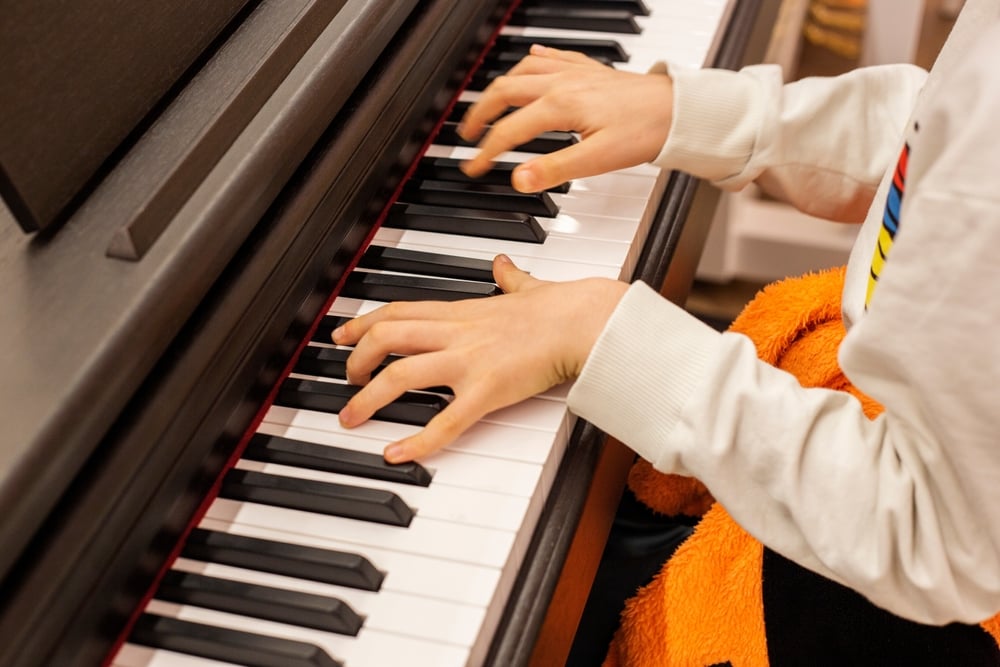
The piano is statistically the most popular first instrument for children and there is a reason for that. Press a key and you get a note. No bow technique, no need to train embouchure, no sore fingers from new strings. The visual layout of notes in a row makes understanding music theory easier than any other instrument allows. The child sees that C is lower than G, that octaves repeat, that chords are groups of notes. This understanding stays with them throughout their entire musical life.
You do not need a full-size acoustic piano straight away. Children's keyboards with 25 keys are suitable from age 3: light keys, realistic sound, compact size. For children from age 6 starting lessons, we recommend keyboards with 61 keys and touch-sensitive keys. Touch sensitivity is crucial — the child learns from the start that a harder press means a louder note, and that is the foundation of proper piano technique.
An interesting alternative is the melodica. It combines a keyboard with a wind principle: the child blows while pressing keys. This develops both finger coordination and correct breathing simultaneously — skills useful for any wind instrument they learn later.
Guitar and Violin
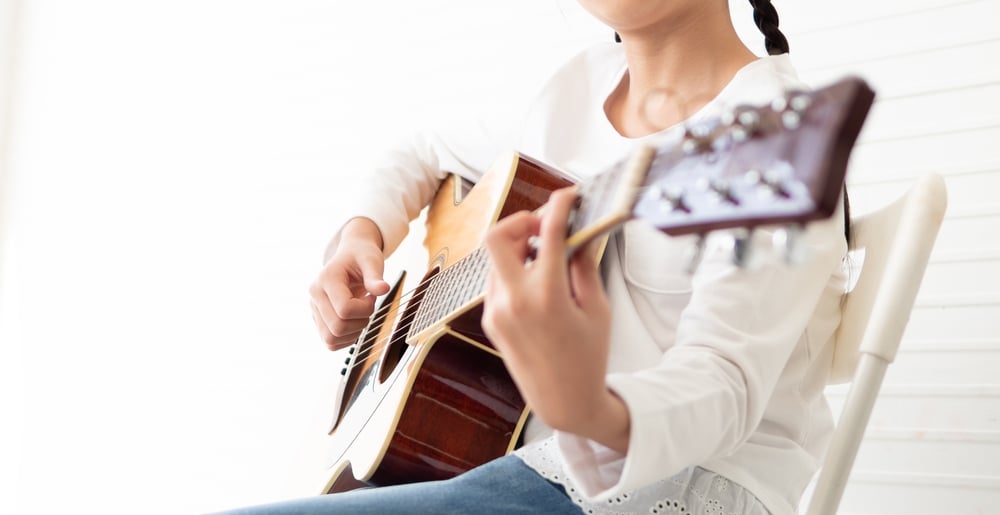
With guitar and violin, one rule is absolute: the size must fit. On a guitar that is too large, your child will learn nothing — they will just bend their wrist and lose interest. On oversized violins the tone will never be clean no matter how hard they try.
Guitars are made in multiple sizes so children can play them too. A rough guide by height:
For children under 6, the ukulele is an excellent alternative. Nylon strings are softer on small fingers, the instrument is light and the short scale makes forming chords easier. Most children from age 5 manage it without frustration. Browse the full range of children's guitars in one place.
| Guitar size | Age | Child's height |
|---|---|---|
| 1/4 | 4–6 years | up to 110 cm |
| 1/2 | 6–8 years | 110–120 cm |
| 3/4 | 8–12 years | 120–145 cm |
| 4/4 (full) | 12+ years | 145+ cm |
For children under 6, the ukulele is an excellent alternative. Nylon strings are softer on small fingers, the instrument is light and the short scale makes forming chords easier. Most children from age 5 manage it without frustration. Browse the full range of children's guitars in one place.
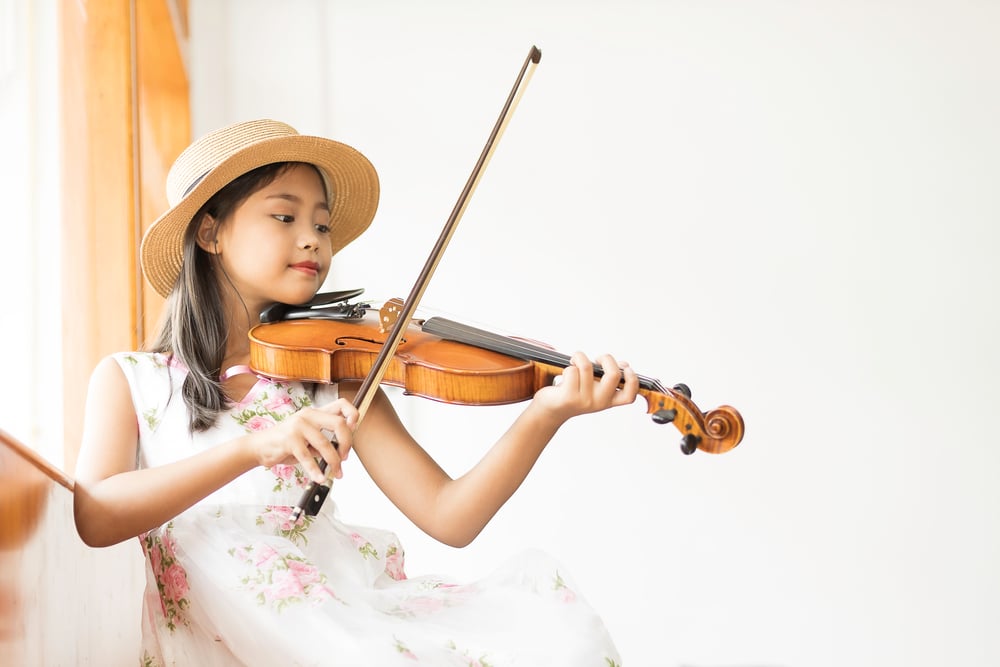
Violins require even greater precision in size selection. Measure the distance from the neck to the centre of the left palm when the child stretches their arm straight out in front.
| Size | Age | Arm length |
|---|---|---|
| 1/16 | 3–4 years | 31–35 cm |
| 1/8 | 4–5 years | 36–38 cm |
| 1/4 | 5–7 years | 39–42 cm |
| 1/2 | 7–9 years | 43–46 cm |
| 3/4 | 9–12 years | 47–52 cm |
| 4/4 | 12+ years | 53+ cm |
Children grow quickly and violin sizes need changing every 1 to 2 years. This is normal and should be factored in when buying. Find the range in the violins category. The recommended age to start violin lessons is 6.
Wind Instruments
Among wind instruments, the recorder is the best first step. It is affordable, tonally straightforward, easy to grasp and teaches your child correct breathing and finger coordination. It is also part of the curriculum in most primary schools. Plastic soprano recorders are the best choice: durable, easy to clean and perfectly adequate for the first years. Browse the full range of recorders here.
For slightly younger children who cannot yet manage finger coordination on a recorder, effect whistles are excellent. Same blowing principle, simpler operation. The full wind range covers various types for different age groups.
The flute, clarinet or trumpet come later. Most teachers recommend waiting until age 7 or 8, because both the lungs and fine motor skills need to be sufficiently developed — otherwise the child gets needlessly frustrated and gives up. With the flute, embouchure technique takes weeks before the first clean note comes out. Patience is key here. Yours and your child's.

What to Watch Out for When Choosing
The most important factor when choosing an instrument for a child is not price or brand, but interest. A child who wants to play drums will not be happy at the piano, however pedagogically correct it may be. If you can, let the child try the instruments before buying — you can do that in every Muziker showroom.
We mentioned size for guitar and violin, but it applies to drums and keyboards too. The child must reach the instrument comfortably, sit at it without tension in the shoulders and have their feet resting on the floor or a stool. Ergonomics are fundamental. Poor posture at an instrument creates bad habits that are hard to undo later.
Material plays a bigger role than you might think. Wooden percussion sounds richer than plastic and children usually sense this themselves. For the very young, plastic is more practical for durability, but from age 4 or 5 it is worth investing in a wooden instrument. Do not buy the cheapest model: cheap percussion falls apart quickly, cheap keyboards have a flat sound and cheap guitars cannot be kept in tune. All of this will put your child off before they have even learned anything.
Volume is solved by electronic alternatives. Electronic drums with a headphone output are just as quiet in a flat as a piano with a mute. Find the full range of children's musical instruments all in one place.
Frequently Asked Questions
Is a 3-year-old ready for a musical instrument?
Yes. At age 3, your child can handle rhythm instruments without any issues: maracas, tambourines, wood blocks. Formal lessons do not make sense yet, but playing with instruments develops motor skills and musical sense. This is the age when interest in music grows most naturally.
What instrument is best for a 5-year-old?
It depends on their interest. If rhythm attracts them, children's drums or a children's percussion set. If melody draws them in, children's keyboards or a ukulele.
What guitar size should I buy for my child?
It depends on the child's height. Up to 110 cm we recommend a 1/4 guitar, up to 120 cm a 1/2, up to 145 cm a 3/4. A full 4/4 guitar suits children from around age 12. Browse the range in children's guitars.
What to choose as the very first instrument: drums or piano?
Both have their advantages. Piano is visually intuitive and better for understanding music theory. Drums and percussion are physically rewarding immediately and better for developing rhythm. If you are not sure what draws your child more, start with a children's percussion set: it is cheaper and will show you whether it makes sense to go further in the drum direction.