 Albania
 Argentina
 Australia
 Austria
 Belgium
 Bosnia and Herzegovina
 Brazil
 Bulgaria
 Canada
 Chile
Chile
 Colombia
 Croatia
 Czech Republic
 Denmark
 Estonia
 Finland
 France
 Germany
 Greece
 Hungary
 Ireland
 Italy
Italy
 Latvia
 Lithuania
 Luxembourg
 Mexico
 Moldova
 Montenegro
 Netherlands
 New Zealand
 North Macedonia
 Norway
 Philippines
 Poland
 Portugal
 Romania
 Serbia
 Slovakia
 Slovenia
 South Africa
 Spain
Spain
 Sweden
 Switzerland
 Turkey
 Ukraine
 United Kingdom
 United States of America



What is the difference between a keyboard and a digital piano?
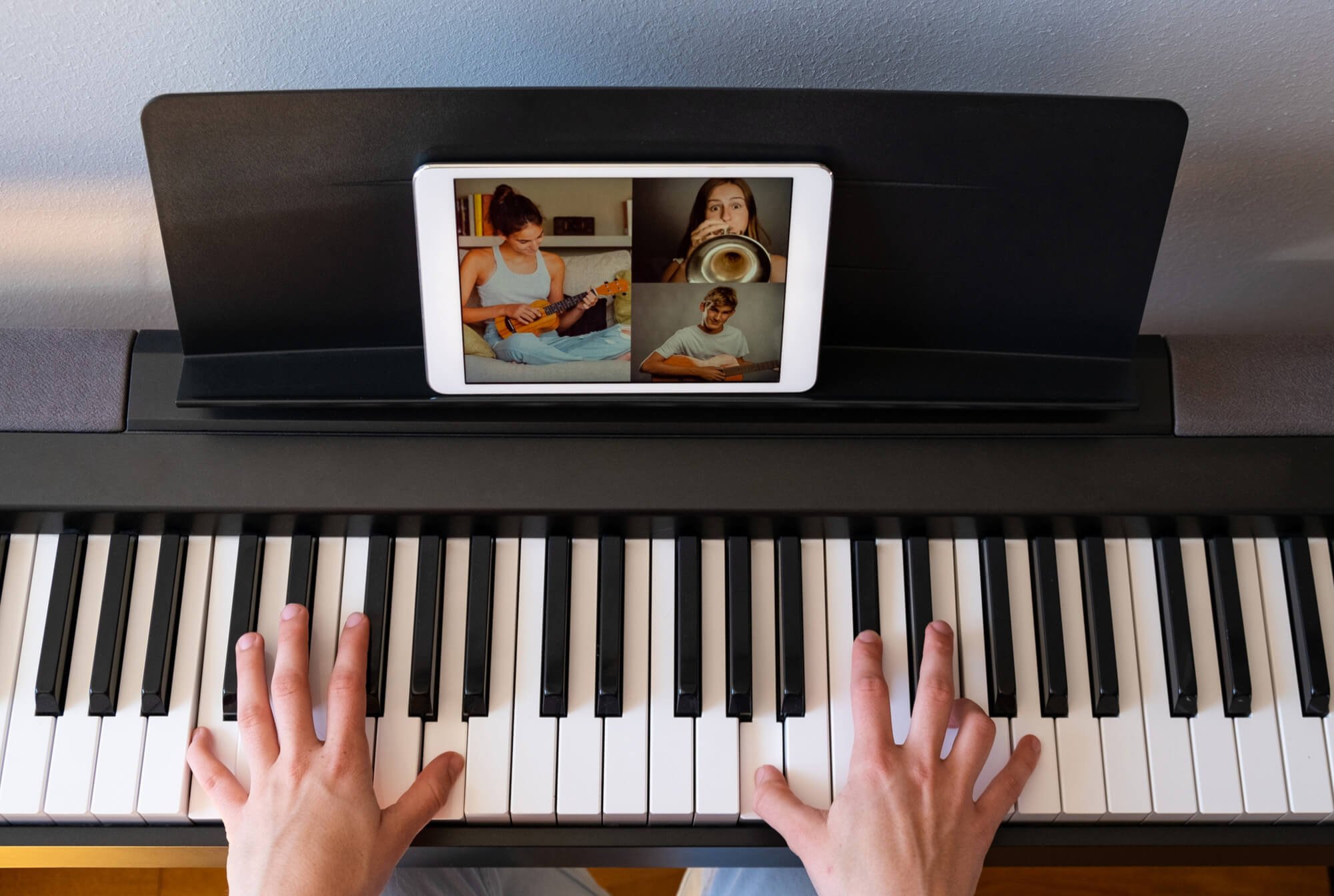
For many people, music is a way to relax and unwind. Keyboards and digital pianos form a broad segment on today’s market.
The difference between a keyboard and a digital piano is not always obvious at first. It may seem that you simply sit down, press the keys and play. The difference is mainly in functions and use. Some features appear on both instrument types. It is important to remember that while some digital pianos include keyboard-like functions, not every keyboard can match a digital piano.
Quick answer: A digital piano tries to imitate an acoustic piano: it usually has 88 keys, hammer action and a pedal. A keyboard is lighter, cheaper and more focused on sounds, rhythms and accompaniments; it often has 61 keys. If you want to learn piano technique, look mainly at digital pianos. If you want accompaniments, many sounds or a portable instrument, keyboards may work better.
Main differences between a keyboard and a digital piano
Digital piano
A digital piano can replace a classic acoustic piano in many situations. Quality instruments have a responsive keyboard – they react to the strength of your touch.
Other electronic features can also be useful, such as different piano sounds, a built-in metronome, recording options or headphone output.
They have the required range and a pedal is standard. Digital piano prices usually start at around 500 euros.
Compared with a classic piano, tone creation is still limited, but digital pianos are an excellent choice for players looking for an alternative to an acoustic piano. Popular brands include Kurzweil and Yamaha.
Keyboard
A keyboard offers many possibilities. You can choose different sounds – one moment a flute, then a guitar, then a whole orchestra.
A keyboard also offers drum rhythm accompaniment. You can record or program, and the instrument is easy to carry and does not take up much space.
It is especially suitable for dance, pop or electronic music. The cheapest keyboards start at around 100 euros, but the price depends on features and the number of sounds. Popular brands include Casio, Yamaha and Roland.
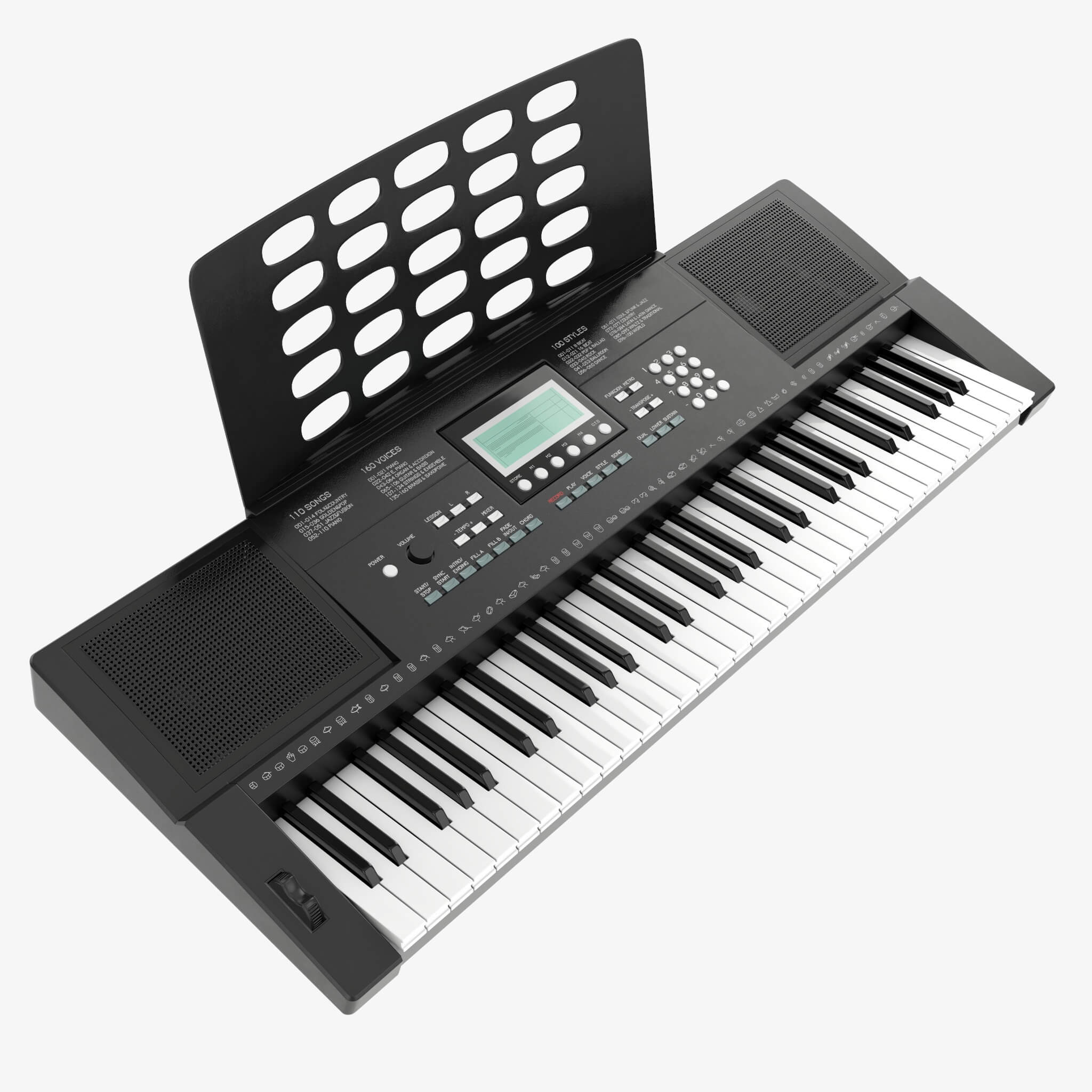
Keyboard vs digital piano in brief
| Feature | Digital piano | Keyboard |
|---|---|---|
| Number of keys | Most often 88, like an acoustic piano | Most often 61, sometimes 76 or fewer |
| Action | Hammer or weighted action for a piano-like feel | Lighter keys, often without hammer resistance |
| Playing dynamics | Usually responds well to touch strength and speed | Depends on the model; cheap instruments may be limited |
| Sounds and accompaniments | Fewer sounds, focus on quality piano tone | Many sounds, rhythms and automatic accompaniments |
| Pedals | Sustain pedal is common, higher models may have three pedals | A pedal can often be connected, but is not the main feature |
| Portability | Heavier and more stable, best for home or lessons | Light and compact, good for carrying |
| Best for | Players who want to learn piano technique | Fun, arranging, accompaniments and first music experiments |
Number of keys
A classic acoustic piano most often has 88 keys. Most digital pianos therefore offer the same range to imitate piano playing as closely as possible. There are exceptions with a smaller range – for example the Yamaha NP-12 BK has 61 keys but is a compact digital stage piano.
Keyboards have on average 61 keys and a range of 5 octaves. They often have narrower keys too. They do not match the range of an acoustic piano, but they are ideal for learning basics or recording dance and electronic music.
If the goal is serious piano learning, 88 keys and hammer action are a major advantage. For fun, simple songs, accompaniments or home music making, 61 keys can be enough at the beginning.
Touch sensitivity and speed
When playing an acoustic piano, the strength and volume of each note depend on how firmly you press the key. Volume also reacts to key speed – gentle playing gives soft tones, while stronger playing creates a more forceful sound.
Digital pianos and quality keyboards imitate this behaviour with a sensor under each key that detects playing intensity and makes the sound louder or softer.
A digital piano shares hammer action with an acoustic piano, so the playing feel is similar. The sound is generated electronically and comes from speakers.
A keyboard usually does not have this action and the keys offer less resistance. Dynamics are therefore harder to control, especially on cheaper models.
Keyboard instruments
Browse our wide selection of keyboard instruments and find the one that suits you best!
Type of sound
Digital pianos usually contain far fewer sounds than keyboards, although there are exceptions. Since an acoustic piano has one basic sound, a digital piano focuses on reproducing it faithfully. The emphasis is on piano tone quality.
Keyboards offer dozens of different sounds that imitate many instruments. They also include synthesizer tones, sound effects and rhythm accompaniments.
MUZIKER TIP:
Looking for an instrument that sounds good without breaking the budget? Discover keyboards, digital pianos and accessories by Pianonova.
Automatic accompaniment
If you want to create music and replace a whole band on your own, a keyboard is ideal. Keyboards usually offer many interesting sounds and automatic accompaniments in different styles. The player uses the left hand for chords or bass and the right hand for the main melody, with drums playing automatically.
Digital pianos usually do not have these functions, although some models offer a few basic rhythms. You can still choose your preferred piano sound.
The Yamaha PSR-E373 keyboard offers more than 200 styles across many genres from around the world.
Pedals
A classic acoustic piano has 3 pedals: soft, sostenuto and sustain, which extends the tone. Keyboards do not have all three, although in many cases you can connect a sustain pedal and use it fully.
Digital pianos usually include pedals. Cheaper or portable models often include mainly a sustain pedal, while higher models may have a three-pedal unit similar to an acoustic piano.
Which keys are best for a beginner?
If you are a complete beginner who seriously wants to learn piano, a keyboard is not the best choice, because it does not develop piano technique like an instrument with hammer action. A keyboard is ideal for those who want fun, many sounds or do not plan to focus fully on piano playing.
A digital piano, on the other hand, offers an almost identical playing experience. It is a great choice for anyone starting with piano. Compared with a classic piano, it is more affordable and compact.
MUZIKER TIP:
Looking for a digital piano for a child? See our guide on how to choose a digital piano.
FAQ: frequently asked questions
Is a keyboard suitable for learning piano?
For first musical steps, simple melodies and orientation on the keyboard, yes. If you want to learn piano technique, dynamics and pedal work, a digital piano with 88 keys and hammer action is better.
How many keys does a digital piano have?
Most digital pianos have 88 keys, the same number as a classic acoustic piano. Some portable or stage models may have 76 or 61 keys.
Are 61 keys enough for a beginner?
For first songs, playing for fun and trying accompaniments, 61 keys can be enough. For longer-term piano study, an 88-key instrument is a better choice.
What is hammer action?
Hammer action is a keyboard mechanism that imitates the resistance and feel of an acoustic piano. It makes the keys behave more naturally and helps the player control tone dynamics.