 Albania
 Argentina
 Australia
 Austria
 Belgium
 Bosnia and Herzegovina
 Brazil
 Bulgaria
 Canada
 Chile
Chile
 Colombia
 Croatia
 Czech Republic
 Denmark
 Estonia
 Finland
 France
 Germany
 Greece
 Hungary
 Ireland
 Italy
Italy
 Latvia
 Lithuania
 Luxembourg
 Mexico
 Moldova
 Montenegro
 Netherlands
 New Zealand
 North Macedonia
 Norway
 Philippines
 Poland
 Portugal
 Romania
 Serbia
 Slovakia
 Slovenia
 South Africa
 Spain
Spain
 Sweden
 Switzerland
 Turkey
 Ukraine
 United Kingdom
 United States of America



How to learn to play the ukulele in a few weeks: quick and effective guide

Ukulele is a cheerful and accessible instrument that you can learn without years of musical experience. Read how to choose and tune a ukulele, learn basic chords, master rhythm, and play your favorite songs in just a few weeks.
1. Choose the right ukulele and tune it
Without a properly tuned ukulele, you’ll feel out of tune even if your chords are correct. So the first step is clear – learn to tune your instrument. Standard ukulele tuning is G – C – E – A. If you’re unsure, use a tuner (digital or mobile app).
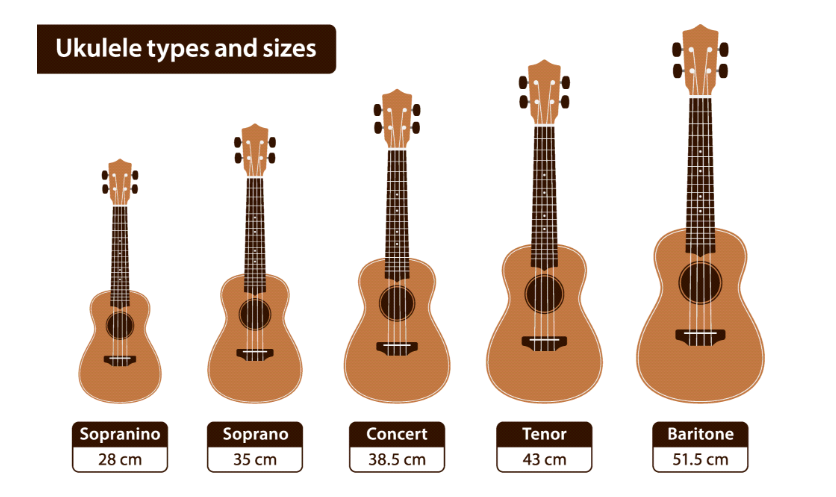
Tip: If you’re a beginner, we recommend starting with a soprano or concert ukulele – they have a shorter scale, are easy to hold, and produce a bright sound.
2. Master the basic chords
Although the ukulele looks like a simple instrument, you only need a few basic chords to play hundreds of songs. Start with these four:
- C major – just press one finger on the third fret of the A string.
- A minor – one finger on the second fret of the G string.
- F major – combines A minor and adds a finger on the first fret of the E string.
- G major – requires three fingers, but it’s used often, so it’s worth learning early.
How to do it?
- Play the chords one after another and focus on their sound. If something buzzes, adjust your finger positions.
- Practice transitions between chords – start slowly and gradually speed up.
- Use the “4 on 4” method – strum four times on one chord before moving to the next.
3. Rhythm is key – use strumming patterns
Strumming gives songs dynamics and character. To sound good, you need more than just changing chords – add the right rhythm.
Simple rhythms to start with:
- Down – down – up – up – down – up (classic folk/pop pattern)
- Down – down – down – down (great for slow songs)
- Down – up – down – up (ideal for reggae and relaxed style)
Tip: If it’s hard at first, try muting the strum – move your hand as if strumming without hitting strings and feel the rhythm.
4. Practice techniques that improve your playing
“Fake Strum” technique
This trick will help you achieve smoother chord transitions. How to do it?
- Place your fingers on the strings but don’t strum yet.
- Release them gently and strum all strings almost simultaneously.
- The sound will resemble normal strumming, but your fingers remain ready for the next chord.
“Upwards Roll” technique
If you want your strumming to sound richer and more dynamic, try rolling your fingers upwards. How to do it?
- Spread your fingers and strum upward so each finger hits a different string.
- This creates a slightly spread sound, perfect for rhythmic passages and solo playing.
5. Practice effectively – less is sometimes more
It’s great to be motivated, but learning through playing is a marathon, not a sprint. It’s not about how many hours you practice daily, it’s about how you practice.
Effective practice plan:
- 10 minutes – warm-up and chord repetition
- 10 minutes – chord transitions and rhythm
- 10 minutes – playing simple songs

6. Play songs you enjoy
Music should be fun, not boring. Choose songs you like – learning them will be much easier.
Tips for easy songs:
- “Somewhere Over the Rainbow” (C, G, Am, F)
- “Riptide” – Vance Joy (Am, G, C, F)
- “Let It Be” – The Beatles (C, G, Am, F)
7. Don’t give up – learning is a process
Some chords may not sound perfect at first, and your fingers might hurt. That’s normal. Every musician goes through a phase of feeling stuck. The key is not to get discouraged.
- If chord transitions are difficult, slow down and focus on smoothness.
- If the rhythm seems off, try muting the strings while strumming first.
- If everything sounds wrong, take a day off and come back with a fresh mind.
In a few weeks, you’ll be able to play your first chords, basic rhythms, and even some techniques that will improve your playing. Remember, music is primarily about joy. If you need advice on choosing a ukulele, strings, or accessories, our Muziker team will gladly help you.
So tune your ukulele, pick a song you enjoy, and start playing. Now is the best time to become an enthusiastic ukulele player!
Photo and video source: Shutterstock, Canva, Youtube